
Commercial Roof Inspection in Westminster, CO
Inspect a Westminster commercial roof with section-based photos, drainage and flashing checks, clear limits, and recommendations tied to observed conditions.
Commercial Roof Inspection
The first drip after a snowmelt raises a question: did water enter at a seam, curb, or outlet? We inspect the Westminster roof area above the reported room and follow nearby details before recommending work. We assess slope, outlets, and water marks at the building under inspection. We record the installed system, visible condition, drainage path, and inspection limits so the owner can act on evidence from the building.

Set a roof map before the walk
A useful inspection begins with the building address, roof plan, access point, system records, and reason for the visit. We identify separate buildings and roof sections before taking photographs. Where no current plan exists, we label the areas consistently in inspection notes and mark major drains, hatches, equipment, edges, and transitions. This keeps a photo of one roof from being mistaken for a finding on another.
At the roof, we note membrane or metal type where confirmed, visible repairs, seams, penetrations, skylights, curbs, parapets, and perimeter details. We check that access can be completed safely and identify any fragile or restricted surface. A section left inaccessible is identified as such. A written condition report can carry the map, photographs, tested areas, and follow-up items into the maintenance file.
Westmoor Technology Park sits in Westminster's U.S. 36 corridor near Jefferson County Airport. For a Westmoor property, confirm the building identifier, roof plan, and access route before the inspection.
Inspection scope has a boundary. We note the elevations reached, areas hidden by equipment, and any section that could not be entered safely. The visit record distinguishes a visual walk from a moisture scan, test opening, or repair. If the owner needs a roof-wide baseline, we list every structure and area included before work begins. A targeted leak call remains identified as a focused inspection, with other sections left outside that conclusion. This prevents one photo, sample, or repair note from being read as a finding for the full property.
Follow water to the outlet
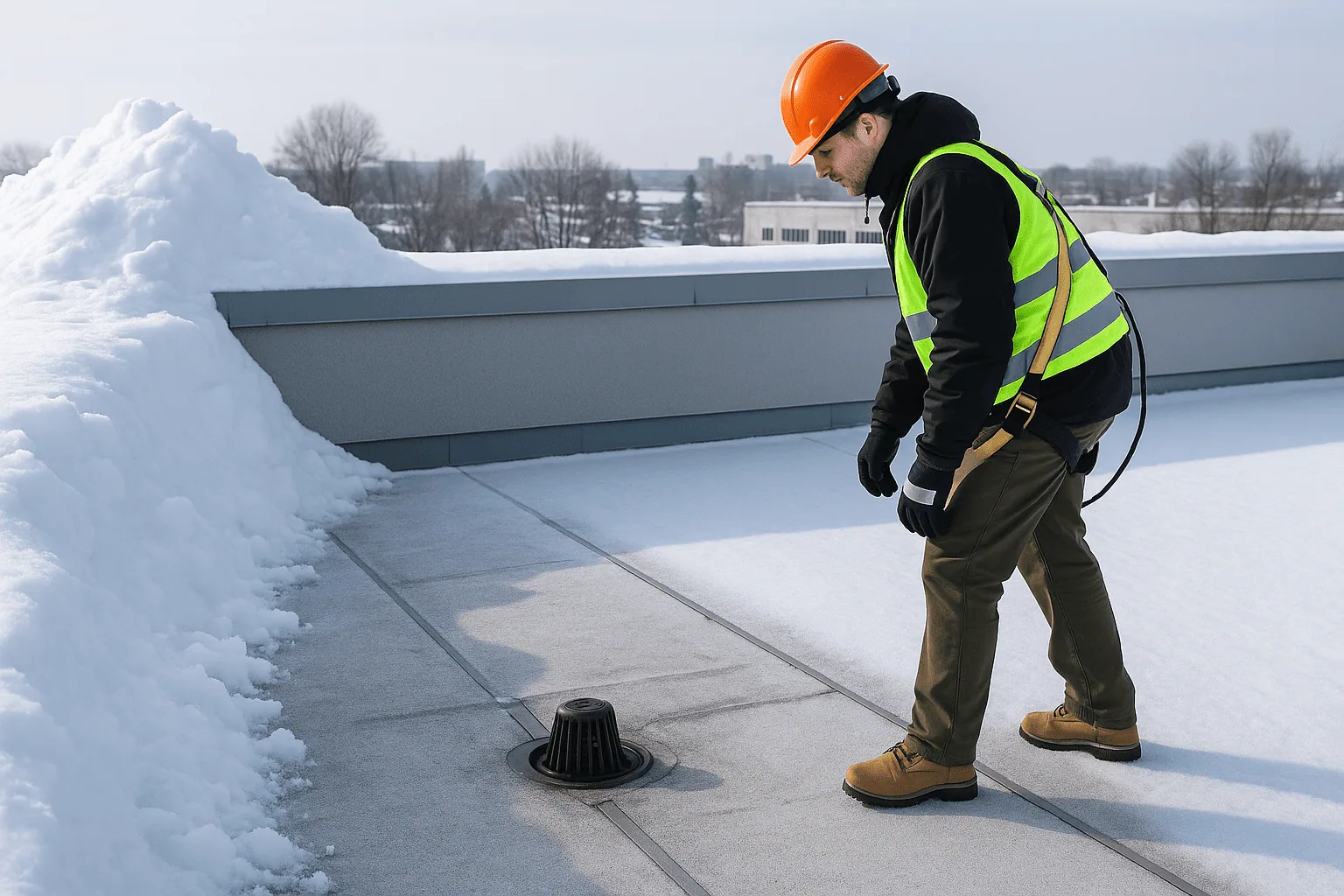
We inspect drain bowls, strainers, scuppers, overflow routes, and low spots for blockage, damage, or water that remains after weather clears. At a drain, we look at the connection between the membrane and bowl, then note surrounding slope and nearby seams. An overflow should have a visible discharge path. A high drain, obstructed outlet, settled area, or failed membrane transition can require different next steps.
Hail, intense storms, and snowmelt make roof drainage useful to document. We photograph the outlet, low point, and water marks, then compare them with the interior report. A drain and scupper scope can separate maintenance from repair or a drainage design issue.
If moisture under the membrane is suspected, visual inspection alone may not confirm it. We explain whether a scan or selected test opening could answer the question. A moisture survey can target an area where assembly and conditions support the method. The report notes which sections were tested and what remains unverified.
Check the connections, not only the field
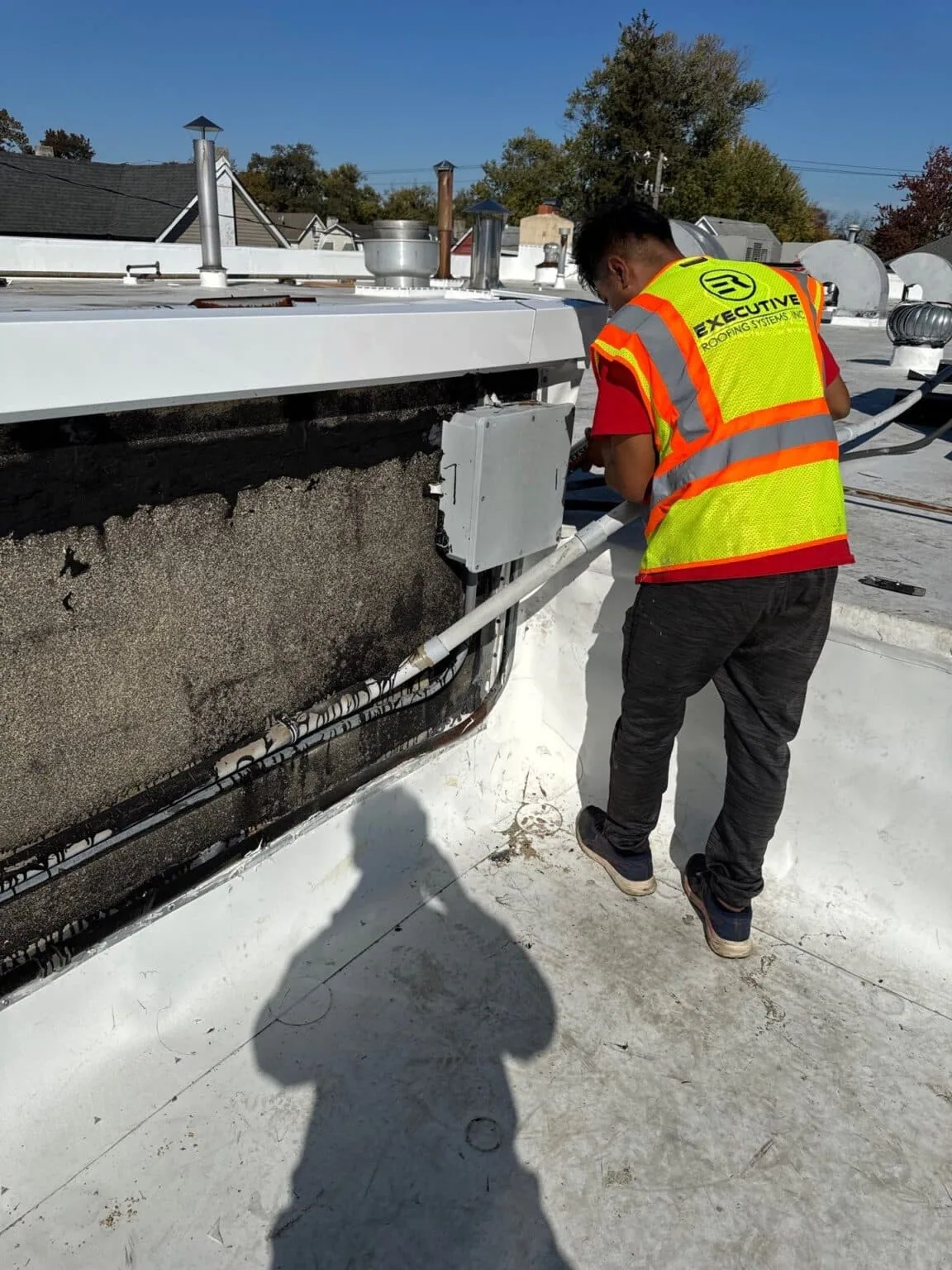
The membrane field may appear intact while water enters at a wall, curb, skylight, pipe, exhaust, or edge transition. We inspect termination height, fasteners, welds, metal joints, sealant, flashing corners, and signs of movement. For each concern, the photo shows the nearby field and the component that connects to it. That context helps distinguish a surface mark from a failed joint.
A repair recommendation should identify the material, condition, and area to be corrected. We compare isolated seam or flashing issues with repeated movement, moisture, or poor attachment across a wider section. A flashing failure review can focus on a transition, while a seam check can record an open lap or failed weld. We do not assign a roof-wide replacement from one localized observation.
For roof systems with coating, patches, or several additions, we record where the materials change and whether their boundaries remain secure. A coating test area or a test opening may be needed before we state compatibility or concealed condition. We mark any recommendation that depends on further access or testing.
Read storm evidence at building scale
The late-May 2024 storm brought hail close to Westminster, with damage also reported in neighboring north-metro communities. On this building, photographs must show a physical mark before we list hail as a cause. We look for actual marks, displaced edges, damaged vents, or punctures and record what we see.
If an event prompted the visit, we note its reported date and compare conditions with prior photographs or repair history. The inspection separates observed impact from ordinary wear, loose maintenance items, and unrelated defects. A storm damage review can document an event-related boundary without presuming the storm caused every condition. Where active water is present, we can arrange an interior-to-roof leak trace.
Nearby centers such as Westminster Promenade and Shops at Walnut Creek include retail, hotel, and restaurant tenants. Their uses may affect the access window at a particular property, but operating rules come from that building's manager. The inspection record identifies the actual access route and whether any roof area remained off limits.
Turn a roof walk into a documented decision
Tell us what weather event or roof issue prompted the call, which area is affected, and how the roof can be accessed. Send the property address, plan, and system history. We will document observed conditions and the next useful step.
Make the next step specific
Findings are sorted into immediate protection, repair, maintenance, testing, and longer-term capital questions. Each item includes its roof section, evidence, and recommended next action. We identify priority by the risk and condition observed, not by a generic age alone. If the report supports repair, the scope names materials and preparation. If testing could change the recommendation, we state what result is needed. Replacement options can be compared with a section-based tear-off scope after the assembly is understood.
Inspection costs and timing depend on the number of structures, roof area, access equipment, records available, weather, and whether testing is required. A routine walk may not include a test opening, infrared survey, destructive review, or repair. We state the work completed and what was not included. If a tenant or maintenance team provides a separate interior report, we retain it with the applicable building rather than assume the condition is roof-wide.
For a portfolio with a building near Westminster Station and another in the North I-25 corridor, we keep each report independent. The city planning and retail inventories identify distinct development areas; only the inspection describes the roof. This makes side-by-side capital review more useful without blending system histories.
When a building has several roof elevations, we note the access route and inspection limits for each one. A lower roof may conceal a drain or wall transition that serves an upper section, so the plan should show which areas connect. We mark changes in membrane, equipment density, and edge height before comparing observations from separate wings. If a section cannot be reached safely, the report identifies the equipment or access setup needed for a return visit.
Commercial Roofing Questions
What does a commercial roof inspection include?
We review access, roof sections, materials where confirmed, drains, seams, penetrations, edges, visible repairs, and reported conditions. The report lists photographs, limits, and follow-up items.
Can you tell whether insulation is wet from a visual walk?
Not always. We describe visible evidence and identify whether a moisture survey or selected opening could confirm the layers at a specific location.
Does a hail report mean we should file an insurance claim?
A weather record is not proof of property damage. We document observed conditions and can prepare inspection findings for the owner and insurer to review.
Will an inspection say when the roof must be replaced?
It records current condition and evidence that supports repair, testing, or capital planning. A calendar age alone does not establish the remaining service life.
What should I send before the inspection?
Provide the Westminster address, roof plan, system history, reported issue, access contact, and any prior photos or repair notes. Include building-specific restrictions.
Related Roofing Work
Commercial Roof Condition Reports
Read more
Westmoor Technology Park
Read more
Commercial Roof Drains and Scuppers
Read more
Infrared Moisture Survey
Read more
More Commercial Roofing Services in Westminster
See the rest of our commercial roofing services for Westminster commercial buildings, or call 555-555-5555 to talk through your roof.
Commercial Roof Inspection
Talk to Commercial Roofing Westminster
Call 555-555-5555 or send a request and we will schedule a visit to look at the roof, explain what we find and lay out your options.