
Commercial KEE Roofing in Westminster, CO
Review Westminster KEE roofing for membrane condition, welds, exposure, and detail compatibility. Choose repair or replacement from observed roof needs.
Commercial KEE Roofing
Heavy rooftop equipment and chemical exposure can make membrane formulation a real design question. KEE is a PVC-alloy option, but the product name alone does not settle whether it suits the building. We check exposure, seams, flashing, substrate, and service history. Near Westminster's U.S. 36 and North I-25 commercial areas, roof use varies by property, so the recommendation starts with a site walk.
Confirm the specified membrane
KEE combines PVC with a ketone ethylene ester alloy. The exact product formulation, thickness, reinforcement, and accessories come from the selected manufacturer's data and approved assembly. We verify the membrane on project records or visible markings where possible. If the roof identity is uncertain, we say so rather than infer KEE from color or appearance.
Some KEE products are selected for flexibility or resistance to certain exposures. Those properties apply within product limits and do not make the sheet immune to damage. We identify rooftop grease, process discharge, cleaning chemicals, and mechanical runoff with the facility contact, then compare known conditions to the product requirements.
Owners comparing single-ply systems can review a PVC membrane and a TPO assembly alongside KEE. The system selection should account for the property, attachment, wind design, details, and maintenance, not just a material label.
Check the sheet and welds
Like other thermoplastic membranes, KEE seams are joined with heat. Inspection looks for contamination, incomplete welds, fishmouths, wrinkles, open edges, and repairs that no longer bond. The probe is used on accessible seam edges after the surface is ready for testing. A passing probe check describes the locations examined; it does not establish the condition of concealed insulation.
Surface changes can have several causes. Scuffs may come from routine service traffic, impact marks may follow weather, and discoloration may reflect exposure or prior repairs. We record the location, width, and nearby detail before recommending a patch or test. The May 2024 hail event is a useful reason to inspect exposed KEE membrane and metal details when a property may have been affected.
A roof near Westmoor Technology Park may carry rooftop units, conduits, and walkways. We map each condition by roof zone and note whether regular equipment access runs across the affected field.
When a repair needs heat welding, a small test area can confirm that surface preparation and settings produce a sound bond. The work log identifies the test location and seam length repaired. Testing one area does not establish every weld on the roof, so the report keeps the inspected boundary specific.
Inspect exposure points and flashings
Curbs, pipes, drains, and edge transitions need flashing compatible with the membrane. We check the height and attachment at curbs, boot condition at pipes, clamping connections at drains, and termination beneath edge metal. Movement around equipment can stress a weld or flashing corner. Sealant is not a substitute for rebuilding a failed membrane connection.
Where kitchen exhaust or process lines discharge near the roof, identify the source and whether residue reaches the membrane. The product's chemical-resistance data must match the actual exposure. If the source can be redirected, coordinate that change with the mechanical contractor. A curb and support review can address equipment interfaces alongside membrane work.
Water movement on this KEE roof depends on the actual slope, drains, and overflow route. Inspect those details before planning a coating or replacement. A drain review can document low points and outlet conditions before a coating or replacement decision is made. We also note whether maintenance staff can reach the strainer without crossing a vulnerable seam.
Separate a local fix from system work
A small puncture or open weld may be repaired with compatible KEE material if the surrounding membrane is stable and clean. The crew prepares the area and heat-welds a patch, then checks its perimeter. If the sheet is brittle, the welds are failing across several sections, or moisture is present below, a series of small patches may not address the broader issue.
A recover adds a new roof layer over an existing assembly only when moisture, attachment, deck, height, drainage, and code conditions support it. The recover assessment checks those factors. A replacement scope can include removal, insulation, cover board, membrane, drains, and edge metal as one designed system.
For a building along the 120th Avenue corridor, work hours, deliveries, and tenant access may affect the sequence. We coordinate the work zone and temporary protection with the property contact; material selection still follows the roof's observed condition and project requirements.
Verify the KEE assembly first
Share the Westminster roof plan, product records, known exhaust or chemical exposure, leak history, and access contact. We will verify the membrane, inspect seams and flashings, and define the repair or renewal scope supported by the roof.
Control substrate and welding
New KEE installation begins with a suitable deck and prepared substrate. The crew verifies insulation and cover-board layout, attachment design, membrane direction, and planned seam locations. Rolls must remain clean and protected. Welding conditions follow the product requirements, and details around pipes, curbs, drains, and edges use compatible accessories.
Heat, wind, and precipitation can change the daily installation window. The crew limits exposed area, secures materials, and closes each phase before weather interrupts. At seams, the installer checks welds before they are covered by later work. Changes in substrate or concealed deck damage are documented for owner direction.
At closeout, we record field seams, flashings, repair locations, and any detail that could not be inspected. A condition report keeps those observations with installation photos, submittals, and follow-up needs. Product warranty language is documented only as approved for the specified assembly.
Before mobilization, the superintendent reviews the approved product data, roll dimensions, seam layout, edge details, and work-zone plan. The owner can then confirm that rooftop access and equipment shutdowns line up with the installation sequence. Samples or mock-ups are provided when the contract calls for them, and any rejected detail is corrected before the crew repeats it across the roof.
Keep product and repair records together
The roof file lists product identification where verified, roof sections, repairs, seam checks, exposure notes, and maintenance needs. Photos show the installed or repaired detail. If an equipment discharge or concealed area still needs investigation, that question remains visible in the record.
A commercial property along 120th Avenue or near Westmoor should keep the KEE plan linked to its building and roof zone. The two locations are separate commercial areas; site conditions are not shared. A maintenance log can track exposure, service traffic, and changes at penetrations between formal inspections.
Send the Westminster address, roof plan, known product name, repair history, leak location, and exposure information. We will verify the assembly, inspect its welds and details, and explain whether maintenance, repair, testing, recover, or replacement fits the roof condition.
Commercial Roofing Questions
What does KEE mean on a roofing specification?
It refers to a PVC-alloy membrane formulation. We confirm the actual product, thickness, accessories, and assembly from available records before planning work.
Is KEE the same as standard PVC?
Both are thermoplastic membranes, but formulation and product properties can differ. We compare the specified product data and exposure conditions instead of treating them as interchangeable.
Can KEE roofing be patched?
A compatible welded patch can address a local defect when the surrounding sheet is suitable. We inspect the weld and substrate and set the repair limit around confirmed damage.
Does KEE resist every chemical on a roof?
No membrane should be assumed compatible with every substance. We identify what reaches the roof and compare that exposure with the selected product's documented limits.
When does a KEE roof need replacement?
Widespread seam issues, brittle material, wet insulation, deck problems, or recurring repairs can shift the decision. We assess those findings before proposing a larger scope.
Related Roofing Work
Commercial PVC Roofing
Read more
Commercial TPO Roofing
Read more
Westmoor Technology Park
Read more
Commercial Rooftop Equipment Curbs and Supports
Read more
More Roof Systems in Westminster
See the rest of our roof systems for Westminster commercial buildings, or call 555-555-5555 to talk through your roof.
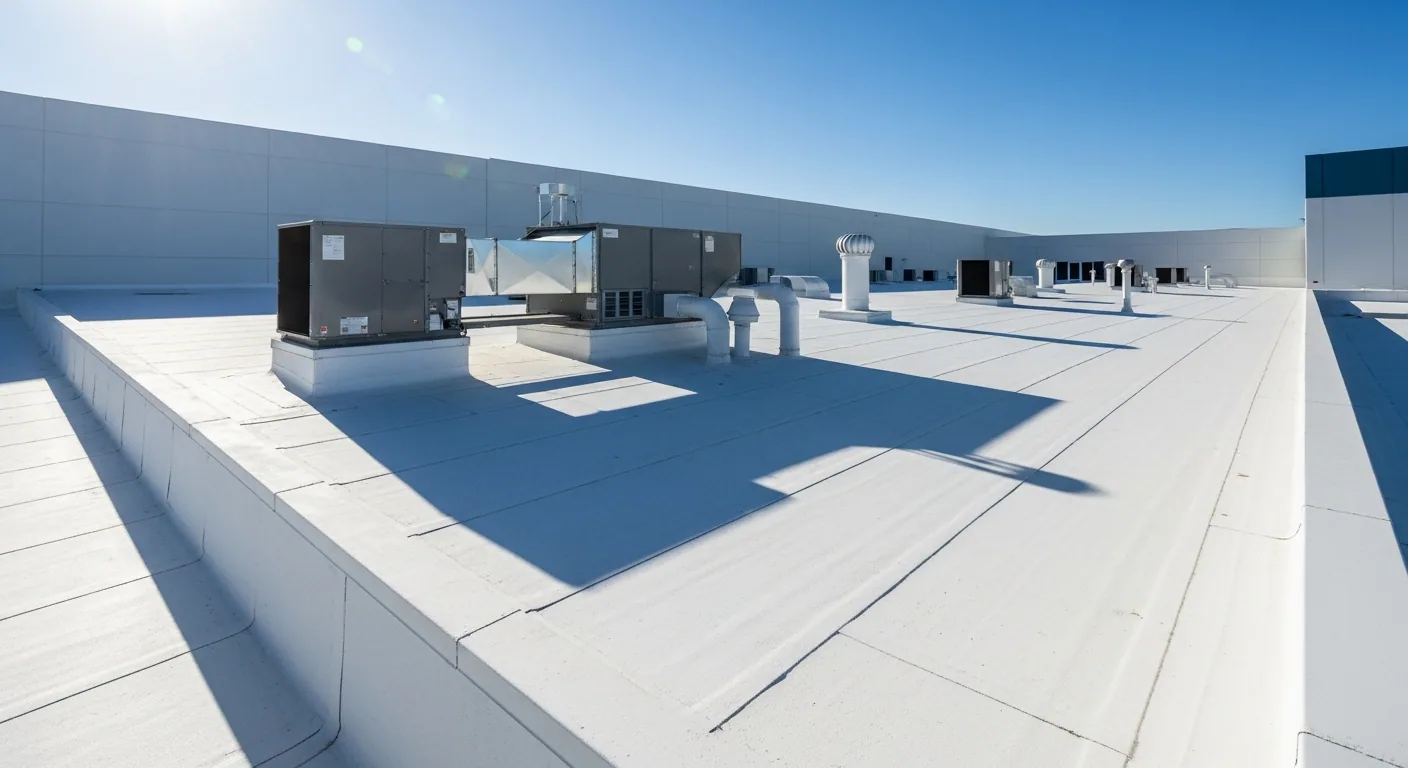
Commercial KEE Roofing
Talk to Commercial Roofing Westminster
Call 555-555-5555 or send a request and we will schedule a visit to look at the roof, explain what we find and lay out your options.