
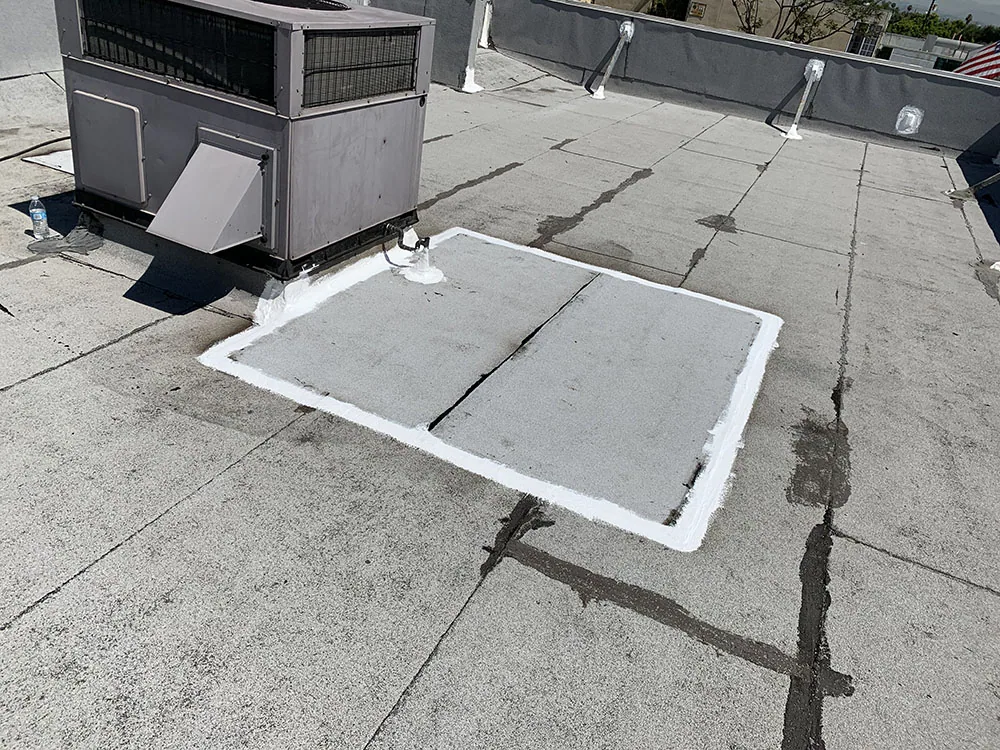
Commercial Roof Seam Failure Repair in Westminster, CO
Repair open seams on Westminster commercial roofs by identifying the membrane, testing the bond, and tracing any water or insulation damage.
Commercial Roof Seam Failure Repair
An open lap on a membrane roof needs a material check before anyone applies heat or adhesive. Identify the system, seam direction, prior patches, and nearby drainage. Then inspect the bond beyond the visible split. Water can travel beneath the field before reaching a ceiling, so the repair scope should follow the assembly rather than stop at the first visible gap.
Map the split before opening the seam
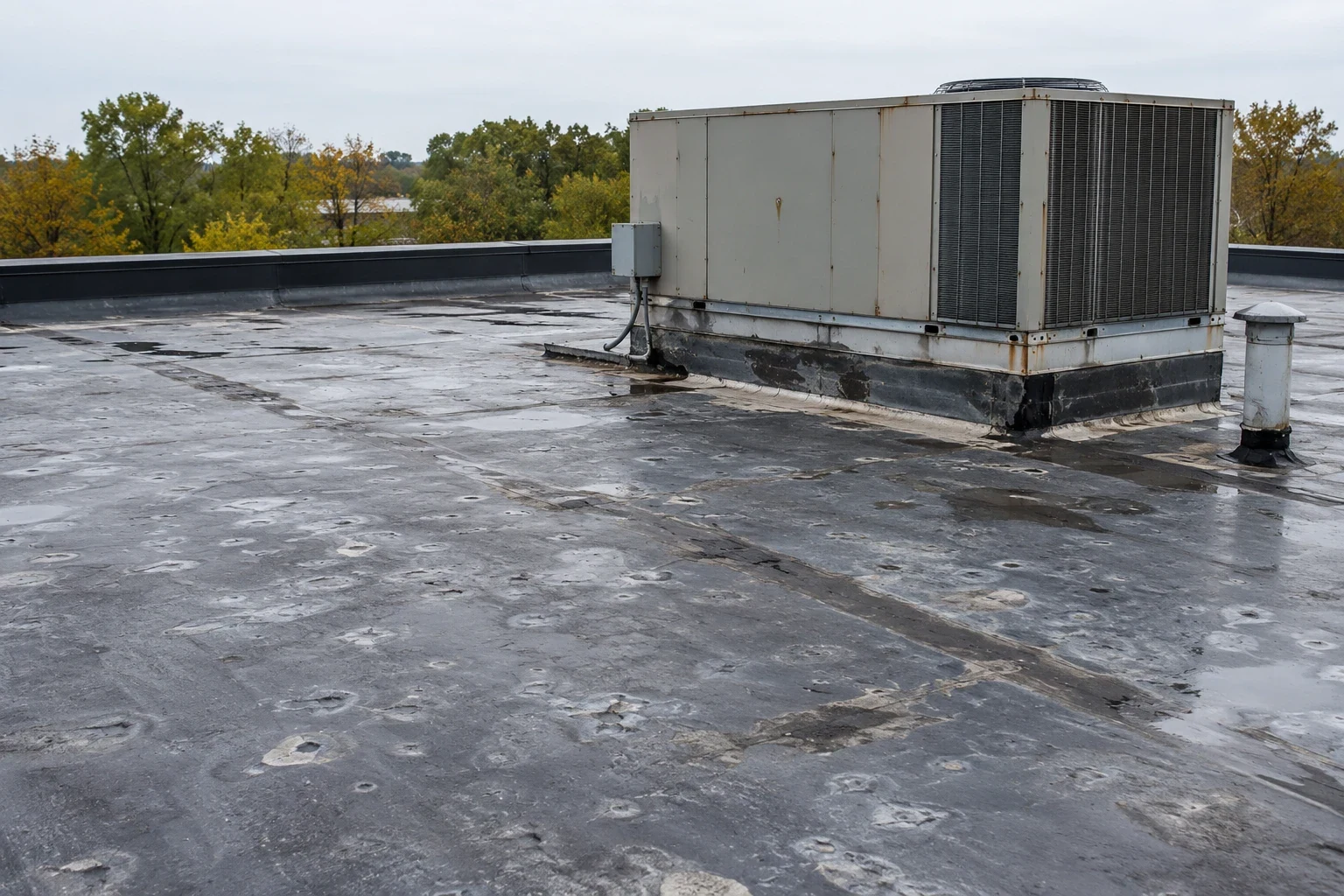
Mark the start and end of the separation and note whether it follows a welded lap, adhesive joint, cover strip, or patch edge. Check for dirt, moisture, wrinkles, fishmouths, movement, and previous repairs. Use a probe or other method appropriate to the system without enlarging the defect. Photograph the detail, roof zone, and surrounding membrane field.
Circle Point and Westminster Promenade sit in different parts of the U.S. 36 commercial area. The place name helps locate a property, but each roof's material and maintenance history must be confirmed on site. A Promenade area roof check should identify the exact building and seam inspected.
Look at the roof beneath the split if the work allows. Soft insulation, trapped moisture, or movement at a substrate joint can affect whether a surface repair will hold. If removal is needed, establish the test area, interior protection, and restoration plan before cutting into the assembly.
Match the repair to the membrane
TPO, PVC, KEE, and EPDM seams use different joining methods and repair materials. A patch that works on one assembly may not bond to another. Read available product records, identify the existing membrane where possible, and confirm compatibility before work. If the system is unclear, pause for records or a test rather than using a generic adhesive.
For a heat-welded membrane, the installer prepares the surface and completes a controlled weld that ties into sound material. For an adhesive or tape detail, remove contaminants and follow the system requirements. The finished repair should be probed or otherwise checked using a method suited to the material. Keep the work window dry enough for the chosen process, and protect the open seam if weather interrupts installation. Record ambient conditions if they affect the manufacturer's installation limits. A finished photograph should show continuous bond past both ends of the original split.
A TPO seam repair requires different prep from a rubber membrane joint. The report should name the system, repair length, patch material, and nearby field condition. If only part of the seam is sound, define the limit and state whether a wider test is needed. Surface condition matters: moisture, dust, old adhesive, coating, and temperature can change how a repair bonds. Test a small representative area when product history is unclear, and record the result before completing the full run. Do not extend a weld or patch over a transition until its compatibility has been confirmed.
Check the roof below and beyond the opening
A split lap can allow water under the field, but the interior stain may be offset. Compare the leak time with roof plans, low areas, drains, penetrations, and earlier work. Inspect adjacent seams and end laps if the path or moisture evidence extends beyond the initial opening. Record what is visible and what would require a test cut.
A commercial roof inspection can map the defect and note moisture or access limits. For active water, a leak response can protect the interior while the permanent seam scope is set. Keep temporary cover details separate from the completed weld or adhesive repair.
Do not close a wet or contaminated seam without addressing the substrate and drying requirements. Photograph any material removed, identify its condition, and note how the area was restored. A later review can then distinguish a new opening from the original failure.
Review seam movement after local weather
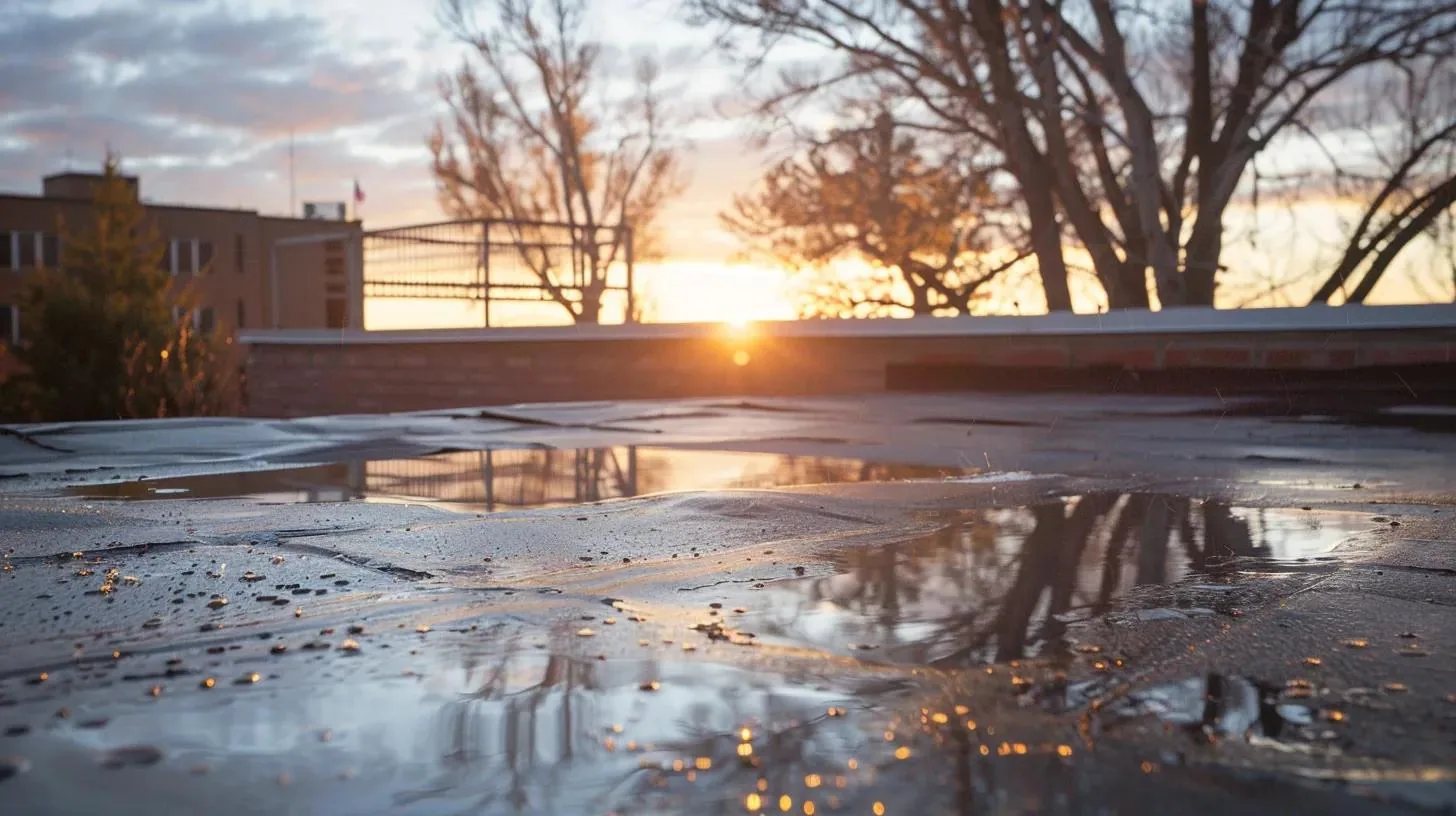
Wind, hail, temperature swings, and snowmelt can expose a weak lap. Wind, hail, temperature swings, and meltwater can expose a weak lap or detail. The inspection should document the seam itself and any related drainage condition. For seam-repair work, separate a visible opening from moisture that needs testing; keep photos attached to the correct roof-zone record. After melt, check low areas and drains near the seam for retained water or debris. The flow path may show whether water reaches the split or whether another detail needs attention.
A wind-related seam review can check edge exposure and fasteners separately. If the seam opened after foot traffic, equipment service, or another trade's work, record that timing and the associated activity without assigning a cause beyond the evidence.
Inspect an open commercial roof seam
Provide the roof plan, leak timing, membrane records, prior repair photos, and access information. We will identify the seam condition and a compatible repair boundary.
Define the repair length and limits
A localized seam can be repaired if the membrane and attachment on both sides remain suitable. The scope names preparation, weld or adhesive method, patch dimensions, weather window, and quality check. If the split continues under a cover strip or into wet insulation, test before extending the work.
Multiple open seams or broad bond failure may justify a larger repair area or renewal review. A roof repair proposal should measure each affected run, identify system-specific materials, and list concealed conditions separately. Include roof access, temporary dry-in, work hours, and any tenant protection required. If several seam lines fail in the same zone, map them individually and compare orientation, drainage, and prior service activity. A cluster can point to a broader assembly issue, but each measured failure should remain visible in the repair list. State whether the proposal includes removal of wet insulation or stops at the membrane surface.
Keep product data, test results, substrate notes, and installation photos with the closeout so the facility can compare future repair proposals against the same assembly. If seam replacement changes drainage direction or crosses a transition, show that condition on the roof plan and identify who approves the detail before installation.
Confirm the seam stays closed
After repair, photograph the completed lap from a wide view and a close angle. Record the material, method, dimensions, location, and date. Note adjacent seams that were inspected and any section left outside the approved access boundary.
At the next suitable inspection, compare the same seam with the closeout image. Check whether the repair edge remains bonded and whether water, debris, or movement appeared nearby. If the seam fails again, review the substrate, field condition, and earlier prep rather than repeating the same surface treatment.
Keep seam repair separate from flashing work unless the detail crosses a penetration or wall transition. Send both files to the maintenance contact for follow-up review. A flashing review can address that adjoining condition with its own material and attachment record.
A probe check should follow the seam without forcing a sound lap open. Mark loose, contaminated, or separated sections and note whether the substrate feels stable. For heat-welded material, test a compatible repair area before proceeding; for adhesive-based seams, confirm the repair method fits that assembly.
Commercial Roofing Questions
What makes a membrane seam open?
Movement, poor bonding, surface contamination, incompatible repair material, or a disturbed detail can contribute. The field check identifies the condition and what testing is needed.
Can you repair a seam without replacing the membrane?
A local repair may work if the membrane and attachment around the split remain sound. Wider bond loss or wet insulation can change the scope.
Can any roofing adhesive close a split lap?
No. The repair method must fit the membrane and existing joint. Identify the assembly and follow its compatible preparation and attachment method.
How do you document a seam repair?
Record the roof zone, length, system, repair material, photos, testing, access limits, and any adjacent area that was not inspected.
Will a ceiling stain show where the seam failed?
Not always. Water can travel under a roof assembly before appearing indoors, so compare the room report with the roof layout and nearby details.
Related Roofing Work
Westminster Promenade
Read more
Commercial TPO Roofing
Read more
Commercial EPDM Roofing
Read more
Commercial Roof Inspection
Read more

More Roof Damage Repair in Westminster
See the rest of our roof damage repair for Westminster commercial buildings, or call 555-555-5555 to talk through your roof.
Commercial Roof Seam Failure Repair
Talk to Commercial Roofing Westminster
Call 555-555-5555 or send a request and we will schedule a visit to look at the roof, explain what we find and lay out your options.