
Storm Damage Roof Repair in Westminster, CO
Assess storm-related roof damage in Westminster with photo records, safe stabilization, a defined repair area, and findings separated from older defects.
Storm Damage Roof Repair
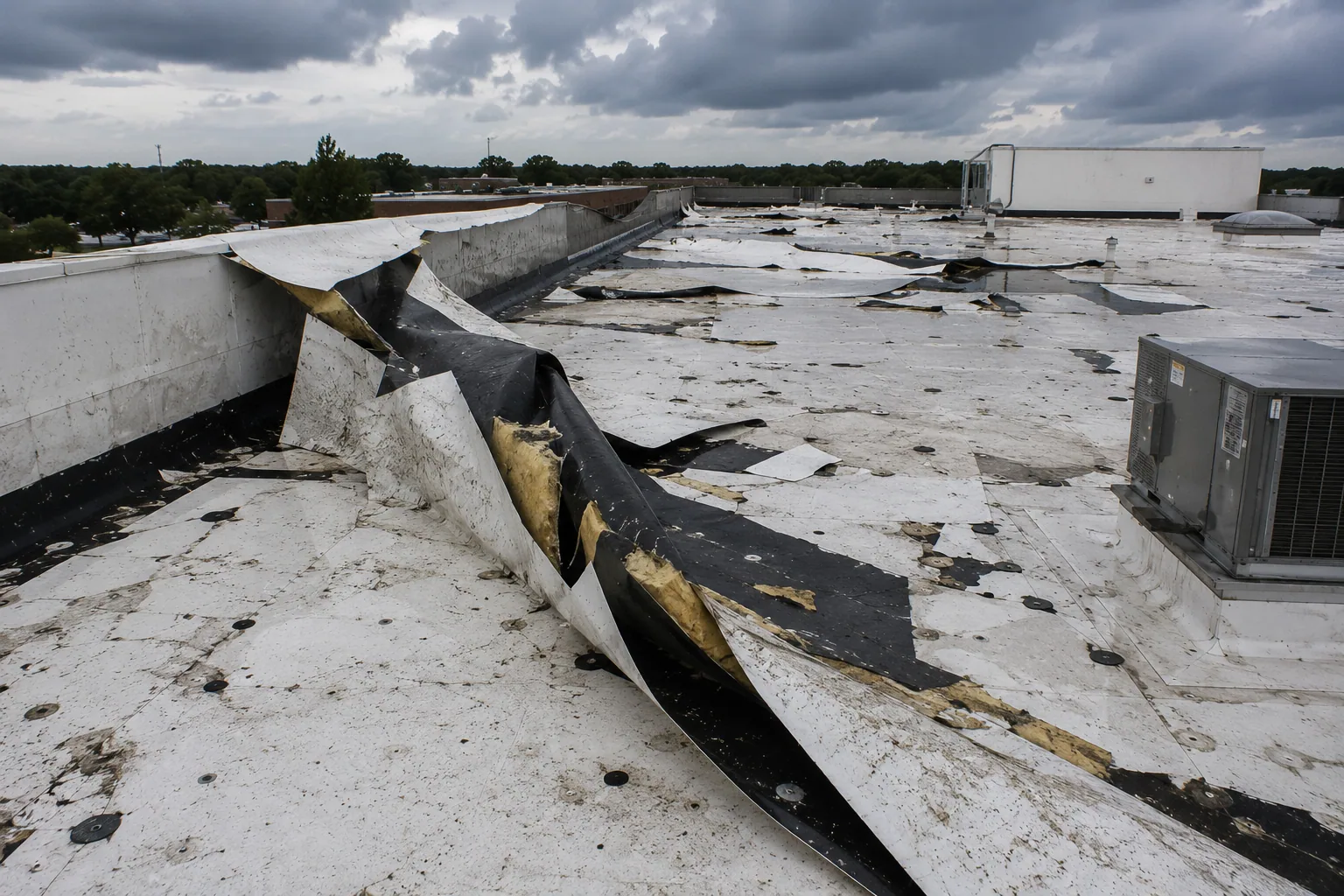
Hail can mark a rooftop unit or split a membrane, while wind may pull on a perimeter detail without leaving damage in the center field. We inspect the Westminster building and separate those conditions before setting a repair limit. On May 30, 2024, hail reports came from near the city, and the broader northern Denver metro saw roof damage during that storm. For the property under review, the roof surface and details establish the repair scope. Our storm inspection documents visible marks, edge movement, punctures, flashing, and drainage at the building under review.
Record the condition before cleanup
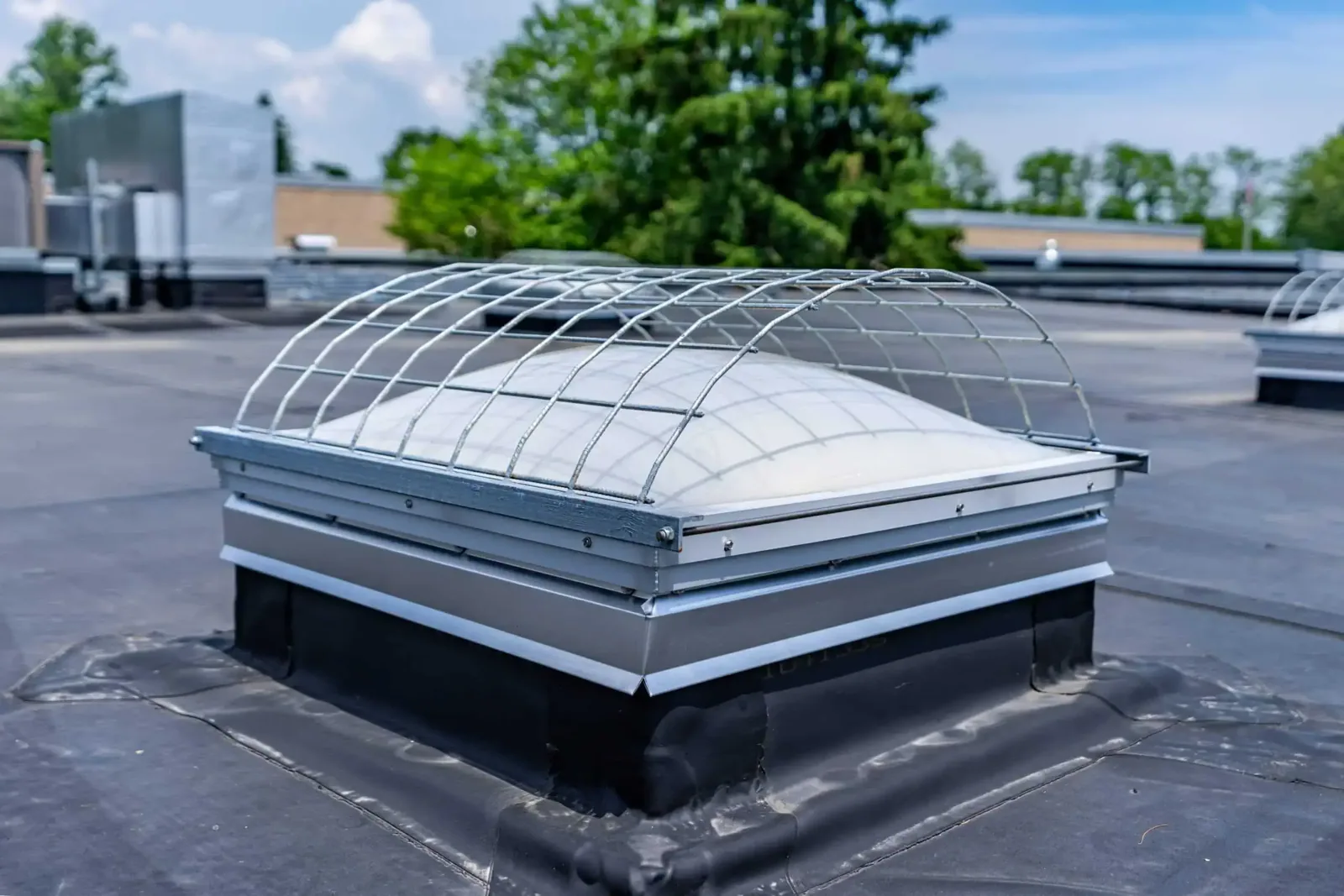
Before debris is moved or temporary cover is placed, we photograph the reported roof area and nearby details when safe. Images show the surface with enough context to identify the section, curb, skylight, vent, edge, or drain. We note standing water, loose metal, torn membrane, displaced accessories, broken glazing, and debris that may have struck the roof. Where hail marks appear, we map their distribution by section, compare metal and membrane surfaces separately, and note damage to rooftop accessories. A cluster of marks directs the next check but does not prove concealed moisture. A close-up without a location reference may not help with a later repair or claim review.
We compare the reported date and event with prior repair tickets, maintenance photos, and any earlier damage. A puncture from a fallen branch is different from a seam that had separated before the storm. If the roof is wet or unsafe, the crew waits for an appropriate access window and records the limit. For a building near Westmoor Technology Park, as elsewhere, actual access, roof plan, and facility rules determine the inspection route.
Compare the reported event date with maintenance photos and repair tickets to identify which visible conditions may be new. We label observed damage, unrelated maintenance items, and uncertain conditions separately. If a moisture survey or test opening could clarify what lies beneath, we identify its purpose and limits before recommending it.
Check the details storms load first
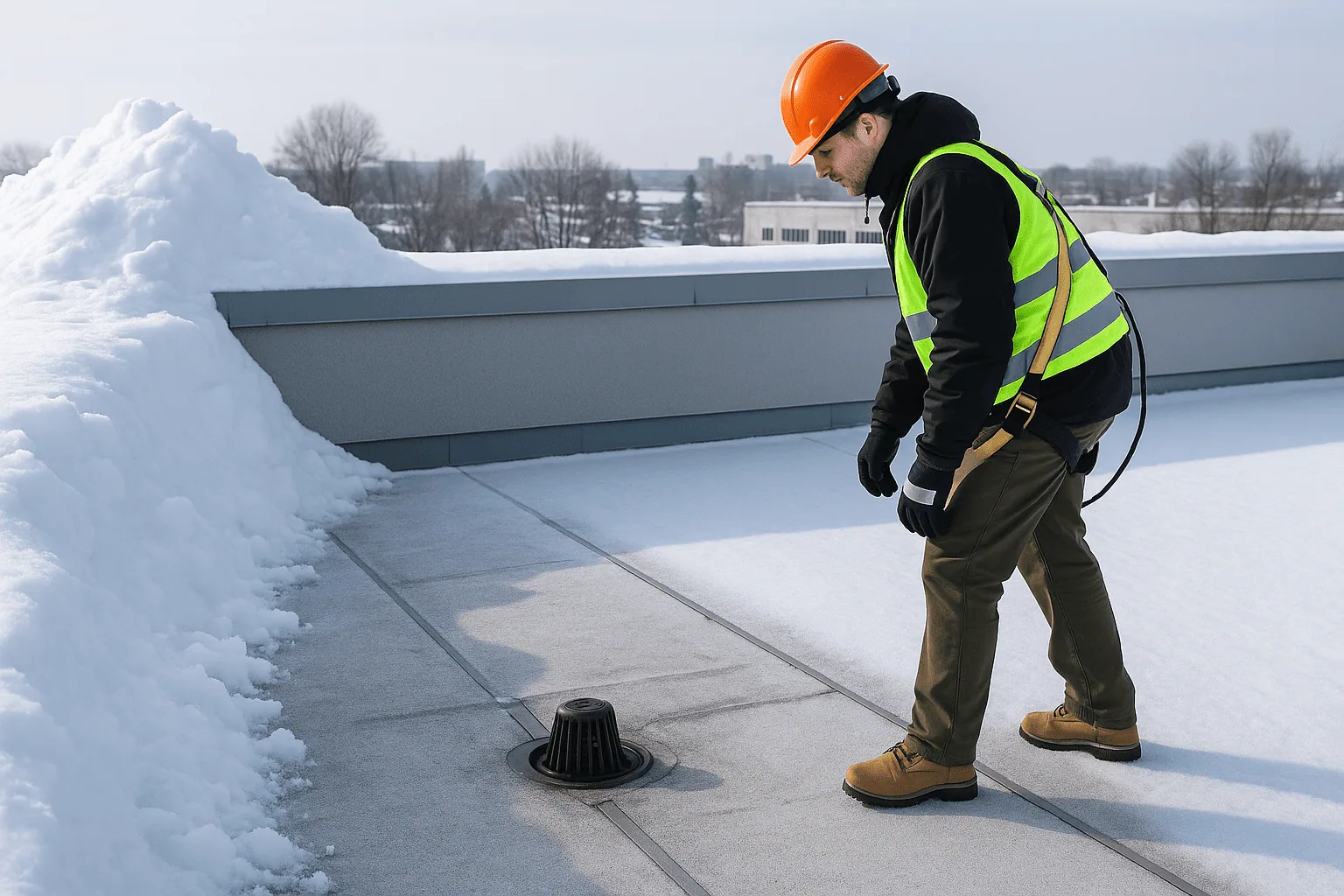
Wind can stress edge metal, coping joints, sheet terminations, and equipment attachments. Hail can bruise coatings, dent metal, or puncture a membrane where impact is direct. Heavy rain can reveal an obstructed drain or weak transition. Snowmelt can expose a slow outlet after accumulation shifts. The walk checks these components in relation to the building instead of applying one storm checklist to every property.
At a low-slope section, we inspect seams, patches, curbs, penetrations, drain bowls, and overflow openings. At the perimeter, we check fasteners, metal joints, and securement. If the roof includes metal panels, we note dents separately from displaced seams or open fasteners. A perimeter repair may be needed even when the central membrane remains intact. Water near a drain can require a drain inspection instead of a hail patch.
The north Denver region can experience hail, tornadoes, wind, flooding, winter weather, heat, and cold. The inspection records which of those hazards left observable effects on this building. The repair recommendation follows marks and failures found at the property. A wind-focused review checks displacement and attachment; a hail review records impact marks and nearby details.
Protect the opening while the scope is defined
If water is active, we first determine whether safe roof access is possible and whether temporary cover can be secured. The crew protects the exposed area, records the temporary measure, and identifies what permanent work remains. Interior protection is coordinated with the facility contact. The closeout labels a tarp, sealant bead, or temporary patch as temporary protection and lists the permanent repair still required.
High wind, lightning, ice, unstable metal, or a wet surface can make an immediate roof walk unsafe. If access has to wait, we state why and schedule the next safe check. A damaged skylight or open curb may also require a temporary interior barrier. Emergency work may take place at any hour, including weekends and holidays, when the site can authorize entry. A rapid response visit records stabilization separately from permanent repair.
After the roof is accessible, we inspect the full path around the opening, not just the most visible mark. Water may travel from an edge or penetration before appearing inside. A leak trace can relate an interior report to the roof details. The record names any section not checked and any test needed before a final repair boundary is set.
Choose repair or broader work from evidence
An isolated puncture with stable surrounding membrane can support a compatible patch. A lifted termination may require reconstruction of flashing or edge metal. Repeated failures, widespread moisture, or loose attachment can require more testing or a broader assembly scope. We describe the conditions that support each option and avoid treating a single impact mark as a reason to replace an entire roof.
The repair proposal identifies affected sections, materials, surface preparation, temporary work, access, testing, and excluded areas. If insurance documentation is requested, the photo set and scope should separate event-related observations from preexisting maintenance needs. A claim documentation service can organize the inspection record without deciding coverage. If findings support removal, the replacement scope identifies tear-off, substrate review, and daily dry-in boundaries.
Westminster's commercial districts include the North I-25 corridor and U.S. 36/Church Ranch Road node. Retail, lodging, offices, and industrial uses shape access and operating needs around the project. The property manager confirms work windows, tenant notices, loading, air intakes, and protected areas. The property contact sets operating windows; roof findings determine the repair method.
Document the roof after weather damage
Tell us what weather event prompted the call, which roof area is affected, and how the building can be accessed. Send the address, prior repair records, and any interior or roof photographs. We will document the observed condition and repair boundary.
Keep storm findings distinct from future work
The closeout file includes event date as reported, roof section, observed condition, photographs, temporary protection, completed repair, and any unresolved test or maintenance item. Each image carries a location reference. We note whether the membrane, flashing, curb, metal edge, or drain was repaired and what adjacent components were checked. If work stopped at an authorized boundary, the record states what remains outside the scope.
A property near the North I-25 corridor can have multiple buildings and tenants. Keep each structure's storm findings attached to its own roof map. Future service staff can compare photos with the baseline and determine whether a new issue appeared or an earlier repair moved. Each image keeps its original date and direction so a follow-up can compare the same surface and nearby details rather than rely on memory.
Send the Westminster address, roof plan, reported event and date, interior leak location, repair history, access contact, and any photos already taken. Tell us which building must remain operational. We will inspect safely, document observed damage, and explain the temporary or permanent work supported by the findings.
Commercial Roofing Questions
What does a hail report tell me about my roof?
A report sets timing for a roof walk. We document impact evidence, openings, and affected details at your property before assigning repair work.
Can you secure the roof before a full damage review?
Yes, when access and conditions are safe. We document the temporary cover or dry-in and identify the permanent repair or test still needed.
How do you separate old deterioration from storm damage?
We compare current photos with prior repairs, maintenance records, and the reported event. The scope lists storm-related observations separately from other conditions.
Will a storm inspection tell me whether insurance will pay?
We document roof conditions and repair scope. The insurer and policy process determine coverage. Our report documents roof conditions and the repair scope for that review.
What should I provide before the inspection?
Send the address, event date, affected rooms, roof plan, prior photos and repair history, and the site contact. Identify access limits and operating requirements.
Related Roofing Work
Commercial Roof Inspection
Read more
Westmoor Technology Park
Read more
Commercial Roof Edge Metal, Coping and Gutters
Read more
Commercial Roof Drains and Scuppers
Read more

More Commercial Roofing Services in Westminster
See the rest of our commercial roofing services for Westminster commercial buildings, or call 555-555-5555 to talk through your roof.
Storm Damage Roof Repair
Talk to Commercial Roofing Westminster
Call 555-555-5555 or send a request and we will schedule a visit to look at the roof, explain what we find and lay out your options.