
Commercial Roof Drains and Scuppers in Westminster, CO
Inspect Westminster roof drains, scuppers, overflows, and ponding with elevation checks, membrane details, repair limits, and discharge records.
Commercial Roof Drains and Scuppers
Slow drainage after snowmelt calls for a roof-level check, starting at the low area and ending at the discharge point. The bowl is only one part of that path. We trace the strainer, membrane connection, overflow, and visible outlet before recommending cleaning or repair. Snow varies across the Denver metro, and intense storms can test Westminster roof drainage. A roof-level inspection identifies whether an outlet is restricted, damaged, or draining as intended. A roof walk records actual elevations, debris, seams, and water marks at this building.
Trace each outlet to discharge
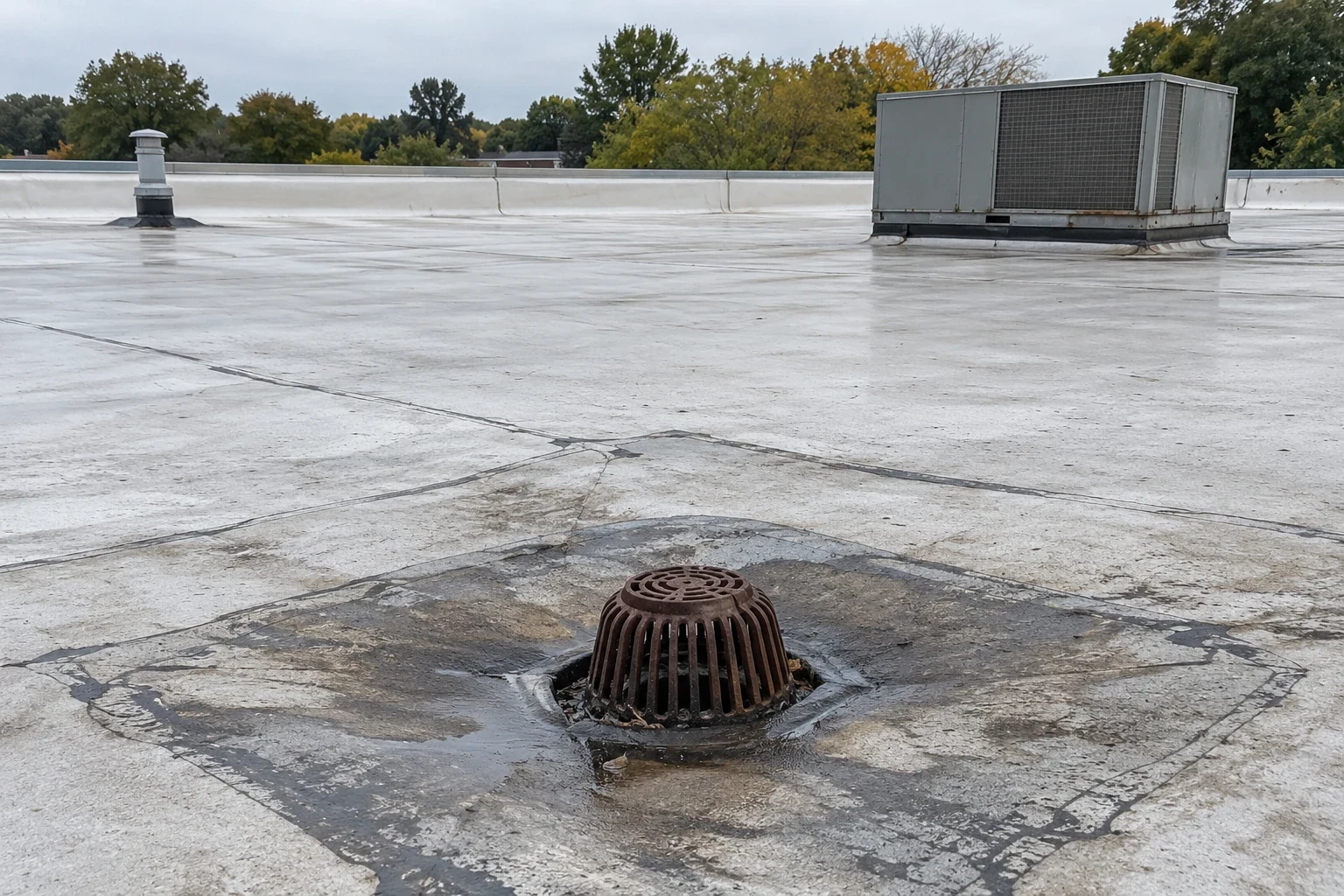
We locate primary drains, scuppers, and overflows on the roof plan, then check whether water can reach each opening. Debris, a displaced strainer, a high bowl, a damaged clamping ring, or membrane pulled away from the drain can change the path. We look at the surface around the outlet and note standing water, sediment lines, and nearby seams. A clear bowl does not prove that a downstream line is clear, so plumbing questions are documented separately.
At a scupper, we inspect the opening, metal sleeve, membrane termination, and visible exterior discharge. An overflow should sit at the intended elevation and remain unobstructed. If water marks show discharge over an edge, we record where it exits and whether that path reaches a gutter or creates a wall condition. A gutter and edge review may be needed when outlets connect to perimeter metal.
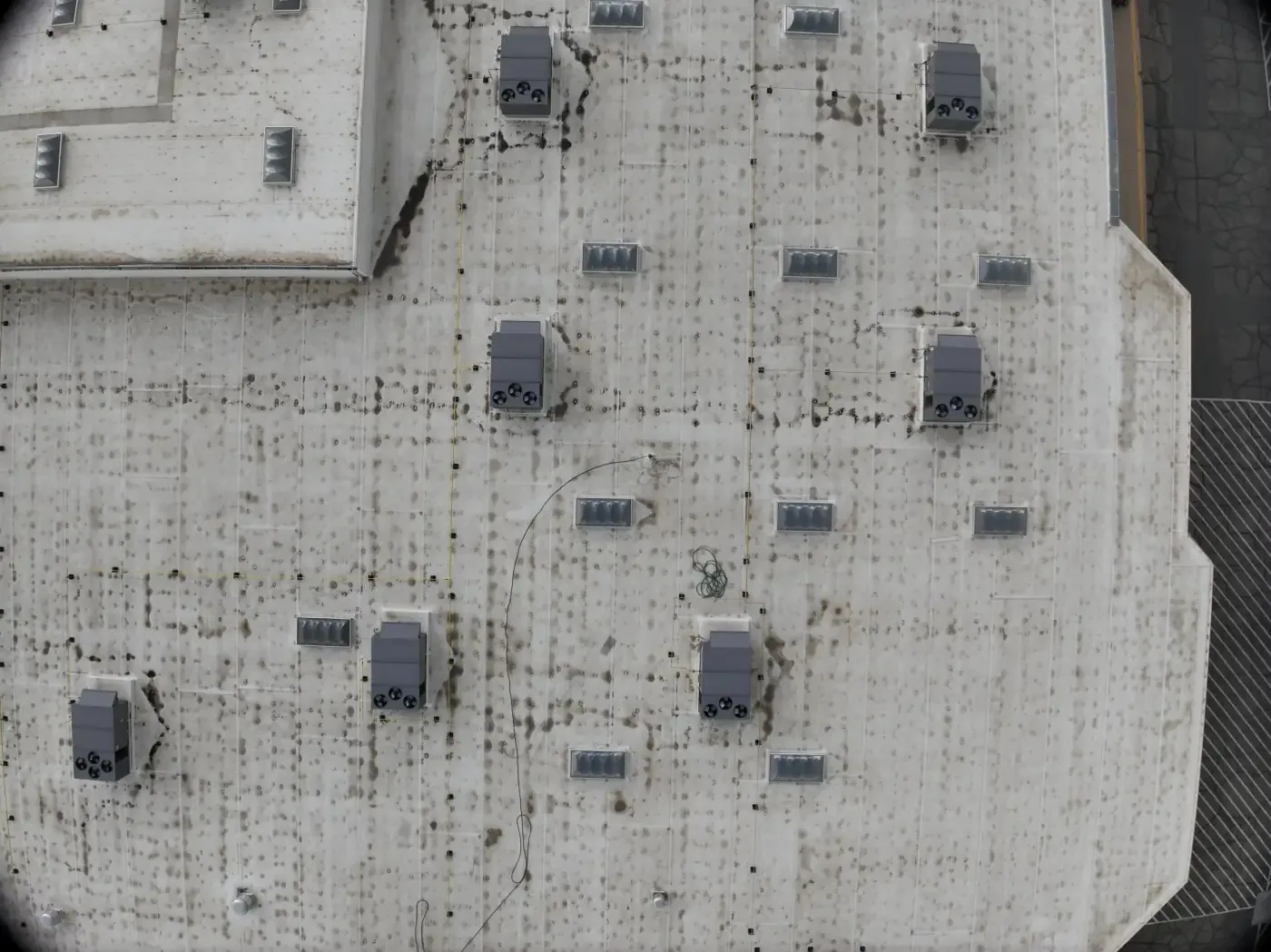
For a broad building near the 120th Avenue corridor, multiple roof sections may drain in different directions. We map outlets by section and avoid treating a blocked bowl on one wing as a site-wide drainage failure. The roof plan and field elevations establish the area covered in the report.
Separate retained water from a leak source
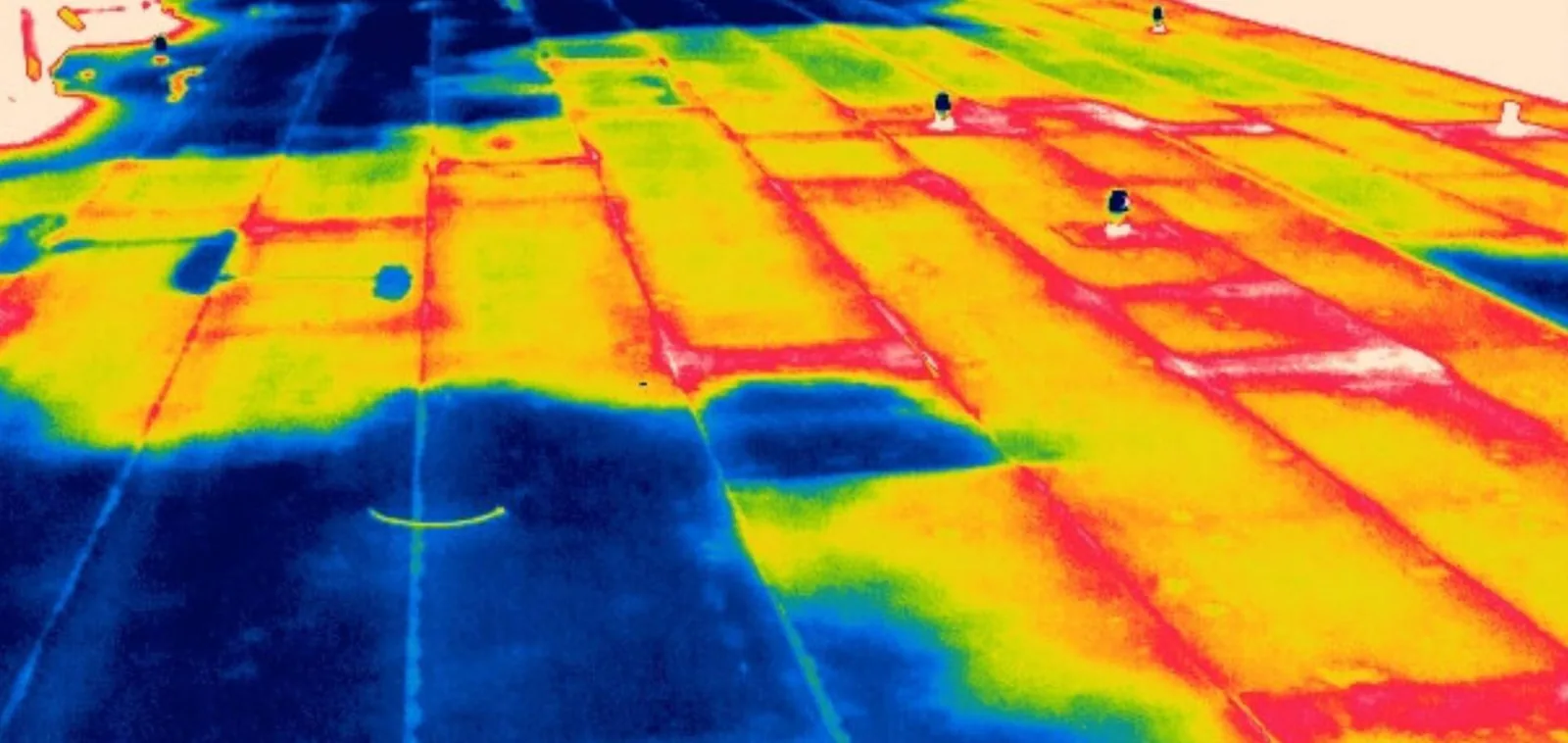
Water at a low point can reflect a blocked outlet, settled insulation, poor slope, or structural movement. The roof surface and drain height help distinguish these conditions. We measure or compare elevations where useful, check how far water extends, and photograph the boundary. If a leak is reported nearby, we also inspect seams, curbs, flashing, and penetrations. Ponding can be a contributing condition without being the entry point.
A drain repair may involve clearing debris, resetting a strainer, rebuilding a membrane connection, replacing a bowl, or correcting a roof transition. A slope or structural correction requires a different scope. We state which work is included and whether any plumbing or design review remains. A ponding-water assessment can document low areas and associated membrane conditions.
Snowmelt can reveal slow drainage after accumulation shifts. We check the actual outlet and low point rather than apply a regional snow total to the roof. If ice blocks safe access, the inspection waits for safe conditions. Photographs preserve what was visible and the date of observation, while a later check can confirm whether water cleared under ordinary conditions. We also note nearby roof traffic or stored material if it changes safe access to the outlet.
Check the membrane connection at the bowl
The drain opening is a roof detail. We look for membrane continuity, compatible flashing, a secure clamping connection, intact fasteners, and a strainer that can be removed for service. If the bowl is lower than the finished roof surface, the condition may hold water. If a new layer has been added, its thickness can change the relationship between the membrane and outlet. The inspection notes those heights before a recover or replacement is considered.
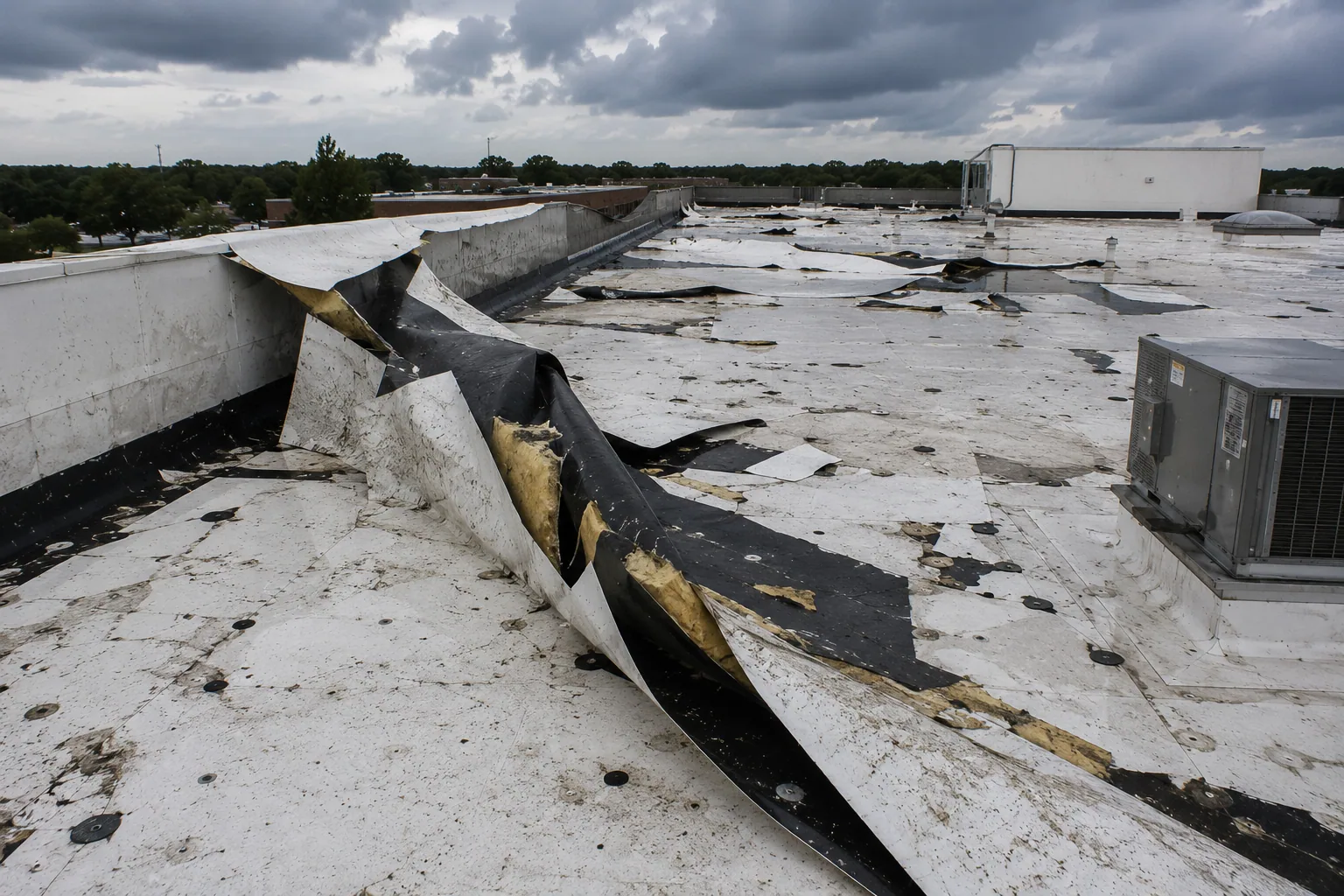
For a membrane system, repair preparation must match the material. Thermoplastic, EPDM, modified bitumen, and coated roofs use different seam and flashing methods. Sealant alone may not restore a failed connection. A repair scope identifies the bowl, membrane, and surrounding section. If a test opening could reveal wet insulation or deck, we explain its location and what it would confirm.
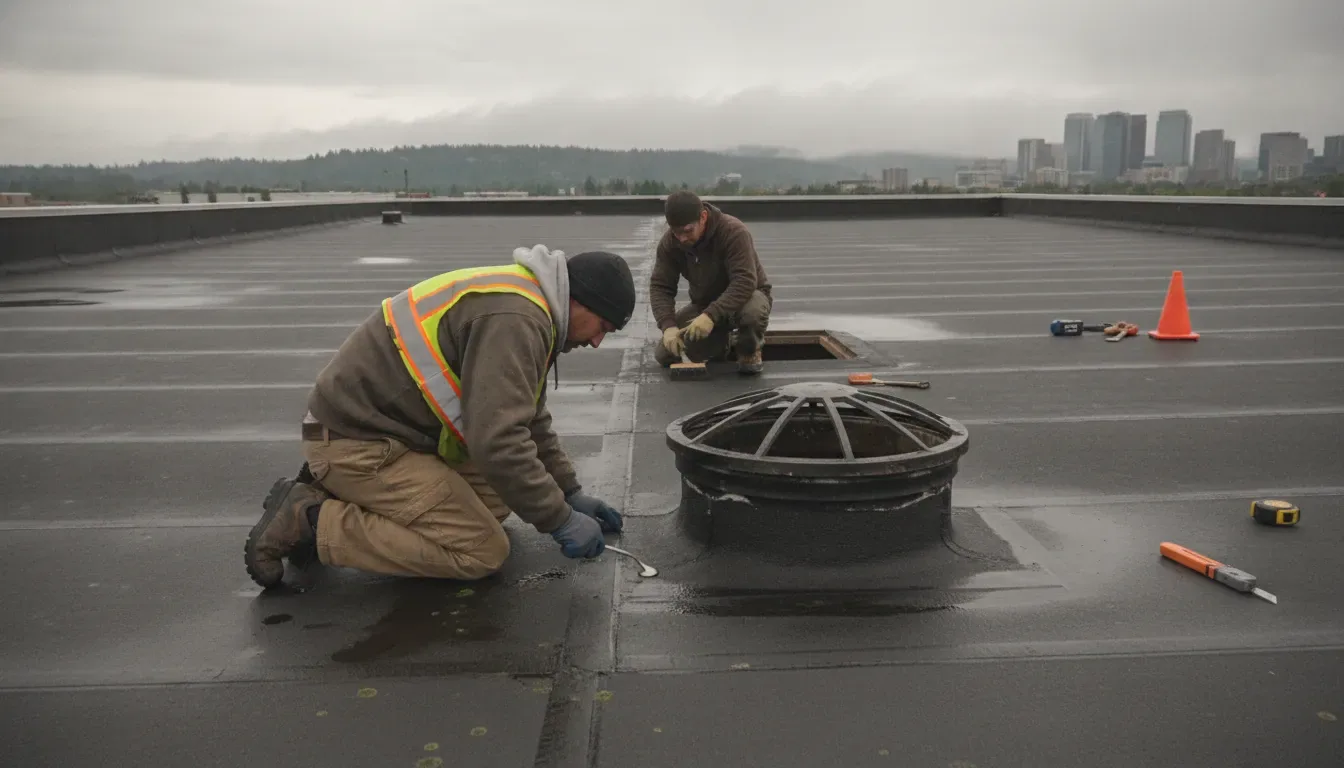
After repair, the crew checks the finished connection and reinstalls the strainer. We photograph the bowl, adjacent membrane, and nearby overflow. If the outlet remains restricted for reasons outside the roofing scope, we identify that limit rather than mark the entire drainage path clear.
Keep strainers and overflow routes serviceable
Maintenance removes leaves, packaging, grit, and other debris from approved roof areas. It also checks that strainers sit correctly and overflows remain open. Cleaning is recorded separately from repair. A cracked bowl, loose membrane, or high drain needs a scoped correction; repeated cleaning will not fix a damaged connection. The log gives each outlet a building and roof-section identifier.
Properties in Westminster's North I-25 and U.S. 36/Church Ranch commercial areas include retail, lodging, and other uses, but the outlet layout varies by building. The manager confirms roof access and tenant schedules. A Promenade property receives its own drain map, as does an office or industrial site near Westmoor Technology Park.
When debris or water reappears between scheduled visits, record the date, weather, outlet location, and interior reports. That makes a follow-up more useful than a note that says only “drain backed up.” A maintenance plan can track recurring outlets and note which ones need repair rather than routine clearing.
Follow water from low point to outlet
Tell us what storm, snowmelt, or leak prompted the call, which roof area is affected, and how the roof can be accessed. Send the plan and outlet history. We will inspect the drain, overflow, and membrane connection and document the next step.
Record the outlet and next action
The drain record identifies the outlet type, roof section, strainer condition, membrane connection, visible slope, overflow route, and discharge point inspected. Photos show the bowl and surrounding area. We note whether debris was removed, a repair was performed, or a test remains pending. If the water path extends into plumbing or a buried leader, that boundary is recorded for coordination.
For a property portfolio in Westminster, map drainage by building and elevation. North Park Plaza, Westminster Crossings, and other commercial centers are separate properties, each with its own roof configuration. A field map establishes each outlet's path, roof section, and discharge point. A condition report can keep these maps with photos and follow-up results.
A useful record also identifies the roof area checked, who provided access, and whether the observation followed rain, snowmelt, or routine maintenance. That timing gives a later visit a fair comparison point. A later visit can compare drainage under similar weather and roof conditions. A follow-up can confirm that a cleared outlet drains under the conditions observed on that day.
To request an inspection, send the Westminster address, roof plan, affected area, recent leak or ponding history, access contact, and preferred service window. Tell us whether water remains after precipitation or appears indoors. We will map the outlet, inspect its connection, and identify maintenance, repair, or further testing supported by the roof.
Commercial Roofing Questions
Can drain cleaning stop an active roof leak?
It can help when debris blocks the outlet, but a leak may also involve the membrane connection, seam, curb, or another detail. We inspect the surrounding roof before defining work.
What is the difference between a drain and an overflow?
The primary drain carries routine water from the roof. An overflow provides a separate discharge path when water rises above its intended level. We check both openings and their routes.
Why does water stay around a roof drain?
A blocked strainer, high bowl, low roof area, settlement, or slope condition can hold water. We inspect elevations and the outlet rather than assume one cause.
Do you inspect drain lines below the roof?
We review the roof-side bowl and visible discharge. Buried leaders and plumbing lines may require a separate plumbing inspection, which we identify in the report.
What information helps plan a drain visit?
Send the roof map, affected outlet, building address, access contact, recent water reports, and any service history. Photos help us locate the section before arrival.
Related Roofing Work
Commercial Roof Edge Metal, Coping and Gutters
Read more
West 120th Avenue Corridor
Read more
Commercial Ponding Water Roof Repair
Read more
Commercial Roof Repair
Read more
More Commercial Roofing Services in Westminster
See the rest of our commercial roofing services for Westminster commercial buildings, or call 555-555-5555 to talk through your roof.
Commercial Roof Drains and Scuppers
Talk to Commercial Roofing Westminster
Call 555-555-5555 or send a request and we will schedule a visit to look at the roof, explain what we find and lay out your options.