

Commercial Roof Replacement in Westminster, CO
Replace a commercial roof in Westminster with a defined tear-off limit, dry-in sequence, substrate review, and records for each completed roof area.
Commercial Roof Replacement
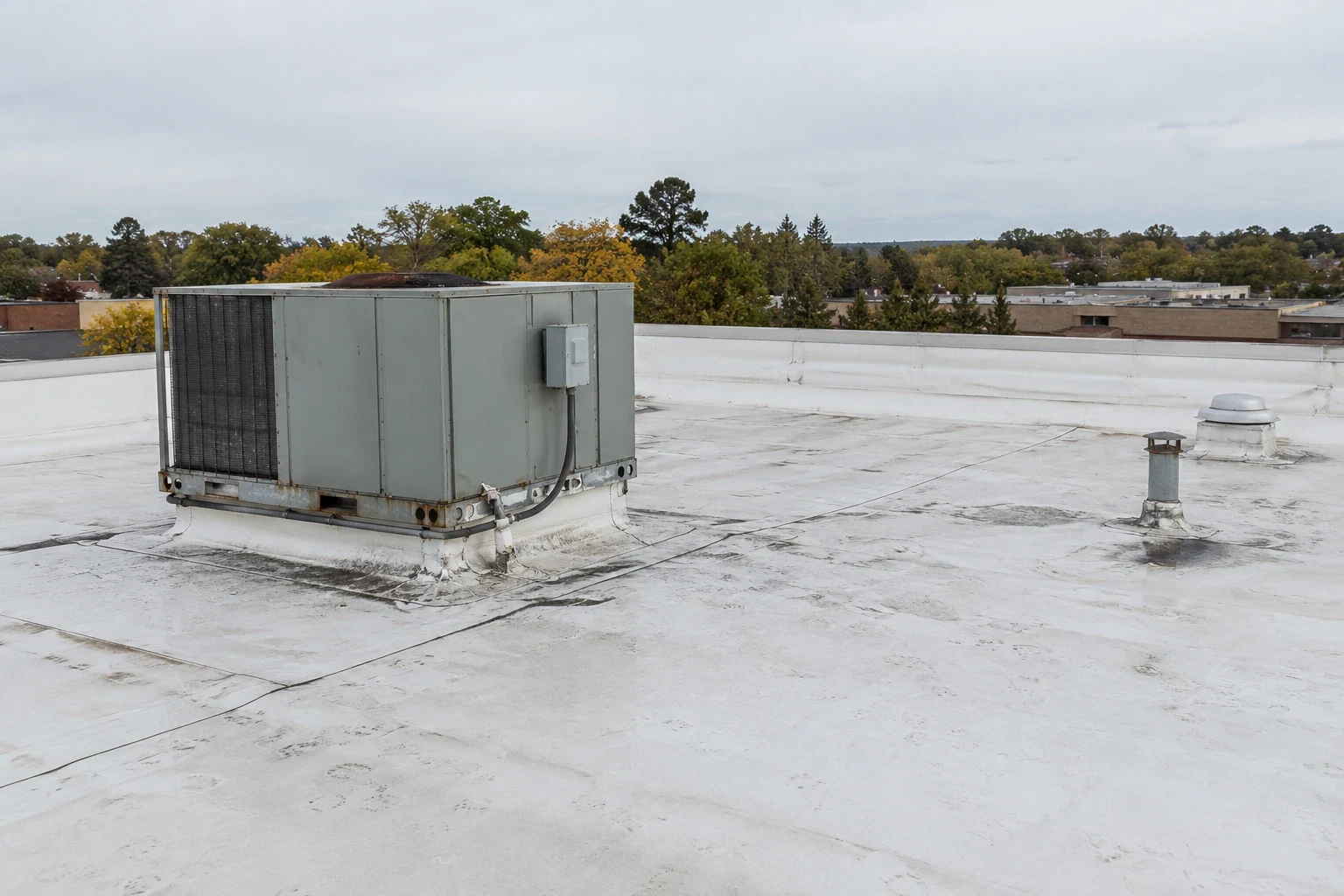
After hail moves through the north metro, a replacement decision starts with the roof, not the storm map. We inspect the membrane field, metal edges, flashings, drains, and equipment curbs at the actual Westminster building. After a hail event, the replacement decision comes from the building. The walk records impact marks, open seams, wet insulation, and areas that remain sound before we define removal and replacement limits. A clear commercial roof inspection gives the owner evidence for comparing repair, recover, and tear-off options.
Separate observed damage from roof age
A roof that has reached an age threshold is not automatically ready for replacement. We inspect the installed assembly and note what the field shows: membrane splits, loose attachment, failed flashing, recurring ponding, exposed insulation, or deck movement. We compare those findings with leak records and earlier repairs. One isolated opening may support a focused repair. Repeated failures across sections, confirmed moisture, or an unstable substrate can support a larger project. A hail damage review can record impact evidence and distinguish it from weathering or an older repair.
Westminster's May 2024 storm history makes a careful post-event walk reasonable, but the damage boundary comes from the building. We photograph each mark with surrounding membrane and nearby details, then flag areas for closer testing if the surface alone cannot show what lies beneath. If a test opening is useful, the report identifies its location and layers.
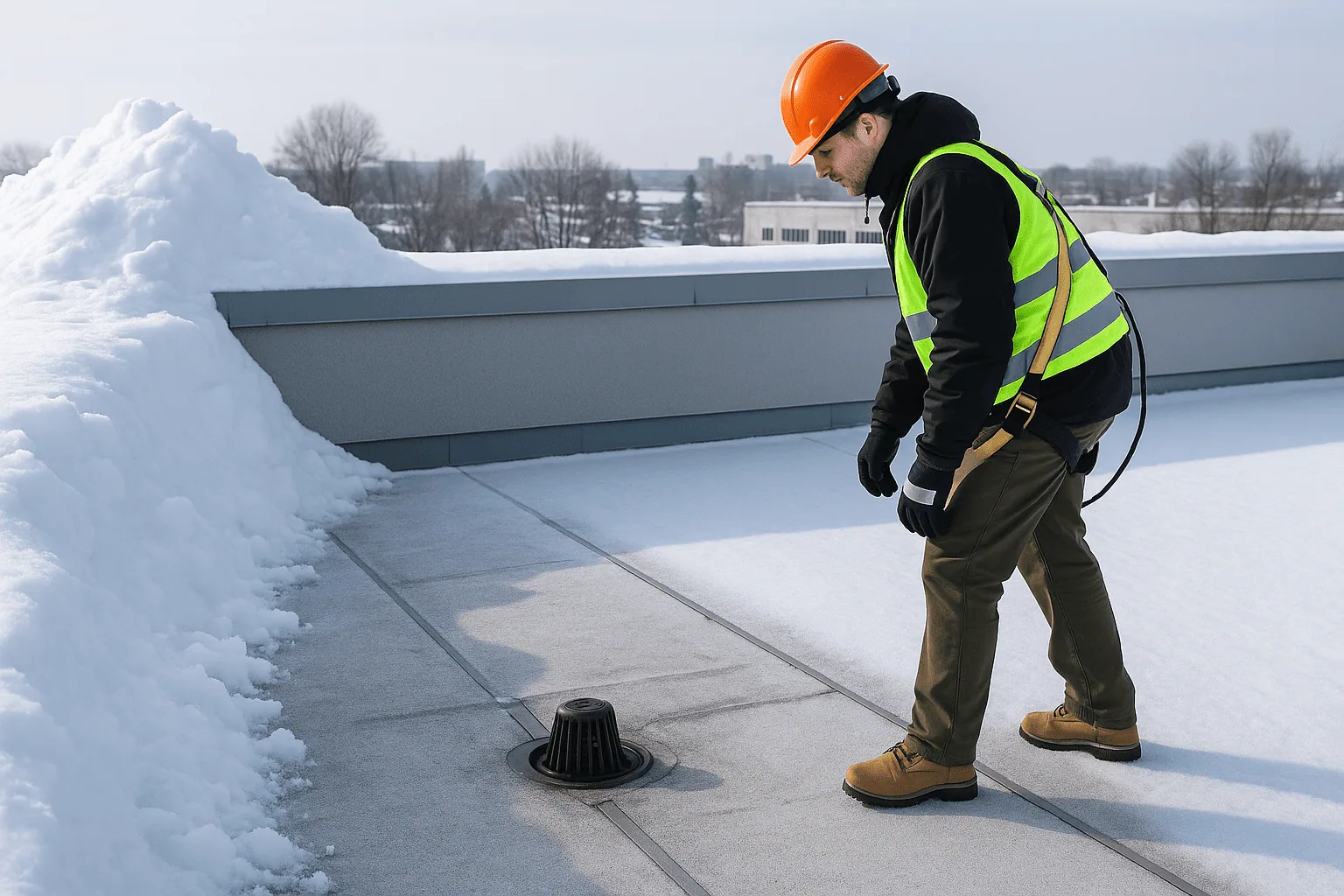
Before accounting for meltwater, check the actual drain bowls, overflow paths, low areas, and curb heights on the Westminster building. Those observations matter when a new assembly changes thickness or when snowmelt must reach an outlet.
Define what comes off
A replacement scope should state the roof sections included, the layers expected, the tear-off depth, and how the crew will protect the building each day. We review plans and prior records, then compare them with test openings where assembly conditions are uncertain. The proposal identifies removal of membrane, insulation, cover board, flashing, edge metal, and accessories as separate work where applicable. It also states how concealed deck deterioration will be documented and priced before the affected area is rebuilt.
Westminster enforces the 2021 International Codes, including the 2021 International Building Code and Energy Conservation Code, effective June 1, 2024. Code review belongs in the project scope because insulation, attachment, edge conditions, drainage, and other assembly details may need to satisfy current requirements. We confirm the requirements that apply to the specific project with the design and permitting team.
At Westmoor Technology Park, an office and industrial setting sits near the U.S. 36 corridor and Jefferson County Airport. Along the North I-25 corridor, shopping and distribution properties have different service routes and daily operations. A Westmoor roof project still begins with that property’s plan, access route, and observed conditions.
Keep a dry-in line each shift
Before tear-off begins, we agree on access, staging, crane or hoist locations, debris removal, tenant notices, and the daily closure point. The work plan divides the roof into areas small enough to remove, inspect, rebuild, and make watertight within the planned window. When a building remains occupied, the property contact identifies entrances, air intakes, loading routes, sensitive equipment, and rooms that need added protection. A phased occupied-building plan can set those boundaries before materials arrive.
The crew removes only the authorized section, checks the deck and insulation, and records concealed conditions before covering them. If the substrate differs from the approved scope, work pauses at a secure limit while the owner reviews the evidence and directs the next step. Temporary dry-in protects the open area until the permanent system is ready. Wind, precipitation, wet materials, access restrictions, and material availability can change the daily sequence, so the schedule includes practical stop points rather than assuming every section proceeds identically.
Projects near Church Ranch Road and U.S. 36 may involve hotel, retail, recreation, and office activity in the surrounding area. That context can affect deliveries and pedestrian controls; the building manager confirms the actual entrance and staging rules. We record the route used and any temporary restriction. An updated roof condition report can preserve the approved section map, preconstruction findings, and field changes for the owner’s records.
Compare the new assembly before award
Replacement is not the only response to a roof concern. When the existing layers are dry enough, stable, compatible, and within project requirements, a recover may be an option. A localized defect with sound surrounding material may call for a repair instead. We compare each option against test results, attachment, moisture, deck, drainage, curb height, perimeter details, and the number of existing layers. A roof recover assessment states which conditions support an overlay and which need further confirmation.
The new assembly specification should identify membrane or metal system, insulation and cover board, attachment method, perimeter enhancements, flashing details, and test requirements. Cost changes with removal quantity, deck repair, roof access, staging, disposal, insulation, edge work, equipment coordination, and tenant phasing. The proposal separates known work from allowances for concealed conditions. It also identifies areas excluded from the project so the owner does not read a section-based replacement as a complete reroof of every structure on the parcel.
If the project calls for a membrane, we can compare TPO roofing and EPDM roofing against the specified design and the existing conditions. Each system has different seam and repair methods. We confirm product requirements and transition details before work starts.
Set the replacement boundary
Tell us what weather event or leak prompted the call, which roof area is affected, and how the building can be accessed. Send plans or system records if available. We will inspect the assembly and document the next supported step.
Close out by roof section
At completion, the owner should receive a marked roof plan, installation records, test results, representative seam and flashing photographs, drain and overflow details, and documentation of any deck work or field change. We label the photographs by roof area so maintenance staff can find the same curb, edge, or outlet later. The closeout identifies work completed, exclusions, temporary conditions resolved, and any follow-up check still due.
For a multi-building property near Circle Point or the Westminster Promenade, keep each structure’s roof record separate even if a single contract covered the work. Circle Point is an office campus with nearby amenities, while the Promenade combines commercial and hospitality uses. A roof asset record can keep inspection photos and replacement history connected to the correct building.
Before we price a replacement, send the Westminster property address, roof plans or system records, reported condition or weather event, access contact, and desired work window. We will inspect the affected roof area, identify any testing that could change the scope, and separate confirmed replacement work from unresolved conditions. If an active leak needs immediate protection, we can document a temporary dry-in separately from permanent replacement.
Commercial Roofing Questions
Does hail near Westminster mean my roof needs replacement?
No. A nearby hail report is a reason to inspect, not proof of damage at your property. We photograph the roof and define repair or replacement limits from the observed assembly.
How do you decide between tear-off and recover?
We check moisture, attachment, deck, layer count, drainage, code requirements, and curb clearances. The written scope explains which findings support removal or an overlay.
How is damaged decking handled during a tear-off?
We document the exposed area and pause before covering it. The owner reviews the location, condition, and added work, then directs the repair under the project process.
Can crews replace a roof while tenants remain in the building?
We plan daily removal limits, weather-tight closures, access, noise, staging, and protection with the property contact. The building’s operating rules and roof conditions set the sequence.
What should we send before requesting a replacement estimate?
Send the address, roof plans, system records, leak history, access contact, and preferred work window. Photos or prior test results help focus the first inspection.
Related Roofing Work
Commercial Roof Inspection
Read more
Commercial Hail Damage Roof Repair
Read more
Westmoor Technology Park
Read more
Occupied Commercial Building Reroofing
Read more
More Commercial Roofing Services in Westminster
See the rest of our commercial roofing services for Westminster commercial buildings, or call 555-555-5555 to talk through your roof.
Commercial Roof Replacement
Talk to Commercial Roofing Westminster
Call 555-555-5555 or send a request and we will schedule a visit to look at the roof, explain what we find and lay out your options.