
Commercial Roof Leak Repair in Westminster, CO
Trace a commercial roof leak in Westminster from the interior report to the roof opening, then document stabilization, repair limits, and follow-up.
Commercial Roof Leak Repair
Water on a ceiling tile gives us a place to begin, not the point to open the roof. We match the interior report to the roof plan, then inspect the membrane, flashing, curbs, edges, and drainage above the affected space. Hail and snowmelt can direct attention to roof details, but weather history does not identify a leak source at one address. We look for an opening and trace the connected path. A marked roof inspection separates what is visible from what needs a test or temporary protection.
Start with the interior report
We ask when the water appeared, whether it changed with rainfall or snowmelt, and which room or equipment area is affected. Photos, maintenance tickets, and earlier repairs help establish timing. We mark the interior location on a plan when available. The point above may sit well away from the entry because water can travel along a deck, insulation joint, beam, wall, or pipe before it becomes visible.
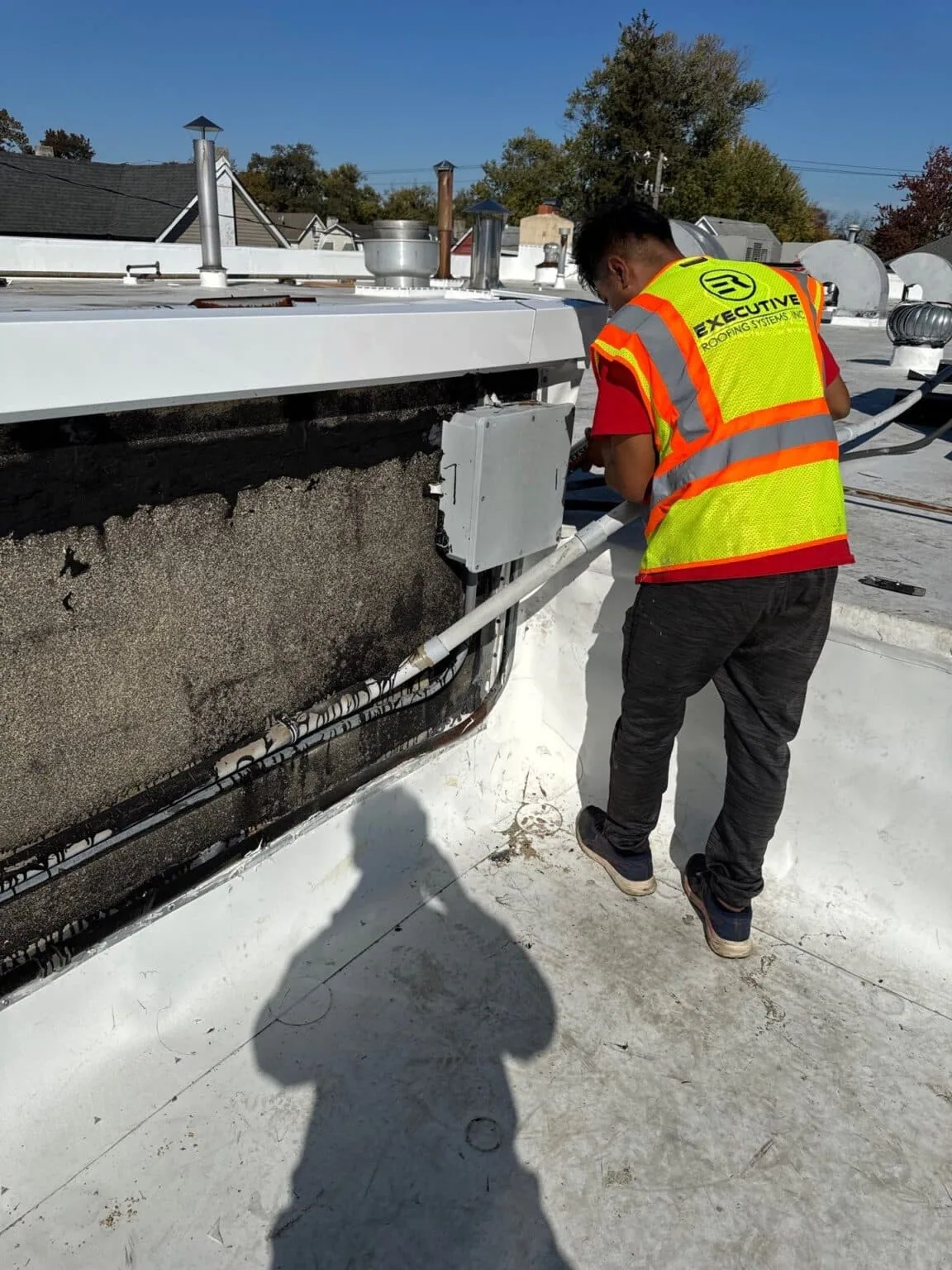
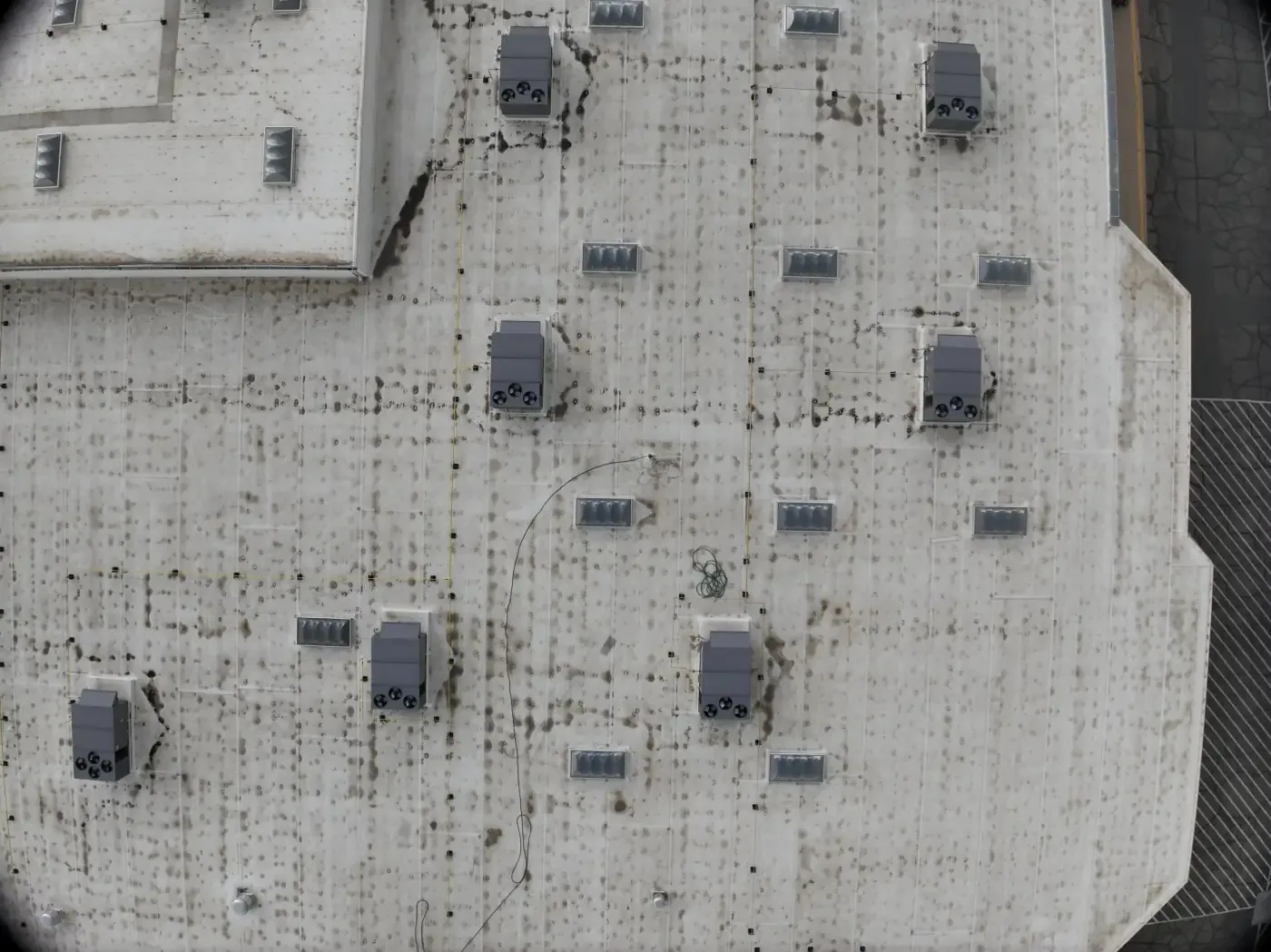
On the roof, we check nearby drains, seams, penetrations, wall transitions, skylights, curbs, and patches. We look for displaced material, open edges, debris, punctures, and staining. The survey follows the likely water path without assuming the first suspicious detail is the source. Where a roof has several assemblies or additions, we label each area independently. An inspection of flashing failure can isolate an open termination or curb transition from a membrane-field problem.
Along the West 120th Avenue corridor, tenant activity can affect entry and staging. Confirm the affected suite, building layout, and roof access with the property contact. We need the property address and access route to compare the reported room with the roof area. The same principle holds near Northglenn: a center name is context, while the inspection follows the actual building and roof plan.
Choose the test that answers the next question
When visual inspection leaves a specific uncertainty, we explain what test would answer it. Moisture survey equipment can help map a pattern in assemblies and conditions suited to that method. A small test opening can confirm roof layers, insulation, and deck at one selected point. We identify the boundaries tested and avoid extending one result to an untested roof section. A moisture survey or core cut is proposed only when the result could change the repair scope.
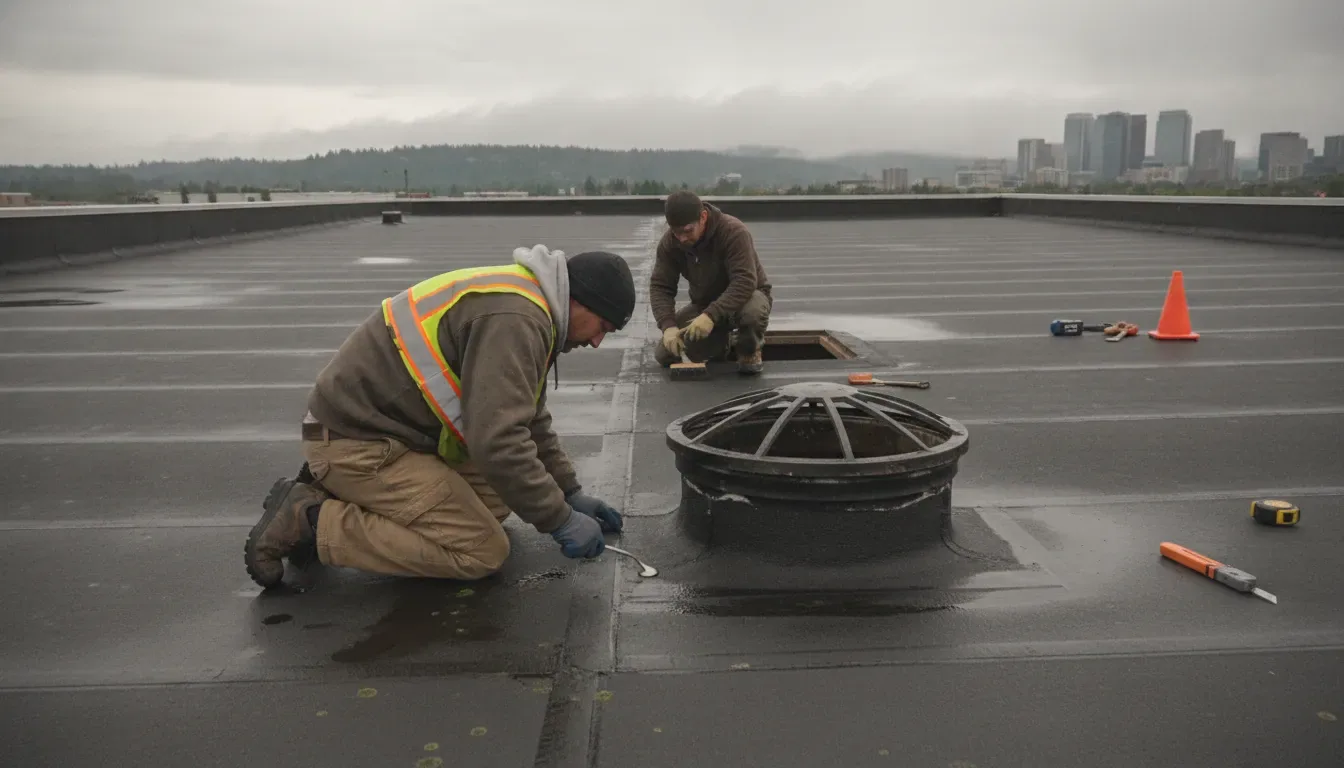
We may find a blocked outlet and an open seam in the same area. Document the outlet restriction and open seam separately, then test the path that connects either condition to the reported interior leak. We check whether the drain bowl, strainer, overflow, and membrane connection are functioning. If water is standing, we record the low area and nearby discharge. A drainage review can establish whether cleaning, detail repair, or additional evaluation is appropriate.
After snowmelt, inspect the actual roof elevations, outlets, and water marks, then compare them with the interior report. We inspect the observed water path, roof elevations, outlets, and snowmelt evidence at the property.
Stabilize active water first
If water is still entering, the first priority is safe interior protection and a temporary roof measure when conditions allow access. Our emergency response operates around the clock, including weekends and holidays. The responding crew identifies the active area, places temporary protection or a dry-in, and records what permanent work remains. The temporary measure has a stated location and follow-up plan. It is not represented as a completed permanent repair.
After stabilization, we determine whether the confirmed opening is a seam, puncture, flashing lap, drain connection, skylight, or other transition. Repair materials must match the installed assembly and be applied to a prepared surface. If material is wet or loose, we remove or correct it within the approved scope. If concealed damage extends beyond the authorized area, we document the condition and ask for direction before extending work. An emergency roof visit can protect the building while a permanent scope is developed.
Weather can affect adhesion, heat welding, safety, and how long the roof may remain open. The crew agrees on a stop point before repair begins and checks the temporary tie-in before leaving. For occupied properties, the contact confirms areas below, air intakes, access, and any tenant notice required.
Make the repair boundary visible
A localized repair is appropriate when inspection finds a contained defect and the surrounding membrane, flashing, and substrate can accept a compatible detail. Repeated leaks, several separated openings, widespread moisture, or failing edge conditions may need a broader evaluation. We mark the repair area on the roof plan, include photographs, and state what we checked nearby. A planned repair scope can specify the material, preparation, labor area, and excluded conditions.
We distinguish between an entry point and contributing conditions. A failed seam can admit water while an obstructed drain keeps the surface wet. A curb flashing may be open even when the field membrane is sound. The scope states whether drain cleaning, seam repair, flashing replacement, or further testing is included. If the assembly is near the end of useful repairability, a recover evaluation and tear-off option can be compared on the same records rather than mixing different boundaries.
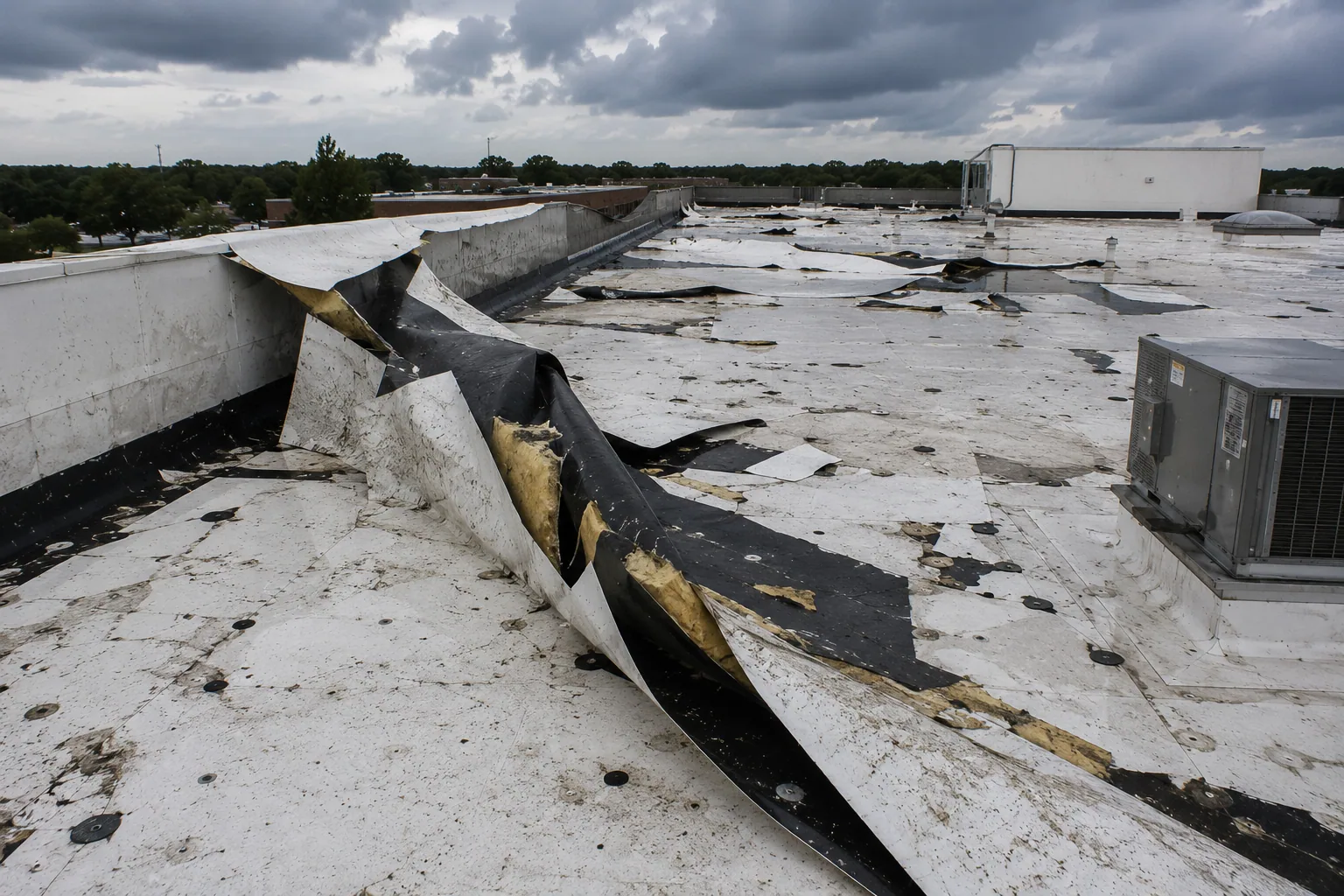
Storms can bring hail and wind across the north metro. The May 2024 storm brought hail to the Westminster area, and nearby north-metro communities reported roof damage. At this address, the inspection must find a physical mark before we connect the leak to that event. We photograph any observed marks, check edges and penetrations, and include only damage supported by the inspection.
Trace the leak to its roof section
Tell us what weather event or leak prompted the call, where water is appearing, and how the building can be accessed. Send the roof plan and repair history if available. We will document the water path, temporary protection, and next repair step.
Give maintenance a usable leak record
The closeout notes the reported interior area, roof section, confirmed source if found, test method, repair material, surface preparation, and condition of adjacent details. Photos include enough context to return to the exact area. We list any inaccessible section or unanswered question and identify who should receive the next update. If temporary protection remains, it is labeled separately from the permanent repair.
For a manager responsible for properties along the North I-25 or U.S. 36 corridors, consistent building labels can organize calls without treating separate roofs as one system. Westminster's commercial activity spans office, retail, hospitality, and industrial areas. The service file identifies the specific property, roof section, and repair boundary. A roof condition record can preserve the leak map, repair photographs, and follow-up check.
When you request service, tell us what weather or interior event prompted the call, which room or roof area is affected, and how the site can be accessed. Send the Westminster address, roof plan, system history, earlier repair notes, and access contact if available. We will trace the report, protect an active opening where safe, and explain what the inspection supports.
Commercial Roofing Questions
Can you find a roof opening when the stain is indoors?
We compare the reported room with the roof plan and inspect connected seams, walls, curbs, drains, and penetrations. Water can travel before it appears, so we test where results could change the repair boundary.
What immediate steps limit damage from an active leak?
Protect equipment and occupants below, contain interior water safely, and contact us for an urgent visit. We locate the active area and arrange temporary dry-in when access and conditions permit.
Does a nearby hail report prove the roof was damaged?
No. We use weather records to guide attention, then photograph the actual roof and include only observed damage in the scope.
Will a moisture scan locate every wet section?
A scan has limits that depend on the assembly and conditions. We identify the area reviewed and may recommend a selected opening to confirm the layers.
What should the leak report include?
It should connect the room report to a roof section, confirmed source, test results, repair detail, photographs, and open items. Temporary protection stays identified separately.
Related Roofing Work
Commercial Roof Inspection
Read more
Commercial Roof Flashing Failure Repair
Read more
Northglenn
Read more
Infrared Moisture Survey
Read more
More Commercial Roofing Services in Westminster
See the rest of our commercial roofing services for Westminster commercial buildings, or call 555-555-5555 to talk through your roof.
Commercial Roof Leak Repair
Talk to Commercial Roofing Westminster
Call 555-555-5555 or send a request and we will schedule a visit to look at the roof, explain what we find and lay out your options.