
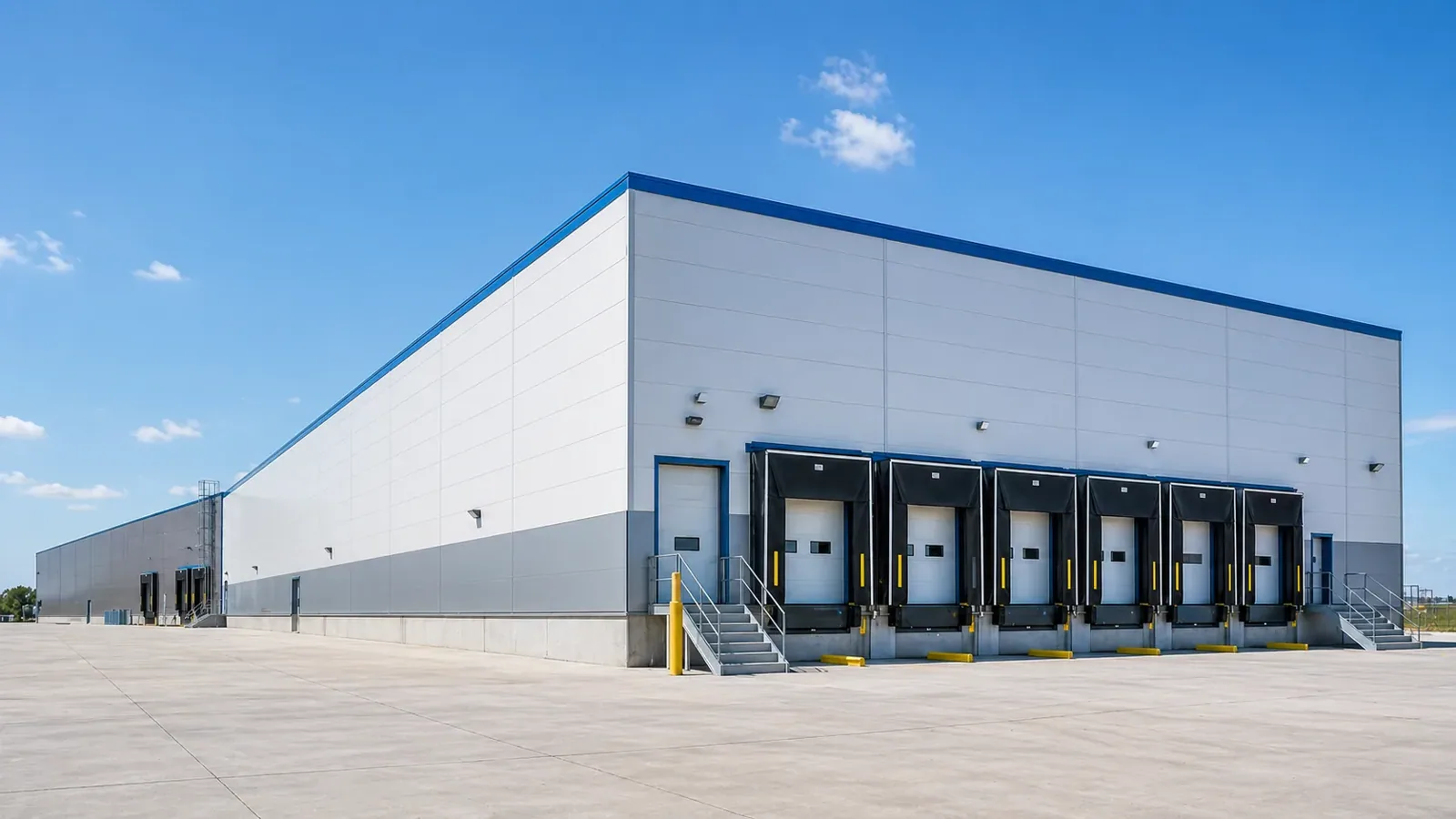
Cold Storage Roofing in Westminster, CO
Inspect Westminster cold-storage roofs for vapor, drain, and penetration details. Plan repairs around temperature control, inventory protection, and access.
Cold Storage Roofing
After a warm spell, water around a freezer roof deserves two checks: the roof detail above it and the temperature boundary below. Condensation, meltwater, and a membrane leak can leave similar clues indoors. We compare the interior report with drains, seams, curbs, and vapor-control transitions before opening the assembly. In Westminster, snow, hail, wind, and heat add separate inspection prompts. The walk still has to confirm what happened at this building.
Follow the warm-to-cold transition
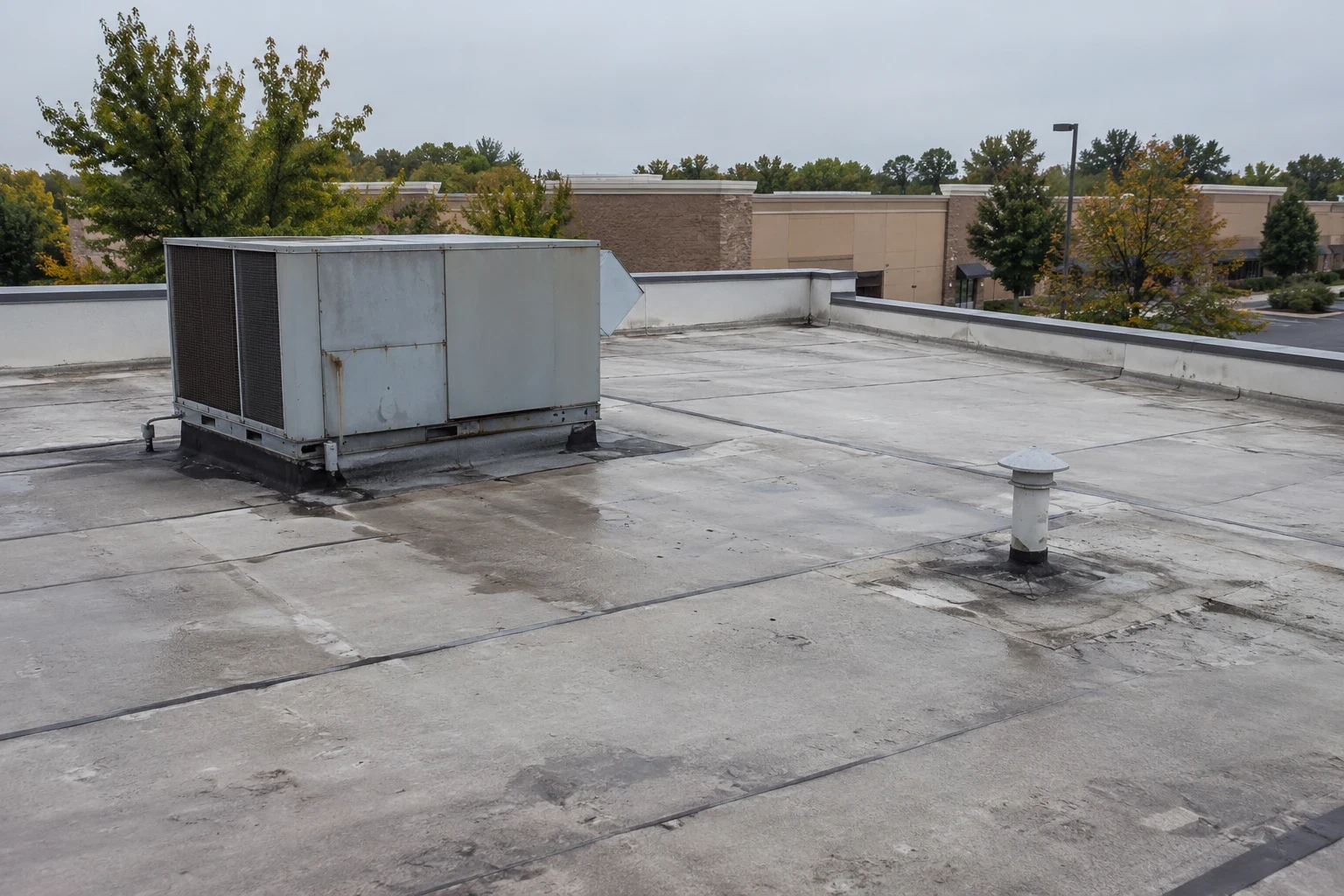
Cold rooms and freezer spaces place a steady temperature difference across the roof assembly. Pipes, exhausts, equipment curbs, and wall transitions interrupt insulation and vapor control. A small gap can allow moisture to move into a concealed area. We trace the detail, look for staining or surface change, and compare the conditions with the room below before assigning a cause.
The roof plan should mark freezer zones, cooler areas, loading space, and any office or staging area. A distribution-center roof review can help coordinate docks and dispatch, while a warehouse inspection can address broad storage and inventory exposure. Cold storage adds a closer look at transitions where temperature and pressure differ.
Dispatch routes may approach from Westmoor Technology Park near U.S. 36 or from the 120th Avenue corridor. Those commercial areas sit in different parts of Westminster, so the property map, receiving entrance, and roof access point should be confirmed before the visit. A building may include several refrigeration zones under one roof. We map each room and roof section with the facility contact, then connect conditions to a specific bay or penetration.
Separate condensation from roof entry
Water droplets or frost below a cold-room ceiling can point to condensation, but they do not rule out roof entry. We ask when the moisture appears, whether refrigeration equipment changed operation, and whether it follows a rain or melt event. Then we inspect the roof above the affected bay. If accessible, temperature and humidity readings can support the investigation, but the building's operating data remains part of the diagnosis.
A leak investigation follows the likely route from the interior evidence to the roof. A moisture survey can help locate areas for confirmation when the assembly and weather conditions support that method. The result is a map of observed conditions and any openings or tests still needed, not a guess based on one wet ceiling panel.
We protect product and refrigeration controls before intrusive work. The owner identifies temperature-sensitive stock, alarm thresholds, and any room that cannot be exposed to dust or outside air. We define how the roof opening will be covered between work shifts and who confirms that operating conditions returned to normal.
Check drainage after snowmelt
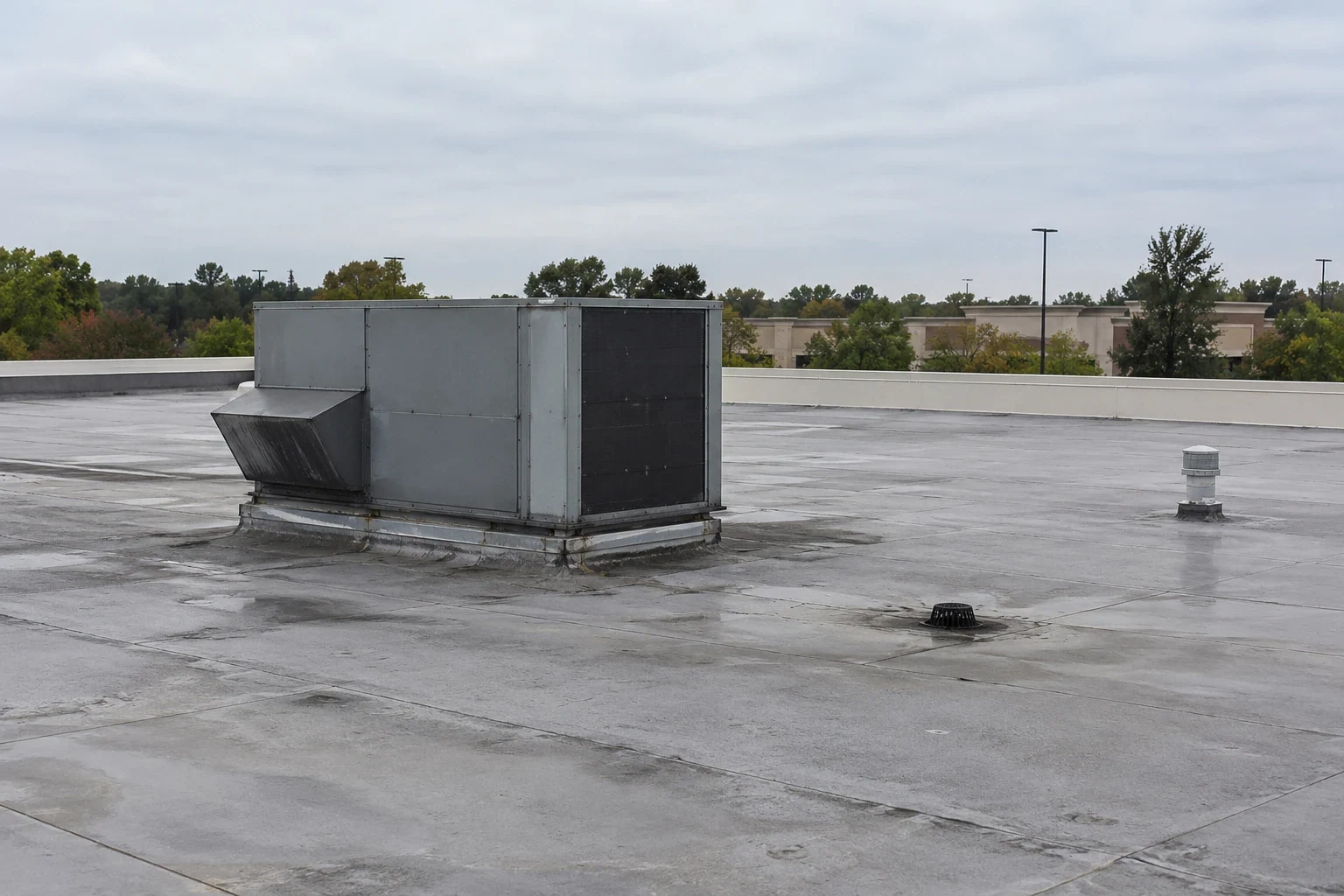
Snowfall varies across the Denver metro, so a regional normal cannot tell us how much snow collected on one cold-storage roof. We inspect drains, overflows, low points, and parapet corners after melt. A blocked outlet can leave water against a penetration or seam. A drain and overflow check documents outlet condition and the limits of any standing water.
Hail was reported near Westminster during May 2024, with roof damage documented elsewhere across the northern metro. That is a reason to inspect a facility after a storm, not proof that this roof was affected. We record impact marks at skylights, edge metal, membrane, and equipment screens, then compare them with interior changes. A hail inspection separates observed impact from unrelated aging.
Heat and wind can stress exposed edges and flashing, while winter access may change safe work hours. We note the forecast and surface condition before scheduling a repair. The site contact confirms whether refrigeration and loading must remain active through the visit.
Inspect penetrations and insulated transitions
Cold-storage roofs can have refrigeration lines, vent pipes, electrical conduits, relief openings, and equipment supports. Each penetration needs flashing compatible with the roof membrane and the temperature conditions. We check for split sealant, loose metal, open seams, and movement where a line is supported. Service traffic can add damage near units, so the report identifies the route as well as the detail.
A cover-board and insulation review can assess the roof layer above the conditioned space. When water is found, we identify whether the proposed work reaches only the membrane or also requires insulation replacement. If an interior vapor-control layer is involved, the repair plan states whether that portion can be inspected and what access the operation requires.
Where a seam or flashing has failed, a penetration flashing repair may be limited to the affected curb. Larger wet areas or repeated failures call for more testing before the scope grows. We mark the repair boundary and list conditions that remain concealed.
Plan roof access around temperature controls
Share the Westminster site location, roof and room maps, affected cooler or freezer zone, recent weather, operating limits, and access rules. We will inspect the roof path and define a protected work boundary.
Keep product and temperature controls protected
Roof work above coolers and freezers requires a short, clear handoff with operations. The plan names the roof section, time window, access route, protection below, and closure method. If a room must remain within a narrow operating range, the facility chooses who monitors alarms and when the crew can work over that zone. Our foreman reports before opening and after temporary dry-in.
Repairs can be phased around receiving windows or product movement. A small work area may be closed the same shift; a larger replacement may need alternate storage or a staged sequence. We do not promise uninterrupted operation before reviewing the roof and site. The owner receives schedule assumptions and the conditions that would change them.
Westminster identifies health and life sciences, hospitality and entertainment, and technology and information among its economic sectors. That market mix makes careful site coordination useful, but we do not infer a particular facility's inventory or process. The facility contact supplies the operating limits; we match the roof plan to those requirements.
Choose repair, recover, or replacement with evidence
A single failed seam or curb may be repairable while the surrounding membrane remains sound. We identify the membrane type, attachment, flashing condition, wet insulation evidence, and tie-in edge before selecting materials. If the roof has multiple layers or unknown repairs, a test opening may be needed to verify what lies below.
A recover review checks moisture, attachment, height, drainage, and code before adding another layer. If those conditions do not support a recover, a replacement plan can include insulation, cover board, vapor-control transitions, penetrations, drains, and phased protection for cold rooms. Cost and timing follow roof area, access, material compatibility, demolition, and inventory constraints.
A maintenance visit can keep drains clear and record changes at seals, seams, and equipment curbs. The log should note refrigeration work that changed rooftop penetrations. For ownership teams, a condition report separates urgent repairs from longer-range renewal decisions.
Commercial Roofing Questions
How can you tell condensation from a roof leak?
We compare when the moisture appears, room operation, and recent weather with the roof details above it. A ceiling symptom alone does not establish the source.
Can roof work continue while a freezer stays in service?
Some repairs can be phased while the room operates. The facility defines temperature, access, and product-protection limits before we set an opening and closure window.
What happens if insulation is wet?
We map the affected area and confirm it with testing or an opening where appropriate. The scope then shows whether membrane work alone is enough or insulation needs replacement.
Does snowmelt always mean the roof is leaking?
No. Meltwater can expose blocked drainage or a weak detail, but we inspect the outlet and roof path before recommending a repair.
What information helps plan a cold-storage roof visit?
Provide the roof map, affected room, leak timing, refrigeration restrictions, alarm contact, inventory precautions, and access instructions. Those details guide staging and protection.
Related Roofing Work
Distribution Center Roofing
Read more
Commercial Warehouse Roofing
Read more
Westmoor Technology Park
Read more
West 120th Avenue Corridor
Read more

More Property Types We Roof in Westminster
See the rest of our property types we roof for Westminster commercial buildings, or call 555-555-5555 to talk through your roof.
Cold Storage Roofing
Talk to Commercial Roofing Westminster
Call 555-555-5555 or send a request and we will schedule a visit to look at the roof, explain what we find and lay out your options.