
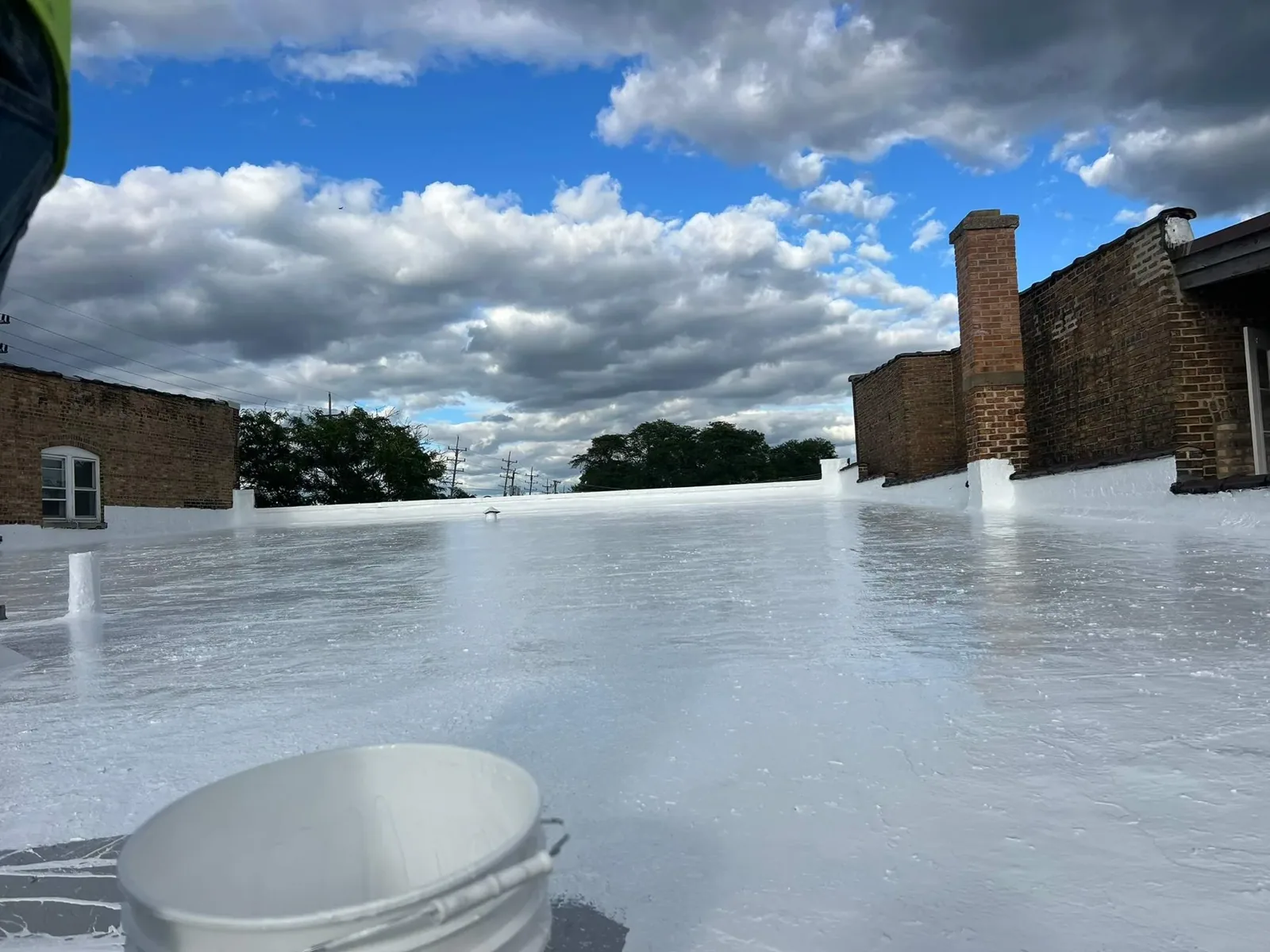
Commercial Silicone Roof Coatings in Westminster, CO
Assess Westminster silicone coatings for adhesion, ponding, seams, and substrate condition. Repair first, then decide whether coating fits the roof.
Commercial Silicone Roof Coatings
After rain leaves water on a low-slope roof, check the surface and substrate before treating silicone as the fix. Silicone coating can protect a suitable roof and tolerate standing water within product limits, but it cannot repair wet insulation or loose membrane. Westminster's storms, hail, snow, and heat make the surface work year-round. We inspect the existing assembly, drainage, and details before recommending a coating.
Check what the coating will bond to
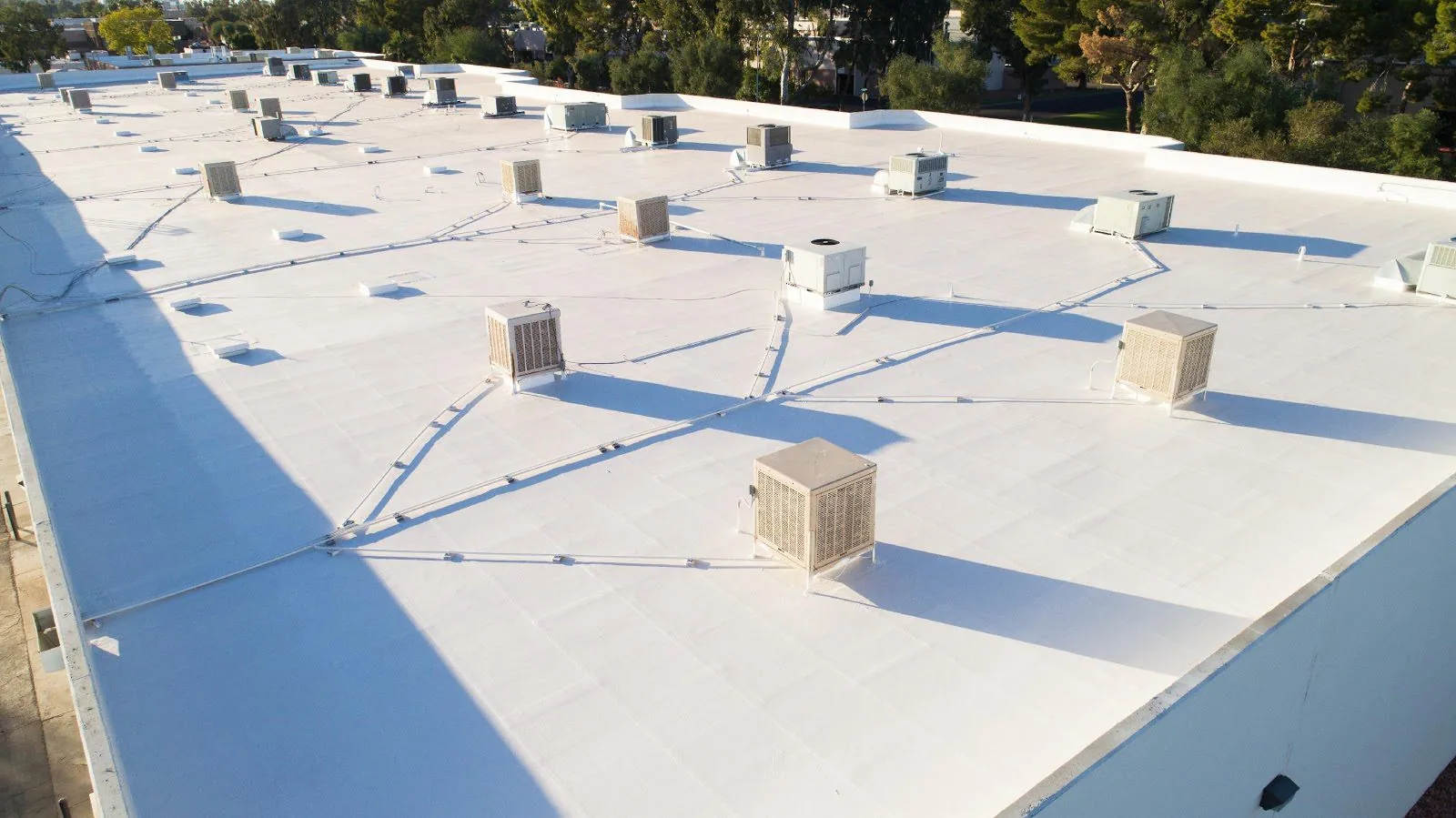
Silicone adheres only when the surface is prepared and compatible with the selected product. We identify the existing membrane or coating, look for loose areas, chalking, grease, debris, and moisture, and test adhesion where appropriate. A roof with multiple old coatings may need a sample area or other confirmation before a larger application is priced.
Wet insulation, failed seams, open flashings, and corroded metal need repair before coating. We inspect the substrate and mark areas where removal or replacement may be needed. A restoration evaluation separates sound roof sections from those that should not be coated.
A facility near Westmoor Technology Park may have rooftop grease, process discharge, or service traffic that changes the preparation. We note each exposure source and coordinate with the property contact before selecting primers or protective measures.
Address ponding and drainage first
Silicone coating can remain stable in ponded water when the product and application meet their limits. That does not make drainage irrelevant. Standing water can collect debris, conceal a leak, and leave the owner unable to see the membrane below. We measure the affected area, inspect outlet height and nearby seams, and record how much water remains after conditions change.
Westminster snowfall varies across the Denver metro. We check the building's actual low points and outlets after melt rather than use a regional snow amount as a proxy for drainage. The inspection records the water route before a coating project changes the surface.
Where slope correction is needed, tapered insulation, drain work, or structural review may be part of a separate scope. Coating thickness does not create a drainage design. We state the water condition and whether the proposed work includes a correction, a maintenance plan, or only surface protection. A later visit can verify whether outlets stayed clear after the new surface cured.
Repair seams and details before application
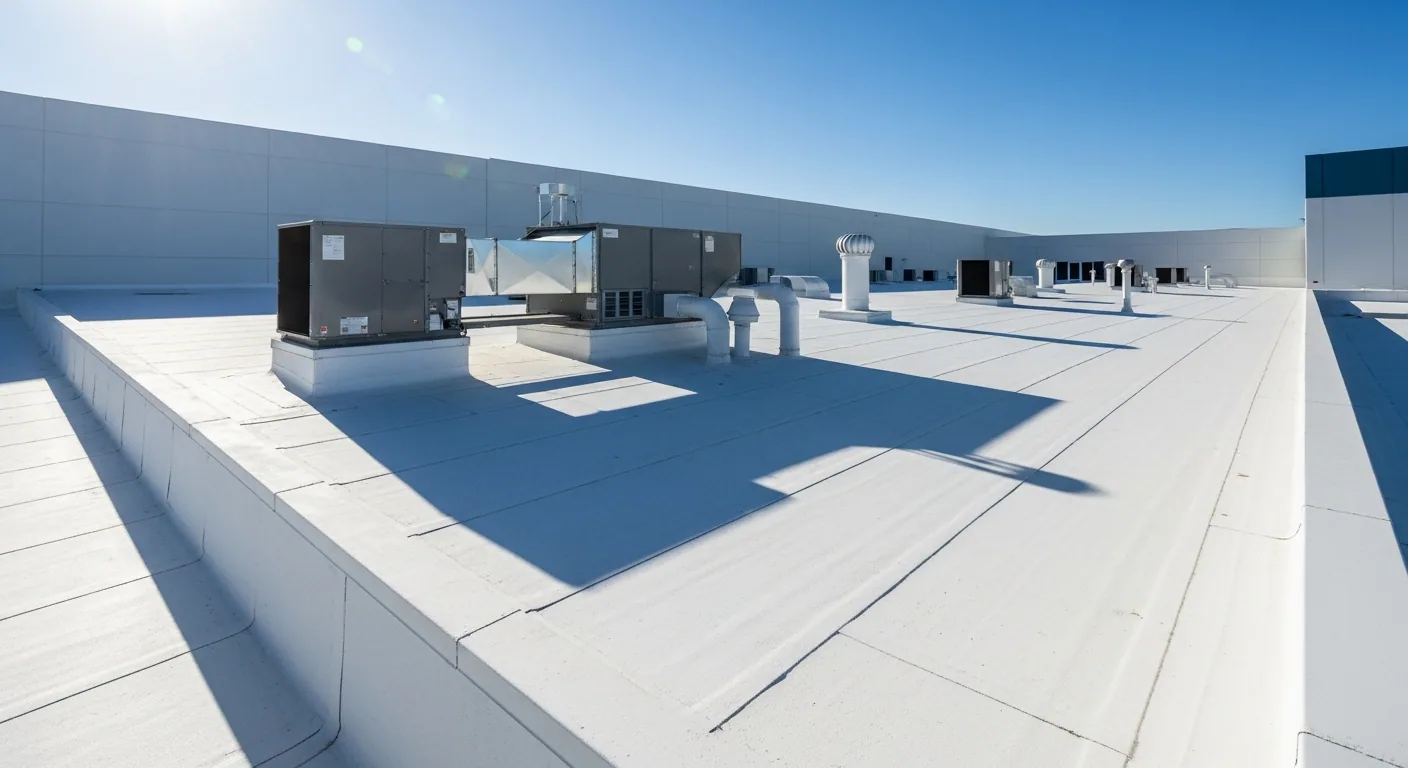
At seams, curbs, pipes, drains, and edges, we identify the current failure before applying a coating. A compatible detail may require a fabric reinforcement, sealant, flashing repair, or membrane patch. The product data defines where the coating can continue across a transition. A broad coat should not hide an opening that needs a mechanical or membrane repair.
Hail reported near Westminster in May 2024 makes a post-event roof check reasonable, but the report does not establish that a particular roof was hit. We inspect for splits, impact marks, punctures, and displaced metal, then repair confirmed defects before coating. A storm inspection can record new findings apart from older conditions.
Edge metal and coping need compatible termination details. A perimeter review checks attachments and water discharge so the coating does not end at a weak transition. We also confirm that drains, overflows, and scuppers remain clear after application.
Compare silicone with other restoration paths
Silicone is one coating chemistry, not a universal roof repair. It can be suitable for some roofs with ponding, but the substrate, climate, product compatibility, and maintenance requirements matter. Acrylic systems are another option with different water exposure limits. Compare a water-based acrylic coating against the roof's ponding and application conditions before selecting either product.
On an SPF roof, silicone may be a topcoat when the foam, existing coating, and project design support it. The SPF assembly needs repairs to exposed foam and details before recoating. A membrane roof may require a different primer or may not be an appropriate coating substrate at all.
If the roof has widespread wet insulation, damaged deck, or multiple failed transitions, replacement can be more direct. A replacement assessment compares removal, new insulation, cover board, membrane, and edge work with the restoration option.
Test the roof before coating
Share the Westminster address, roof plan, current membrane or coating, ponding and leak history, and access contact. We will inspect the substrate, drainage, seams, and details, then define repairs and coating compatibility tests.
Control surface preparation and coverage
Coating performance begins with cleaning and repairs. The crew removes debris and loose material, protects drains and equipment, and confirms the roof is dry enough for application. Primer is used where the system requires it. The application plan records the product, coverage rate, reinforcement, and number of coats specified for the project.
Weather affects cure and adhesion. The crew monitors temperature, humidity, wind, and precipitation and limits the daily work area to what can be completed safely. If a surface remains wet or the forecast closes the window, work pauses rather than leaving a partially treated transition exposed.
We inspect the finished surface for holidays, thin areas, ponding boundaries, and detail continuity. Photos document drains, flashings, seams, and coated field. A roof inspection can confirm visible application conditions at the agreed hold points.
Plan for inspections and recoating
Silicone does not remove the need for maintenance. Debris, foot traffic, mechanical service, and weather can affect the coating and flashing. Inspect around penetrations, drains, and access routes, and keep the surface clear enough to see changes. Any recoating plan begins with cleaning, adhesion, thickness, and repair checks.
For Westminster properties along the 120th Avenue corridor, tenant access and roof service windows may control inspection timing. We label the building and roof zone, then note where equipment traffic or ponding recurs. The record helps the owner compare coating condition with the prior visit.
A coating can be renewed only when the existing layer remains a suitable base. If adhesion is poor or the substrate has changed, the repair or removal scope must be revisited. We document the next inspection point and any product-specific maintenance instruction.
Record the coating system and limits
The closeout identifies the product and primer where confirmed, preparation, repaired areas, application zone, drainage observations, and excluded conditions. Photos show the coating and detail transitions. Any ponding or concealed moisture question remains listed as an open item if it was not part of the authorized work.
For a Westminster commercial roof, keep the coating record with the existing membrane and repair history. Separate building files matter even when sites share a corridor. A future inspection can then compare the same roof zones and identify what changed. Date each photo and note the outlet status.
Send the address, roof plan, known surface and coatings, ponding or leak history, and access contact. We will check adhesion, substrate, and drainage, then determine whether silicone coating, repairs, or a new roof assembly fits the conditions found.
Commercial Roofing Questions
Can silicone coating cover a roof with standing water?
Some silicone systems tolerate ponding within their product limits, but we still inspect the outlet, substrate, seams, and water depth before recommending application.
Does silicone coating stop an active leak?
Not by itself. We locate and repair the membrane or flashing opening, confirm the base is suitable, and then evaluate whether coating is an appropriate protective layer.
Can silicone be applied over another roof coating?
Only when the existing chemistry and surface support adhesion. We review product records and test a sample area if compatibility is uncertain.
How do you prepare a roof for silicone?
Preparation includes cleaning, drying, correcting defects, protecting outlets, and applying primer when required. The exact sequence follows the selected system data.
Can silicone be used on an SPF roof?
It may serve as a protective topcoat when the foam and existing coating are sound and compatible. Exposed or damaged foam needs repair before application.
Related Roofing Work
Commercial Roof Coating Restoration
Read more
Westmoor Technology Park
Read more
Storm Damage Roof Repair
Read more
Commercial Roof Edge Metal, Coping and Gutters
Read more
More Roof Systems in Westminster
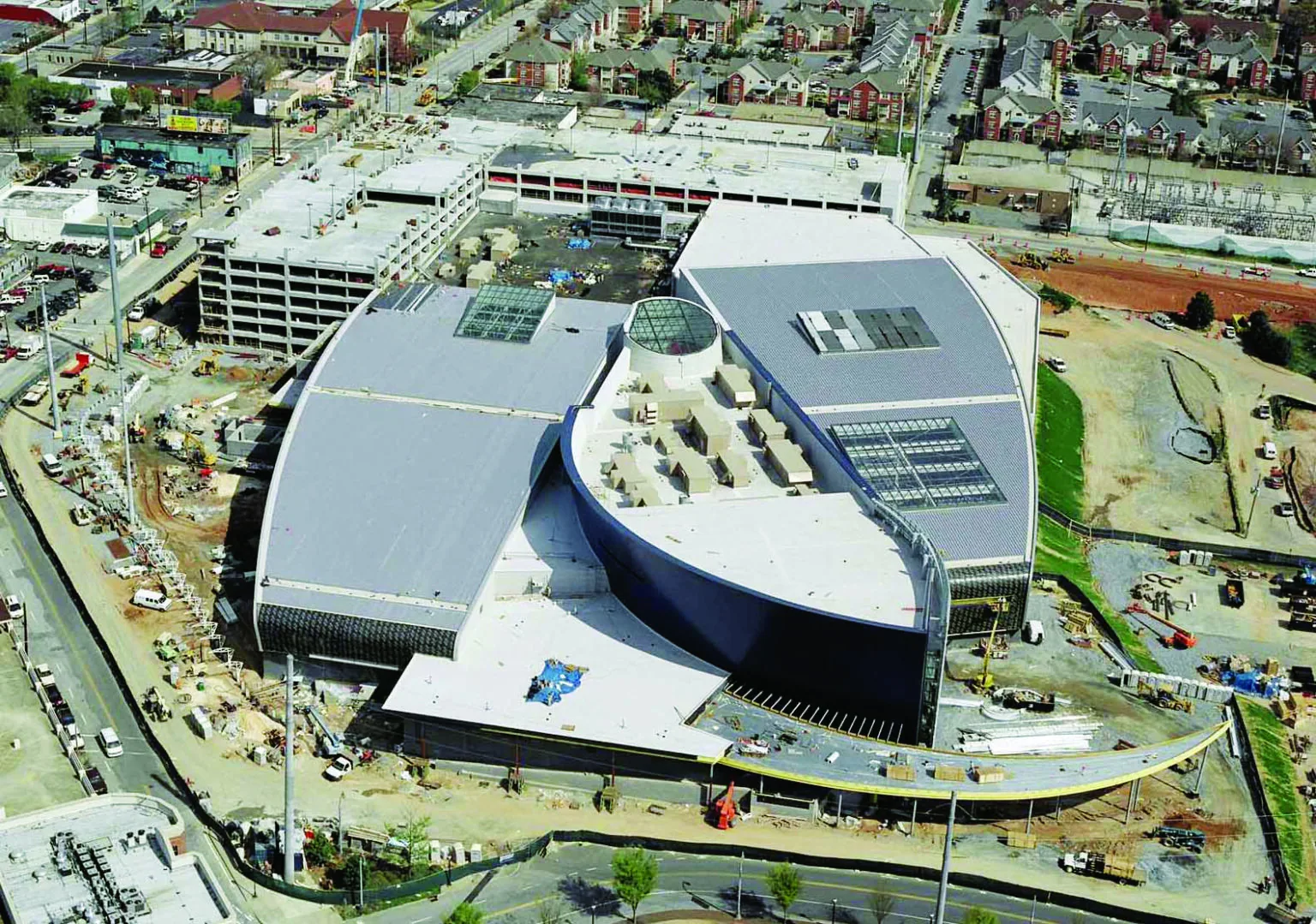
See the rest of our roof systems for Westminster commercial buildings, or call 555-555-5555 to talk through your roof.
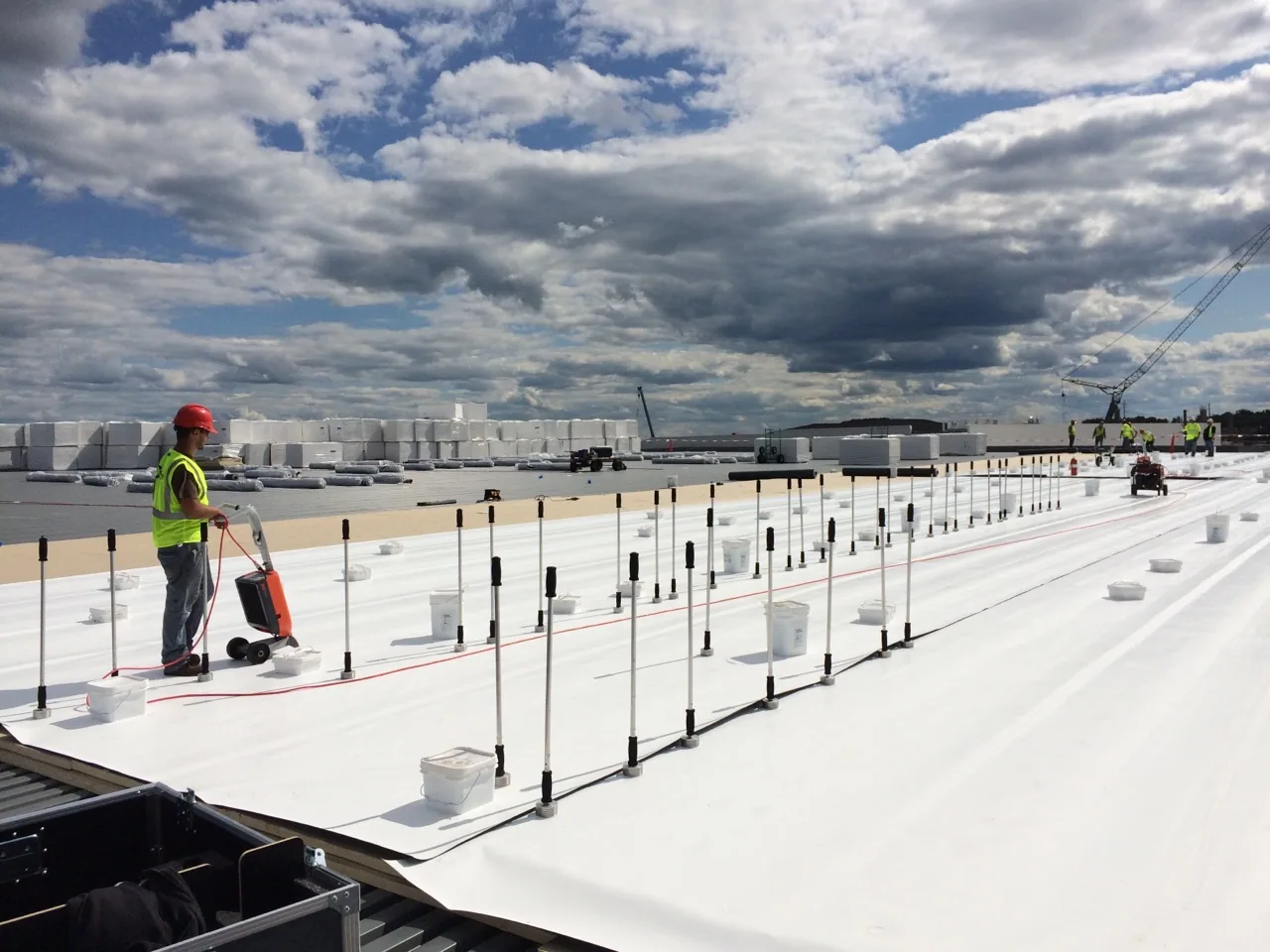
Commercial Silicone Roof Coatings
Talk to Commercial Roofing Westminster
Call 555-555-5555 or send a request and we will schedule a visit to look at the roof, explain what we find and lay out your options.