
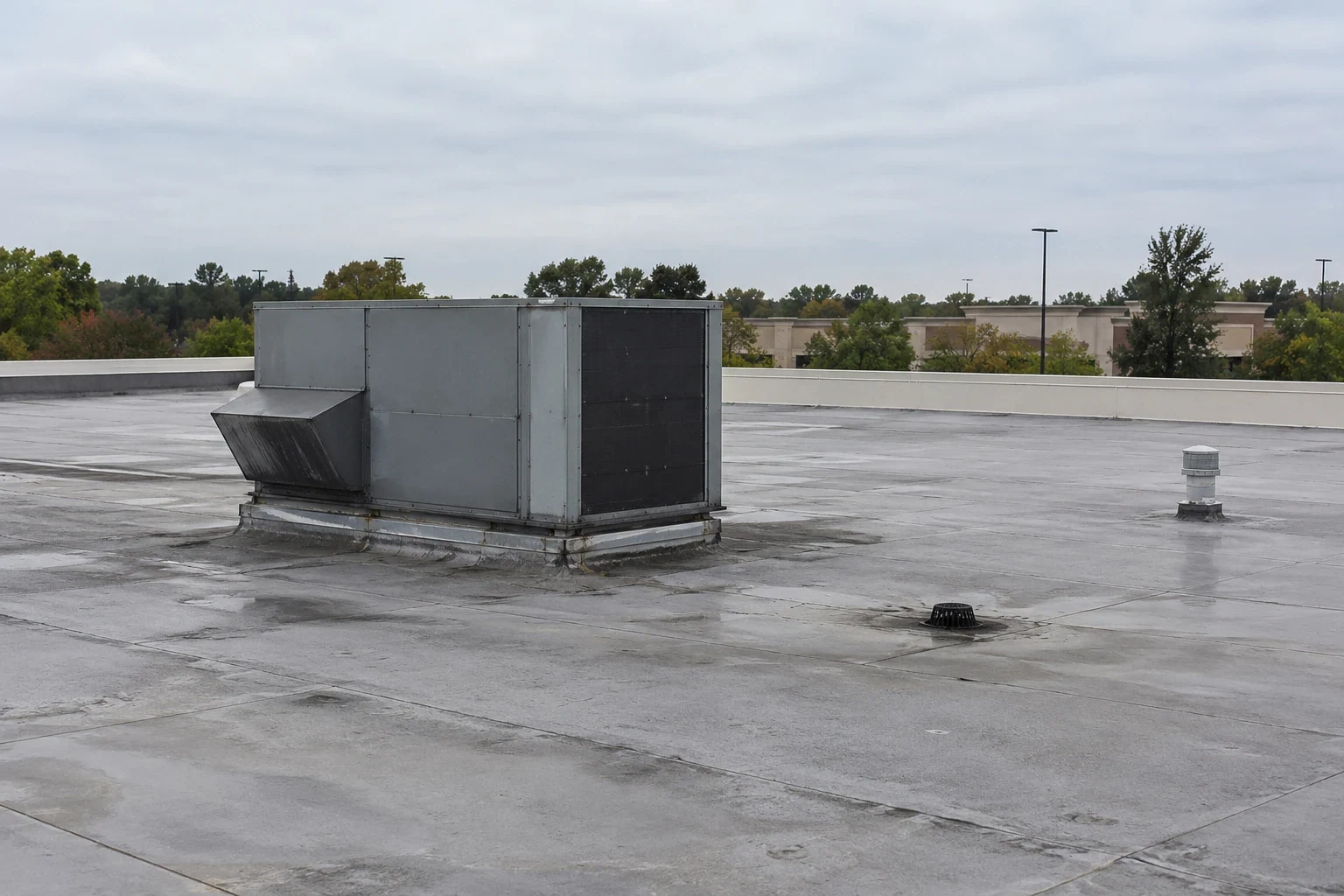
Big-Box Retail Roofing in Westminster, CO
Plan Westminster big-box roof repairs around sales floors, stock, loading, and rooftop units. Inspect drainage and membrane details before choosing a scope.
Big-Box Retail Roofing
After hail or a sudden leak, check the roof above the affected sales or stock area before shifting merchandise across the store. A water path can cross several bays before reaching a ceiling or light. Westminster's retail districts include the North I-25 corridor and 120th Avenue, but each store has its own assembly, equipment, and access plan. We map the building, protect inventory, and define a repair area the manager can follow.
Mark the store zones beneath the roof
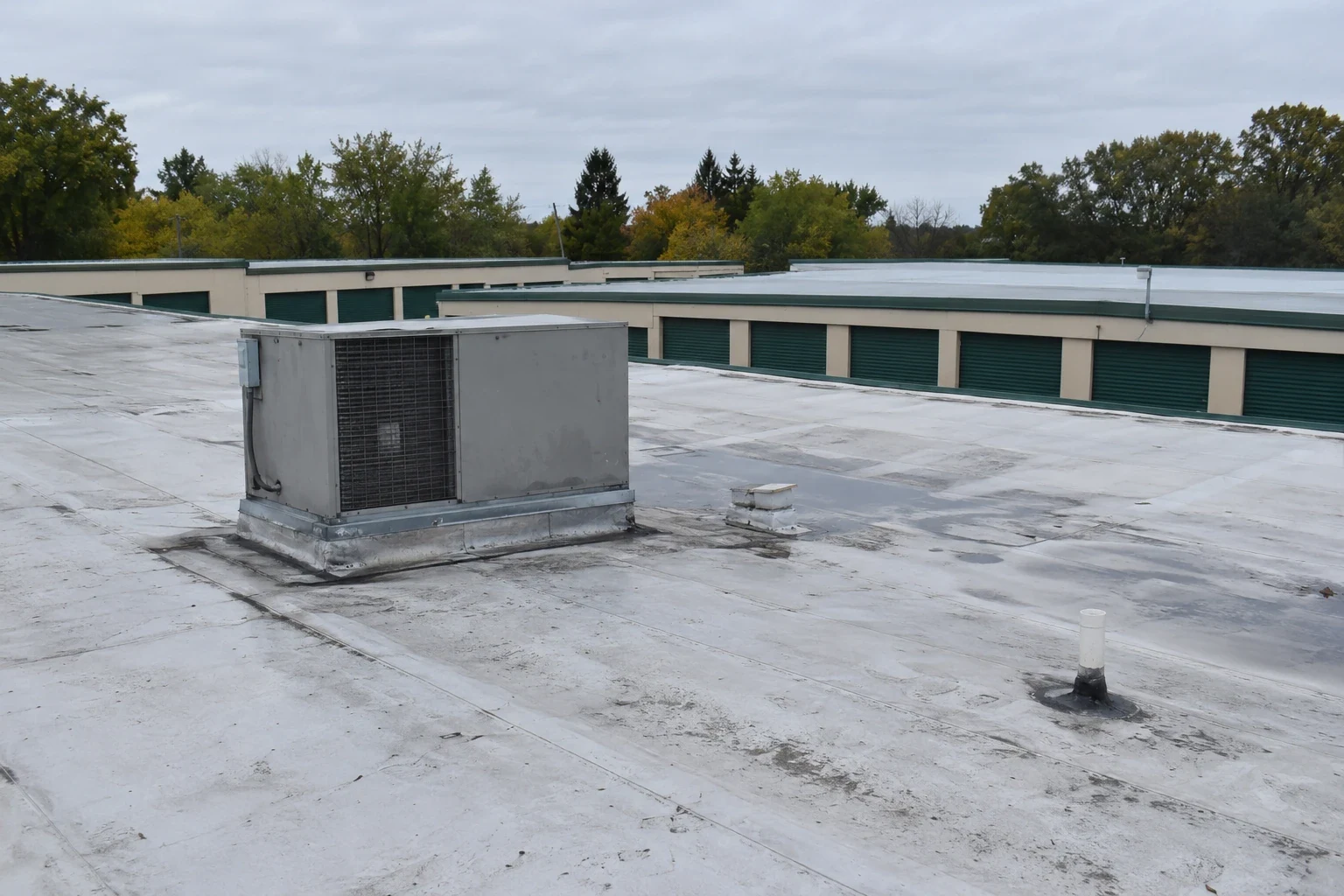
A big-box building may have a sales floor, receiving area, back-of-house storage, offices, refrigeration, and roof-mounted HVAC. The manager identifies the aisle, stock, or equipment exposed to water. We compare that report with roof seams, drains, curbs, skylights, and the loading bay. The plan labels the roof zone and the store area below so a repair does not drift into uninspected sections.
The North I-25 corridor includes Orchard Town Center and Westminster Crossings. In the city's 120th Avenue corridor, retail clusters near Federal Boulevard. These are commercial areas for route planning, not evidence that a specific retailer sits at any one roof location.
A shopping-center roof review addresses shared tenant rows and freestanding pads. A grocery-store inspection may need closer coordination with refrigeration and food areas. Big-box work has its own stocking, delivery, and customer flow to account for.
Inspect impacts and drainage in sequence
The May 2024 north-metro hail event makes a post-storm walk useful when a Westminster store may have been exposed; it does not diagnose the store. Inspect membrane, skylights, edge metal, screens, and curbs for visible change. A hail inspection records impact evidence separately from aging and previous patches.
Snowfall varies across the Denver metro. After melt, we check drains, overflows, low points, and water marks on the actual roof rather than transfer a regional total to one building. A blocked outlet can leave water near a seam or curb. The report notes whether debris, a damaged drain, or another condition limits flow.
Wind and heat create different observations. We inspect exposed edges, flashing, and material transitions, then compare any interior report with that area. Weather sets the timing; the store's roof determines the repair.
Protect stock and trace the entry point
The store team identifies products, display fixtures, point-of-sale equipment, and aisles that need protection. We use those boundaries to choose a roof route and interior covering. A leak investigation looks at roof details above and around the report. Water can travel through insulation or deck flutes, so the visible drip may not align with the opening.
We record when the issue began, recent weather, any unit service, and whether other areas changed at the same time. If multiple leaks appear, each receives a separate map location until inspection shows a connection. This prevents a single ceiling report from expanding the work limit without evidence.
Before cutting into the assembly, the manager approves product relocation, barriers, and timing. The crew sets temporary dry-in, removes debris, and confirms the roof is closed before the store reopens the affected path. Any concealed condition is documented and priced as a separate decision. We photograph the roof after closure and identify where the crew finished so store staff can monitor the exact area without blocking a larger zone.
Fit staging around trucks and shoppers
Big-box sites depend on loading access and customer parking. We confirm truck schedules, delivery doors, fire lanes, lift placement, and material staging before mobilization. A rooftop crane or lift may require a temporary parking or drive aisle closure. The property manager approves that plan and tells store operations what route remains open.
Roof replacement can proceed in sections to reduce the area open at once. Each phase has a daily closure limit, protection plan, material route, and debris pickup. An occupied-store work sequence states which zones are active and when each can return to normal access.
If an after-hours shift is needed, store management identifies alarm procedures, lighting, security access, and the person who can approve a change. We notify the contact if weather, concealed damage, or an unavailable loading bay changes the sequence. The closeout record says what was completed and which area needs monitoring.
Keep store access in the roofing plan
Share the Westminster store location, roof map, affected aisle or stock area, loading and customer schedule, weather or leak timing, and access limits. We will inspect and document a defined work zone.
Choose a repair or capital project
A localized puncture, seam opening, or curb flashing failure can be repaired when neighboring roof materials remain sound. We identify system type, compatible materials, drainage condition, and tie-in boundary. If insulation is wet or the deck needs testing, the scope shows where that evidence comes from and what remains unknown.
A recover may work only when moisture, attachment, height, drainage, and applicable requirements support it. Replacement can address removal, insulation, cover board, membrane, roof edges, curbs, and drain details. Cost and time depend on roof area, system, material handling, access, inventory protection, and how much of the sales floor must remain open.
Westminster currently applies the 2021 building and energy-code editions to construction review. Permit and assembly requirements depend on the project's scope. We define the proposed work and coordinate the applicable review with ownership before starting. A large sales floor can conceal different roof sections from prior additions, equipment changes, or repairs. We do not treat a uniform ceiling layout as proof of a uniform roof. During inspection, we note changes in membrane, deck height, drainage direction, and flashing so replacement quantities can be separated by assembly. If an owner wants to phase the work over several seasons, we identify transitions that must remain watertight between phases and details that should be checked before a later tie-in. The proposal records sequencing assumptions so store operations can review temporary closures in advance.
Keep repair history with store operations
HVAC service, sign work, solar review, and other rooftop activity can add traffic or change a penetration. Retain a roof map with equipment, drains, seams, and repair boundaries, then match photos to store zones. When a vendor crosses the membrane, log that visit so a later leak investigation can compare timing and location.
A scheduled maintenance visit can clear drains, inspect flashings, and record damage before the next weather change. A roof condition inspection separates immediate repairs from longer-range renewal and lists sections that were inaccessible.
For a retail portfolio, keep a separate roof and operating contact for each store. At closeout, record completed work, removed barriers, open items, and the next review date. That gives facilities and store managers one concise record for later planning. Include the person who approved the repair and the date the affected aisle returned to normal use.
Commercial Roofing Questions
Can roof work happen before or after store hours?
Yes. A planned window can reduce customer and delivery conflicts. We still confirm security, lighting, access, staging, and end-of-shift closure with the store contact.
How do you protect merchandise during a roof leak?
The store identifies affected stock and displays. We agree on covering or relocation, then trace the roof path and set temporary protection before permanent work.
Does a hail report mean the store needs a full replacement?
No. A storm report prompts inspection. The visible roof condition, verified moisture, and repair history determine whether work is localized or broader.
Can a large retail roof be repaired in sections?
A phase plan can limit the open roof area and identify daily closure points. The sequence also accounts for loading, customer paths, inventory, and weather.
What information should we share before the visit?
Send the roof plan, affected aisle or stock area, loading schedule, equipment restrictions, weather timing, access rules, and any prior roof repairs.
Related Roofing Work
North I-25 Corridor
Read more
West 120th Avenue Corridor
Read more
Shopping Center Roofing
Read more
Grocery Store Roofing
Read more
More Property Types We Roof in Westminster
See the rest of our property types we roof for Westminster commercial buildings, or call 555-555-5555 to talk through your roof.

Big-Box Retail Roofing
Talk to Commercial Roofing Westminster
Call 555-555-5555 or send a request and we will schedule a visit to look at the roof, explain what we find and lay out your options.