
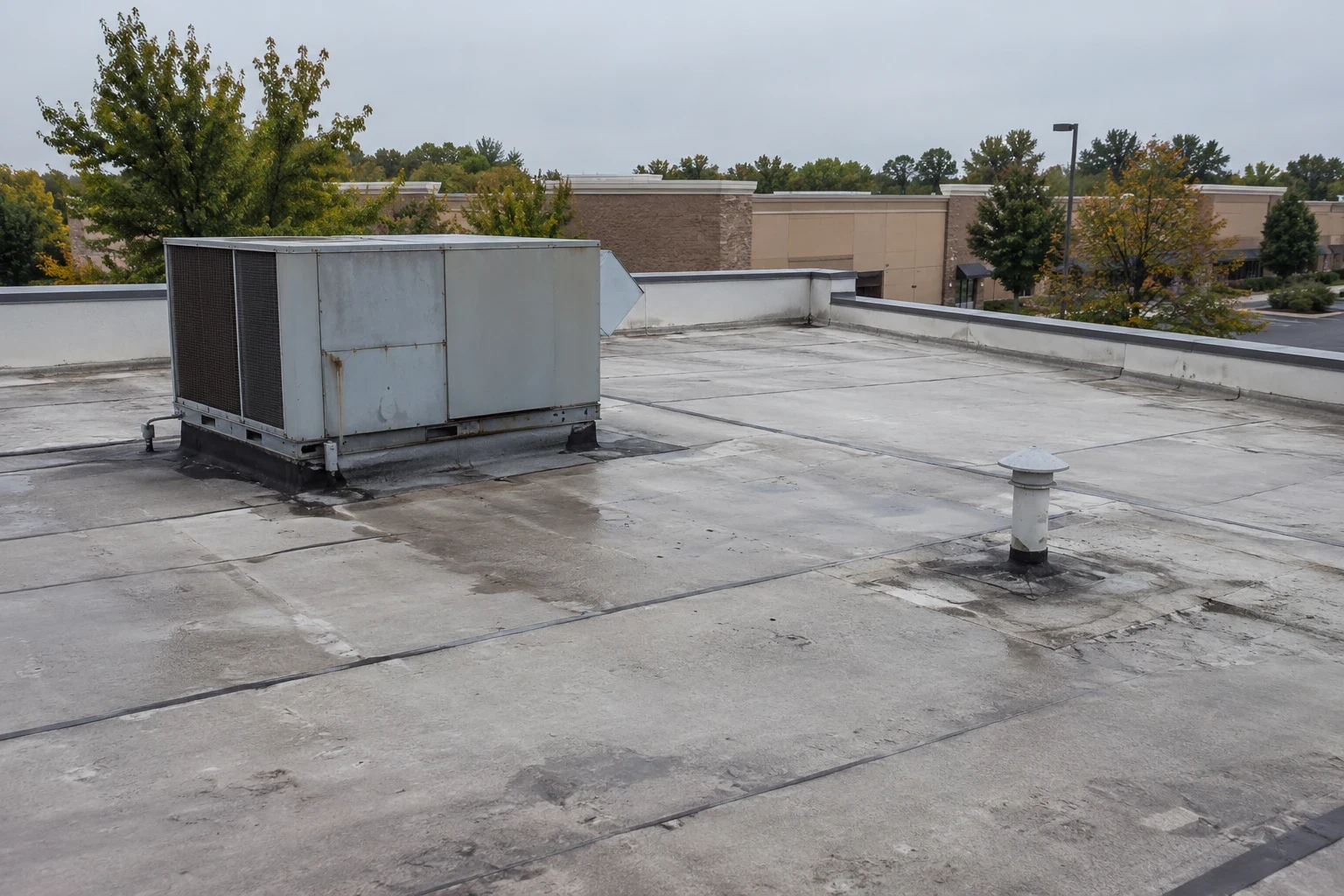
Shopping Center Roofing in Westminster, CO
Plan Westminster shopping-center roofing around tenants, loading, drainage, and public access. Inspect each roof section before setting repairs.
Shopping Center Roofing
After a hail or wind event, start with the tenant spaces beneath the reported area and the roof details above them. A shopping center can have joined bays, stand-alone pads, shared walls, and different roof assemblies. The city inventories retail in the North I-25, U.S. 36, and 120th Avenue areas, but the actual condition belongs to each building. We map the roof section, protect tenants, and coordinate access before opening the membrane.


Separate shared roofs from individual pads
A shopping property may combine a long retail row, restaurant pads, service spaces, and loading areas. We identify which tenant reports the leak and whether the suspected roof section crosses a demising wall or changes assembly at an addition. A drip by one storefront may follow a seam from another bay. The roof plan and tenant layout help keep the inspection boundary clear.
Westminster's 120th Avenue retail area includes Sheridan Crossing and North Park Plaza. The U.S. 36 node includes Shops at Walnut Creek and Westminster Promenade. These are broader commercial districts, not assumptions about any individual property's roof. For a service call, we confirm the address, access gate, loading hours, and roof hatch with the property manager. A center may have separate controls for its main roof and freestanding pads. We note which tenant contact approved access, what area can be closed, and whether a lift or ladder can reach the section safely. Shared ownership records should identify the covered bay rather than only naming the retail property.
A big-box roof review can focus on a single large-format store and its equipment layout. A grocery roof inspection considers refrigeration and receiving operations. Shopping centers add shared tenant access and phased communication across multiple businesses.
Check drains after weather changes
For a shopping property, we look at how meltwater moves across each roof bay, where outlets discharge, and whether an overflow shows use. Conditions differ across the metro, so the record describes this center rather than assigning it a regional snow quantity. The inspection records the outlet condition and any standing-water boundary.
Westminster had a nearby hail report in May 2024; documented damage also occurred elsewhere in the north metro. A retail property can be reviewed after hail, but only its own membrane and metal details show whether the event left a defect. A hail inspection documents impact evidence on the membrane, skylights, metal edges, and equipment screens. Wind and heat create separate checks at flashings and exposed roof edges.
For a center with multiple buildings, each roof receives its own findings. Similar tenant signs or façade finishes do not demonstrate that roofs share construction or age. The report notes which areas were accessed, which outlets were checked, and any section that remains outside the inspection.
Trace leaks without disrupting storefronts
We ask when the report began, which suite is affected, and whether the problem followed rain, hail, or snowmelt. Then we inspect the roof above and nearby seams, curbs, drains, skylights, and wall transitions. Water can travel under the membrane before appearing indoors. A leak investigation documents the likely route, temporary dry-in, photos, and remaining questions.
The property contact identifies sensitive stock, food preparation, checkout equipment, and public paths below the work. We coordinate a safe entrance and set barriers before carrying tools through shared space. If a roof opening sits over active retail, the work plan names the closure target and who confirms the area can reopen.
Multiple tenant reports need separate map points until evidence connects them. We record suite, time, roof zone, and weather. This helps ownership distinguish a recurring defect from an unrelated issue in another bay and keeps the repair scope tied to the areas actually inspected.
Stage work around customers and deliveries
Shopping centers have customer entrances, delivery lanes, fire access, and service corridors to keep open. We confirm lift placement, material staging, waste removal, and any temporary closures with management. Deliveries may continue at hours when retail is quiet, or customer traffic may peak when loading slows. The property schedule determines a workable roof access window.
Work can be divided by roof section or tenant row. Each phase has a daily closeout, protection below, debris path, and a point where the roof is watertight before crews leave. An occupied-building reroof sequence can show how the project proceeds while stores remain in operation.
If odors, noise, hot work, or dust could affect a tenant, management can set notice and timing requirements. We list these assumptions before mobilization. A change in weather, hidden deck damage, or unavailable loading access may shift the schedule, so the owner receives a clear update when the work boundary changes.
Schedule around the center's tenant mix
Share the Westminster property location, roof and tenant plans, affected suite, delivery and operating hours, recent weather or leak timing, and access rules. We will inspect the right roof section and document the repair boundary.
Compare repair and renewal by roof area
A small opening at a pipe boot, a separated lap, or a drain obstruction may call for a localized fix when surrounding material remains sound. We confirm the membrane type and attachment, materials that can tie in, and conditions around the visible defect. The scope identifies what the repair covers and any wet insulation or deck area that requires a separate decision.
Repeated leaks across several bays, broad moisture, or deteriorated transitions may justify testing and a larger capital review. A recover requires acceptable moisture, attachment, height, drainage, and code conditions. Replacement can be phased by tenant row and include insulation, cover board, membrane, edge metal, and drain work. Cost and duration depend on access, roof area, materials, and the occupied-site sequence.
Westminster enforces current 2021 building and energy-code editions. Permit needs follow the project scope and assembly. We identify proposed work and coordinate the applicable review with the owner rather than infer requirements from the center's appearance.
Keep tenant and roof records together
Tenant improvements and rooftop equipment service can change penetrations, drainage, and access routes. Retain a roof plan showing each bay, curb, skylight, drain, and prior repair. Match inspection photos to tenant spaces and dates so a later report can be compared against the same roof zone.
A maintenance visit can clear drains, inspect seams and flashings, and record new traffic damage before the next weather shift. A written inspection can sort urgent work from planned renewal and list areas that need testing. For a center with multiple addresses, keep a separate report and access contact for each property. Record which loading entrance is in use and whether a neighboring tenant needs notice before rooftop staging begins.
Closeout identifies the completed repair, removed barriers, any tenant area still being monitored, and the next check date. Ownership can retain the record with lease and facility documents, then use it to coordinate future repairs without treating one tenant's report as a center-wide diagnosis.
Commercial Roofing Questions
Can roof work happen while shops remain open?
Often, if work zones, customer routes, loading, barriers, and closure times are coordinated. Some noisy or odor-producing work may need an off-hour window.
How do you handle a roof shared by several tenants?
We map the affected suites and roof sections, then define which tenants and details are included. A leak in one bay does not establish a problem across the entire row.
Does a hail report mean the whole shopping center was damaged?
No. The event sets a reason to inspect. Each roof and tenant area needs its own evidence and repair boundary.
Can replacement be phased by tenant row?
Yes. The sequence can identify roof zones, loading limits, daily closure targets, and tenant notices so operations can continue in unaffected areas.
What should management provide before the inspection?
Send roof plans, tenant layout, access and delivery schedules, affected suites, recent weather, prior leak history, and any areas needing special protection.
Related Roofing Work
West 120th Avenue Corridor
Read more
Church Ranch and U.S. 36
Read more
Big-Box Retail Roofing
Read more
Grocery Store Roofing
Read more
More Property Types We Roof in Westminster
See the rest of our property types we roof for Westminster commercial buildings, or call 555-555-5555 to talk through your roof.
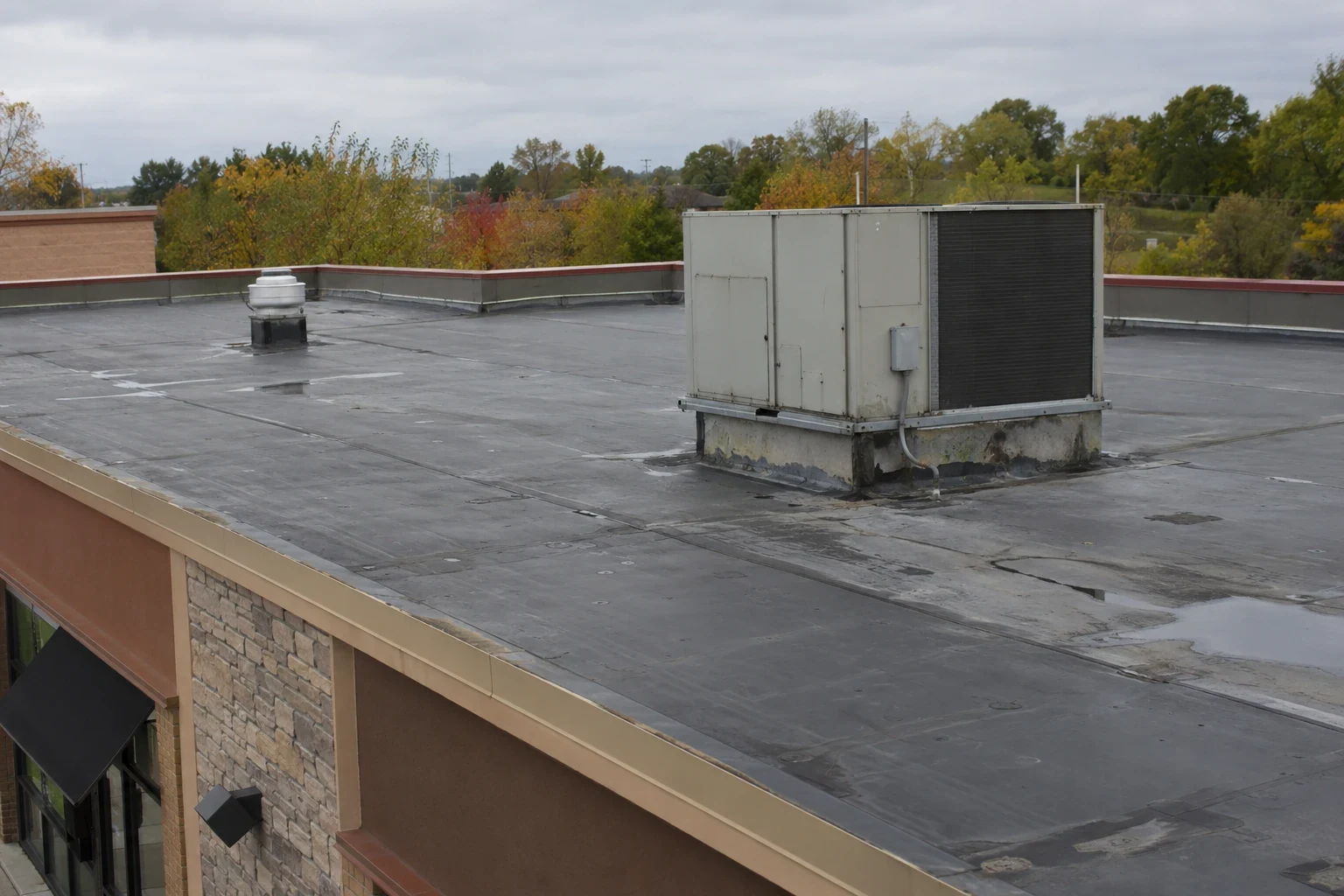
Shopping Center Roofing
Talk to Commercial Roofing Westminster
Call 555-555-5555 or send a request and we will schedule a visit to look at the roof, explain what we find and lay out your options.