
Commercial Roof Maintenance in Westminster, CO
Maintain Westminster commercial roofs with scheduled drain, seam, edge, and flashing checks tied to photos, repairs, and the next service visit.
Commercial Roof Maintenance
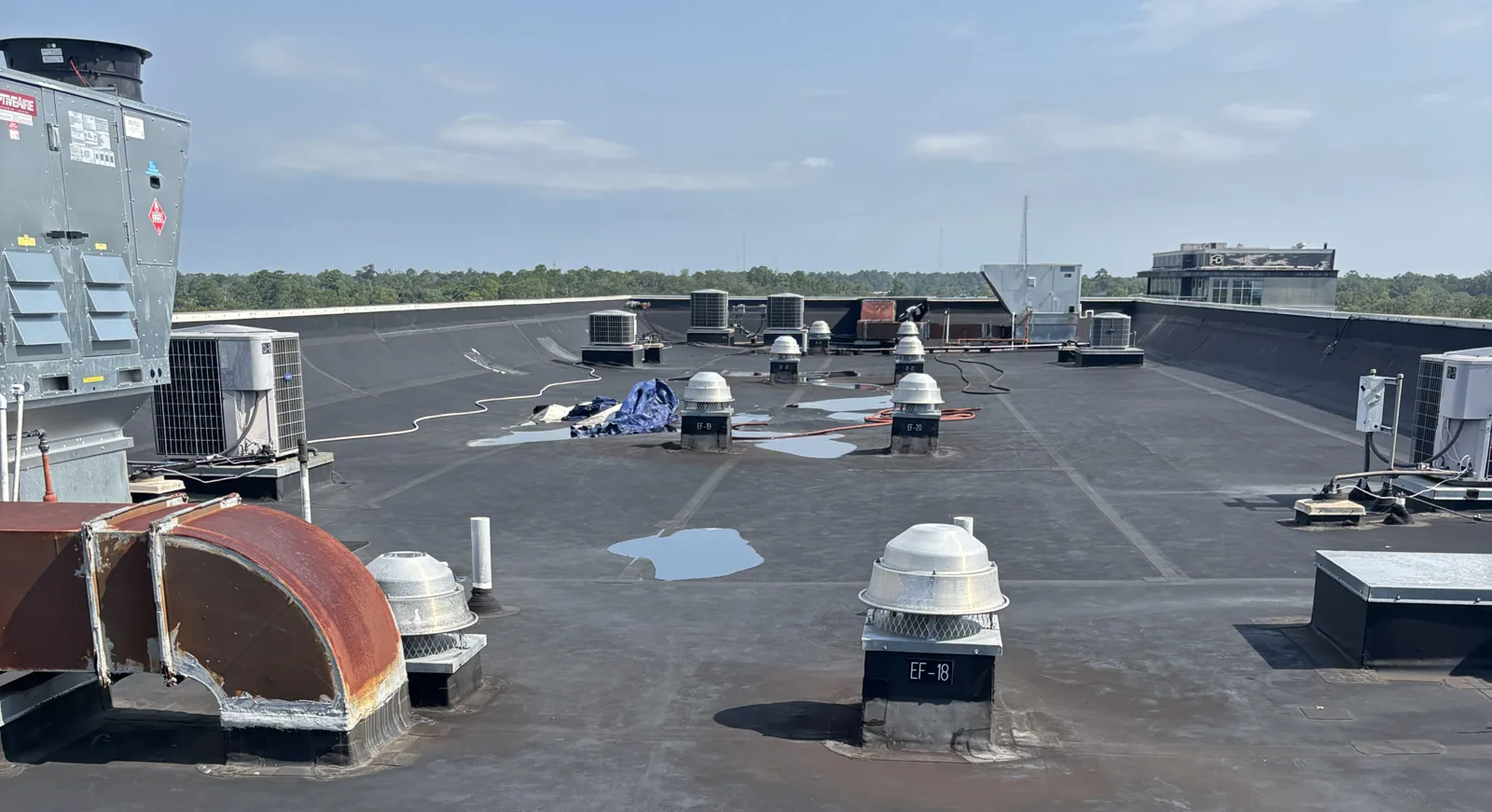
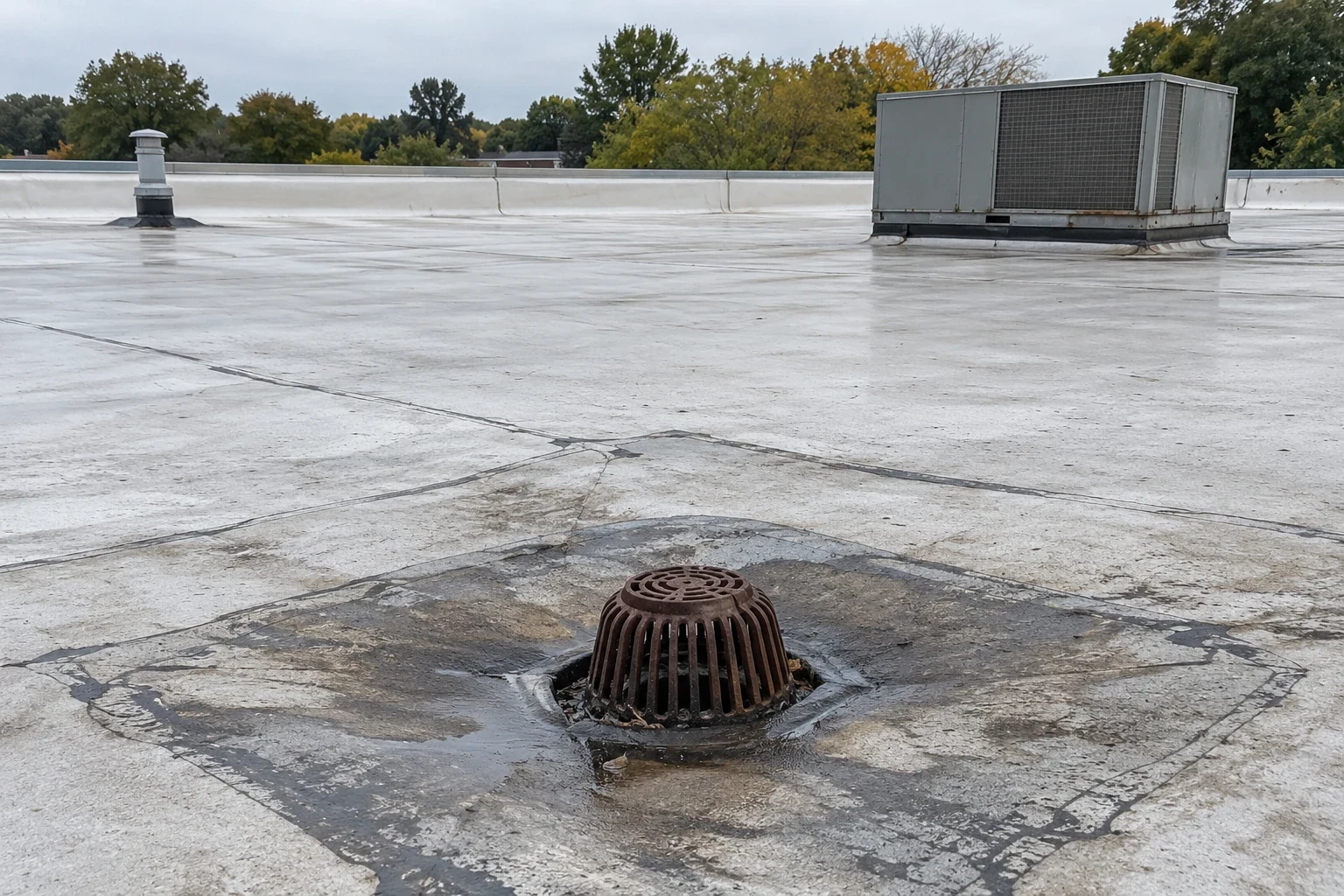
After a wet spring, debris in a drain bowl can keep water at a seam long after the rain stops. A maintenance visit checks the outlet, nearby membrane, curb, and edge as one connected area. In Westminster, a May 2024 hail event and seasonal weather shifts make a planned roof check useful when exposure or maintenance history calls for one. Those conditions make dated roof checks useful; they do not prove a defect. We record the actual building, roof sections, and findings so the next visit can compare conditions instead of starting from memory.
Set visits around the roof and season
Maintenance timing depends on the roof system, prior repairs, equipment traffic, drainage, tenant activity, and the owner's risk priorities. A scheduled walk can follow spring weather, a planned capital review, or a recurring service interval chosen for the property. We establish a baseline, then revisit the same drains, seams, curbs, and edges. A roof inspection can document broader condition when the owner needs a starting report before recurring visits begin.
Inspect the property's roof directly after snowmelt and record what changed at drains, seams, and transitions. A regional average cannot show whether one roof has a blocked outlet or settled low point. We check actual water paths, overflow openings, parapets, and areas where debris gathers. After hail, wind, or heavy precipitation, a focused follow-up can compare the roof with prior images. A storm assessment records visible changes separately from routine maintenance items.
For a portfolio in Westmoor Technology Park or along the 120th Avenue corridor, visit frequency can differ by building. A warehouse roof with frequent service access may need different attention from a retail property with tenant-facing entries and canopies. We keep separate asset records and do not assume one building's maintenance interval or repair history applies to another.
Work from a repeatable inspection path
We follow a defined route and mark each roof section on the plan. First we check drains, scuppers, overflow paths, and visible low areas. Next we review seams, flashing, penetrations, hatches, equipment supports, and perimeter metal. We note debris removal separately from repairs. A loose strainer, open seam, punctured membrane, or failed termination receives a location, image, and recommended action.
At a curb, we look for membrane movement, corner splits, open terminations, and metal that has separated. At the roof edge, we inspect coping joints, fasteners, gutter connections, and downspouts. A drainage service can address a damaged outlet, while edge and gutter work can repair a perimeter detail. The maintenance log states what was completed and what remains for authorization.
A visual walk does not show every concealed condition. Soft areas, recurring leaks, unusual staining, or failed repairs may justify a closer test. A moisture survey or test opening is a separate method with its own coverage and limits. We identify the question first so the additional work has a purpose.
Remove routine debris without masking repairs
Leaves, packaging, grit, and loose rooftop debris can restrict a drain or hold moisture against a detail. When debris removal is included, we clear it from approved areas and confirm that the strainer and overflow remain open. We do not treat cleaning as repair to a damaged bowl, loose membrane, or failed connection. The visit record separates maintenance performed from defects that need a work order.
Westminster Promenade contains retail and hospitality uses; Orchard Town Center is a major outdoor retail area in the North I-25 corridor. Those local examples have different delivery, public-area, and equipment schedules. The property manager confirms the actual access route and work window. A Promenade property or an Orchard Town Center property still receives a building-specific maintenance plan.
Equipment changes can disturb a roof even when the roofing work is not part of the service call. We note new supports, conduit, exhausts, curb modifications, and abandoned penetrations. The manager can then coordinate with the mechanical contractor before a small opening becomes an interior leak. The service log identifies the affected section and the party responsible for follow-up, when known.
Prioritize work from observed risk
Each item should have a clear next step. An active opening may need temporary protection. A loose seam may require compatible membrane repair. Repeated ponding can call for drainage review. A brittle coating or widespread moisture may need testing before a restoration or replacement decision. We rank the work by active water entry, deterioration, exposure of the assembly, and the consequence of waiting, while noting any area that could not be checked.
Westminster enforces its adopted 2021 building and energy code provisions for applicable projects. If maintenance turns into a larger alteration, the design team confirms requirements for that scope. The maintenance ticket records the work performed and any issue referred for design or permit review. It does not treat routine cleaning as code work or promise that a visual visit is a compliance inspection.
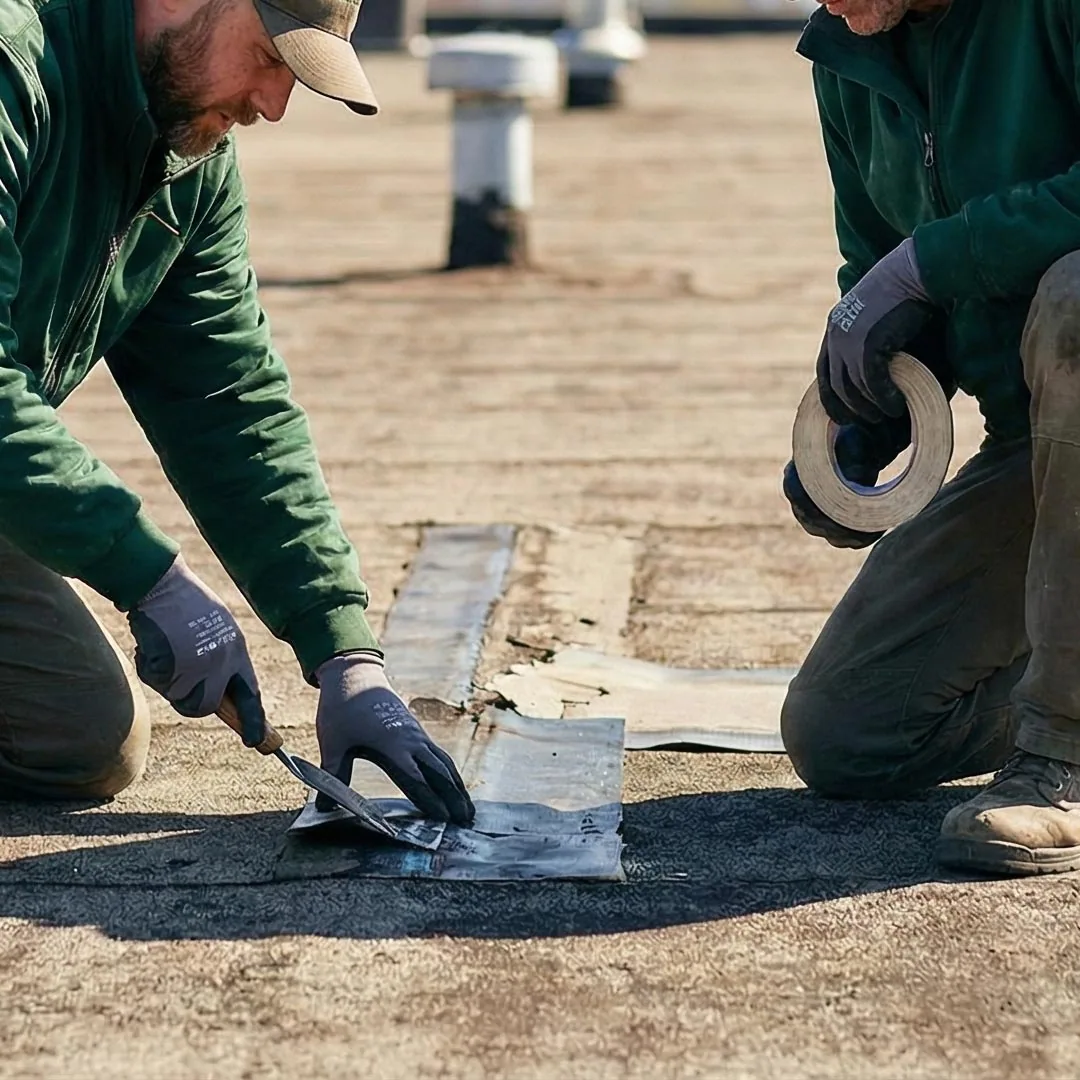
When repairs are approved, we define material, preparation, access, and area. The crew photographs the surface before and after work. A repair scope can address confirmed defects. If records or testing show a wider failure, a recover evaluation can compare options before the next budget cycle.
Put the next roof walk on the calendar
Tell us what weather event or roof issue prompted the call, which building and area are involved, and how the roof can be accessed. Send plans and repair history if available. We will document the route, findings, and next service step.
Leave a useful record after each visit
A maintenance record includes date, building, weather and access conditions, roof sections reached, drains and details checked, debris removed, repairs performed, and open items. Each photo is labeled with a roof map reference. If part of the roof was blocked by equipment or could not be entered safely, we say so. The next person can tell whether an item is new, unchanged, or outside the earlier visit.
For a Westminster owner with multiple buildings, shared scheduling should not merge condition records. A roof asset file can hold each structure's map, system notes, repair tickets, and next service date. This supports budgeting while preserving individual roof history. It also helps facilities staff find the last observation when a tenant reports water or a contractor needs access.
To start a maintenance program, send the property address, roof plans or system information, leak and repair history, access contact, equipment schedule, and preferred service window. Tell us what weather or building issue prompted the request. We will set an inspection route, record current conditions, and recommend a useful follow-up cadence for the roof areas inspected.
At each return visit, we compare new photographs with earlier views of the same drain, joint, or edge. A cleared strainer is not a repair to a cracked bowl; a new patch is not proof that adjacent seams were checked. We note what changed and what stayed stable. The manager can use that distinction to schedule maintenance, authorize repair, or request a closer test without losing the context of the previous visit.
Commercial Roofing Questions
What does a maintenance visit check?
We review drainage, seams, flashing, penetrations, edges, visible repairs, and access conditions. The record separates cleaning from repairs and lists follow-up items by roof section.
How often should our building be on a service schedule?
The interval depends on the assembly, drainage, prior findings, equipment activity, and owner priorities. We recommend a cadence after establishing the roof's condition and access needs.
Does a maintenance walk include infrared testing?
Not unless that method is included in the scope. We identify where a scan or test opening could help and report its coverage separately from a visual walk.
Can maintenance prevent every leak?
No. Regular checks can find debris and visible deterioration earlier, but concealed conditions and new damage can still occur. We document what was inspected and any limits.
What records should we keep between visits?
Keep dated leak reports, repair invoices, roof plans, equipment changes, access restrictions, and photos with the building address. Those records help the next inspection focus its route.
Related Roofing Work
Commercial Roof Inspection
Read more
Storm Damage Roof Repair
Read more
Commercial Roof Drains and Scuppers
Read more
Commercial Roof Edge Metal, Coping and Gutters
Read more
More Commercial Roofing Services in Westminster
See the rest of our commercial roofing services for Westminster commercial buildings, or call 555-555-5555 to talk through your roof.

Commercial Roof Maintenance
Talk to Commercial Roofing Westminster
Call 555-555-5555 or send a request and we will schedule a visit to look at the roof, explain what we find and lay out your options.