
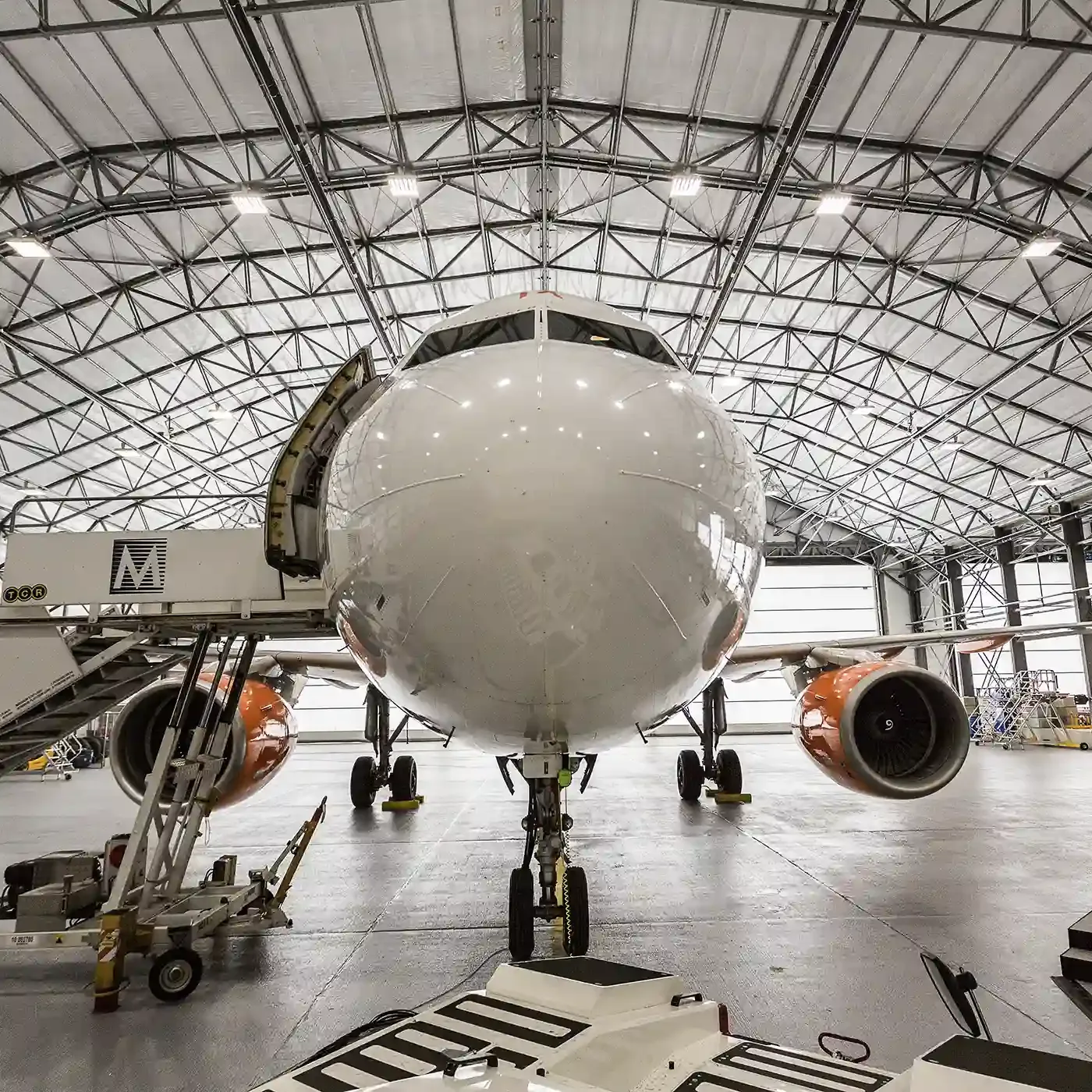
Aircraft Hangar Roofing in Westminster, CO
Plan Westminster-area hangar roofing around aircraft clearance, door systems, and apron access. Inspect wind edges, seams, and drainage before repairs.
Aircraft Hangar Roofing
After wind-driven rain reaches the floor near a hangar door, inspect the door head, roof edge, and drainage path before opening the membrane. A leak can follow framing or a seam and surface well away from the roof entry. Jefferson County Airport sits near the U.S. 36 corridor. A commercial hangar visit starts with the specific building, aircraft schedule, and door access; we map the roof and coordinate safe work boundaries.
Map the roof around aircraft movement
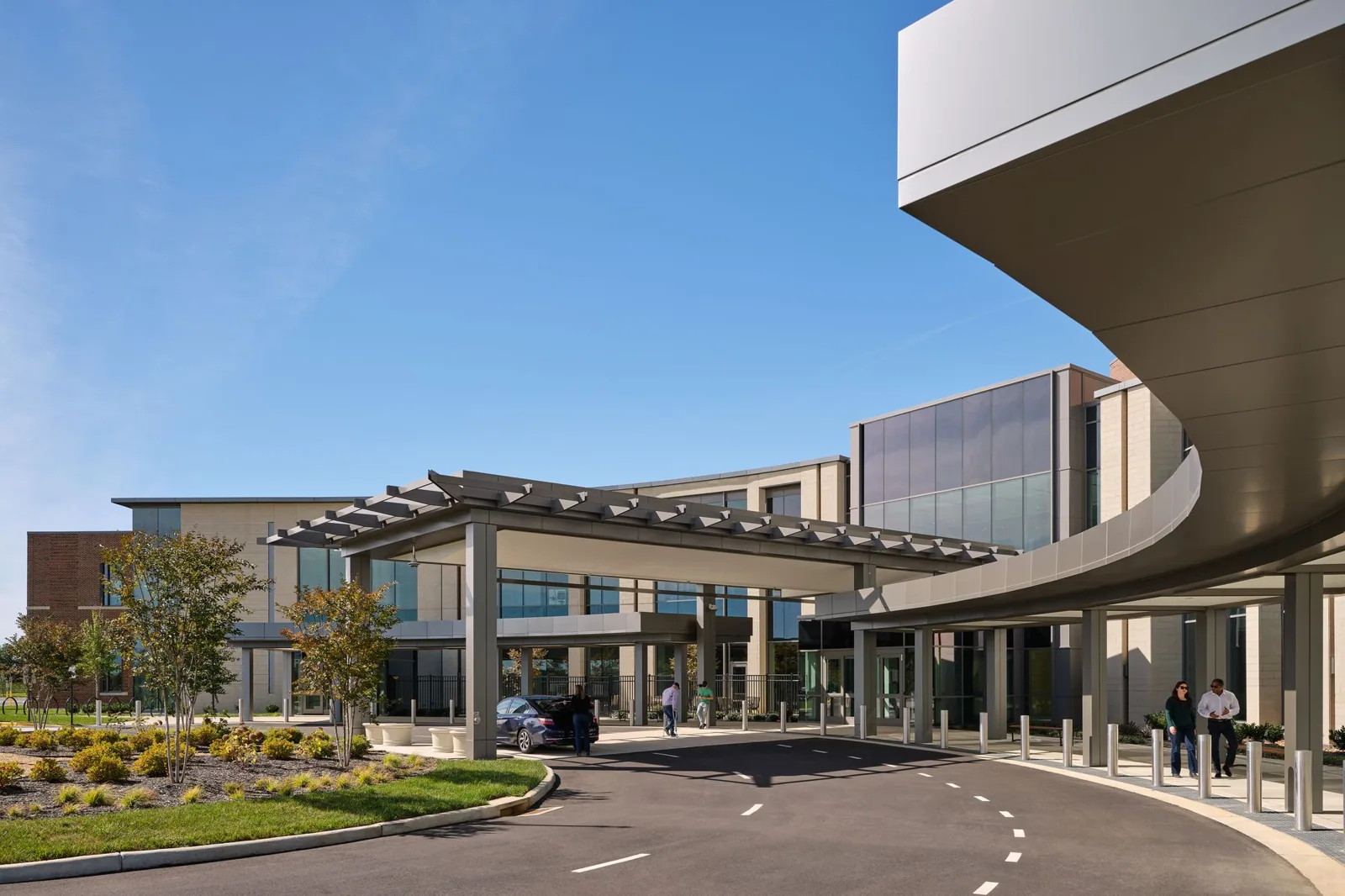
Hangars can combine clear-span roof areas, large doors, maintenance bays, offices, parts rooms, and equipment platforms. The operator identifies which aircraft or work areas cannot be moved and where a temporary restriction would affect flight or maintenance activity. We compare the interior report with seams, penetrations, drains, roof edges, and the door assembly before setting a repair boundary.
Westmoor Technology Park sits in the northwest business corridor, a short distance from Jefferson County Airport. The regional Church Ranch and U.S. 36 node provides another Westminster-area route reference. These facts help orient dispatch; the operator must confirm the hangar location, apron entrance, and airside access procedure.
A flex-industrial roof review can address mixed office and shop functions. A military hangar assessment may require installation-specific access and procurement requirements. Commercial hangars need their own aircraft movement, maintenance schedule, and security coordination.
Inspect the door transition and roof edge
Hangar doors place unusual demands on the enclosure. We check the head flashing, jamb transitions, seals, wall-to-roof junction, and nearby membrane. Door movement and vibration can affect adjacent metal or sealant. We note the door position during inspection and coordinate any test that requires opening or cycling it.
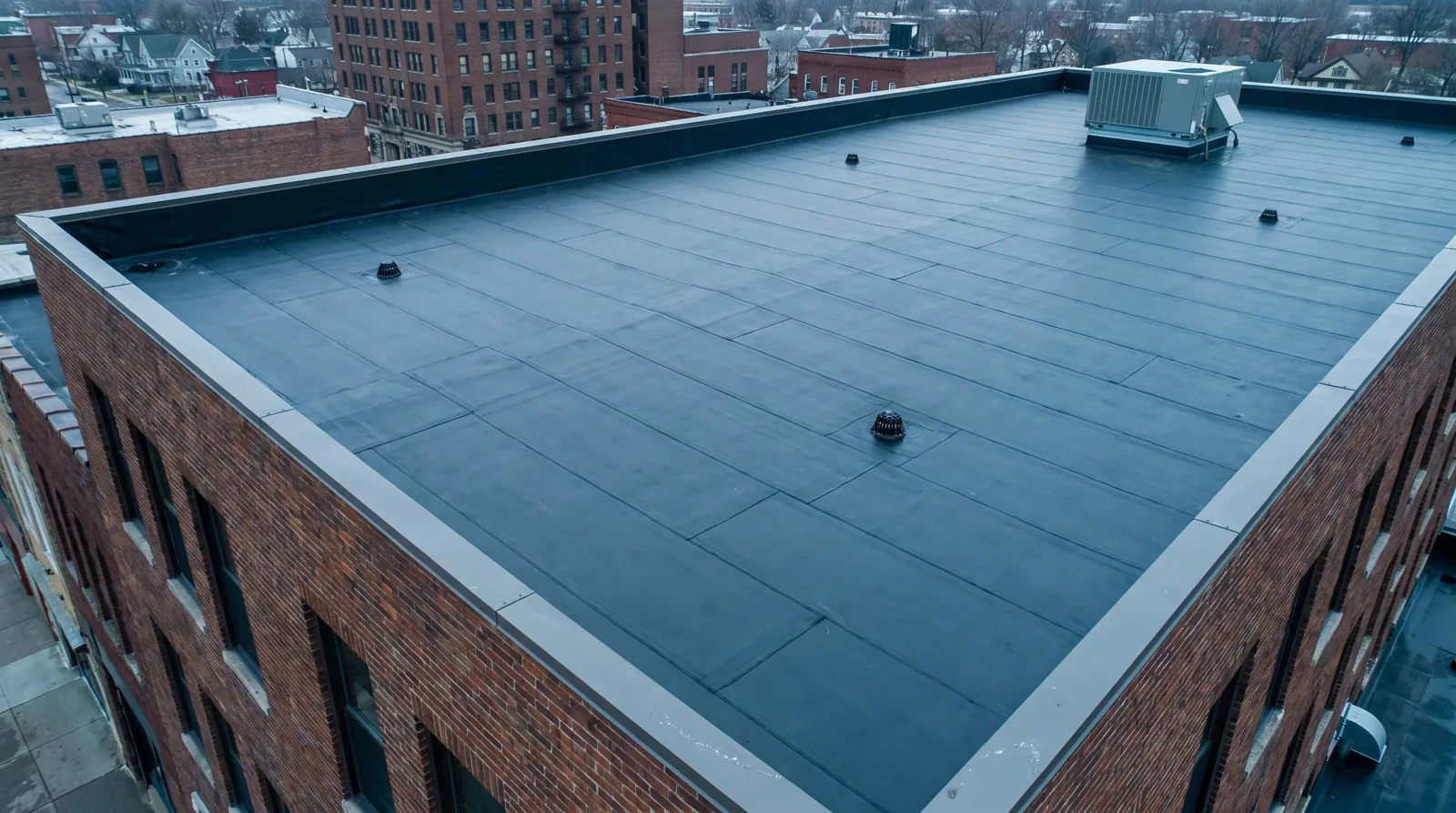
On the roof, the crew checks seams, penetrations, equipment supports, drains, and exposed edge details. Standing seam metal and low-slope membranes need different inspection methods. We identify the actual assembly before proposing a patch, flashing repair, or larger renewal. A roof inspection records photos, roof zones, and areas the crew could not safely reach.
If water appears above a maintenance bay, the operator identifies tools, parts, and aircraft components that need protection. We define where a temporary cover can be placed and what work below must pause before opening the roof. A leak investigation traces the likely path and states which tests remain.
Use wind and snow as separate checks
Westminster-area weather includes hail, wind, snow, heat, and winter events. After hail, we inspect membrane, skylights, roof metal, and exposed equipment for impact evidence. For aircraft hangar roofs, separate a visible opening from moisture that needs testing; leave structural questions to the project design professional. Wind can expose edge conditions and door-side flashing. A wind-related roof review can document displaced details and temporary protection without assuming damage from a forecast alone.
Aircraft movement, apron operations, and roof access must be coordinated together. The operator sets the secure perimeter and movement hold. We confirm that the work zone will not interfere with a door cycle, refueling route, or emergency movement before staging materials.
Protect aircraft and maintenance schedules
Before a repair, identify the aircraft below, planned movements, maintenance tasks, and any equipment that cannot be exposed to dust or debris. A short repair can still affect a hangar if the work crosses an active door or clear-span area. The plan states the roof opening, debris control, overhead protection, and time needed to restore the area. It also lists who verifies that no loose fasteners, packaging, or tools remain before an aircraft moves beneath the repaired section.
Some repairs can be completed between aircraft movements. A larger reroof may require a bay-by-bay sequence, a temporary hangar closure, or a staged aircraft relocation. Management sets the operational limits; our superintendent defines each roof phase and its daily watertight endpoint. An occupied-facility sequence can show the access route and affected area before work begins.
Security procedures vary by property. The operator supplies badging, escort, photography, and tool-control requirements. If a planned procedure changes, the crew pauses at the boundary and receives direction from the authorized contact before continuing. The operator identifies which person can release an aircraft bay and whether tools or materials must be counted when the crew exits. These steps belong in the daily closeout, along with the door position and any temporary restriction that affects the next shift.
Coordinate roof access with hangar operations
Share the hangar location, roof and bay maps, aircraft movements, door schedule, security rules, weather or leak timing, and access limits. We will inspect the roof and document a safe work boundary.
Choose a scope from roof findings
A repair may stay within one roof zone when the surrounding sheet and flashing remain sound and the defect has a clear boundary. We identify roof type, material compatibility, attachment, tie-in point, and the visible moisture boundary. The proposal names any test opening or concealed condition that could change the scope. If the deck or support framing becomes visible, we record the finding and seek direction before adding structural work to a roofing repair.
Repeated leaks, broad moisture, or deteriorated door transitions may require testing and a capital review. A recover depends on moisture, attachment, added height, drainage, and project requirements. Replacement may involve removal, insulation, cover board, membrane or metal panels, door-head flashing, and edge work. Timing and cost depend on area, equipment access, aircraft protection, and whether the hangar can be phased.
Westminster currently applies its 2021 building and energy-code editions. If the hangar is outside city limits or subject to airport or other jurisdictional rules, the owner identifies the authority having jurisdiction. We coordinate the proposed scope with that review instead of assuming one code process applies to every site.
Keep the hangar roof history current
Door adjustments, new exhaust lines, antennas, and equipment service can change roof details. Record each visit and any repair near a door head or support. Photos should match a roof map and identify the aircraft bay below, access condition, and follow-up item. The next inspection can compare the same detail after another season or equipment change.
A scheduled maintenance visit can inspect seams, flashing, drains, and traffic paths before water reaches a hangar floor. A drain review can document outlets after snowmelt. At closeout, the operator receives the work boundary, photos, temporary protection status, and the next check date.
For multiple hangars, keep a separate roof plan, access contact, and movement procedure for each building. A facility's roof type or operating limits should not be inferred from the neighboring bay. The record shows what was actually inspected and what remains outside the scope. Keep each visit associated with its building number and movement contact for dispatch.
Coordinate the roof zone with aircraft movement, door cycles, and any maintenance activity below. The facility operator should confirm the work boundary and secure access before equipment is staged. If an inspection cannot reach a section without interrupting operations, list that limit and agree on a return window rather than implying full coverage.
Commercial Roofing Questions
What clearance is needed to work above a parked aircraft?
Sometimes, if the operator can establish clearance, overhead protection, movement holds, and a safe closeout. A larger opening may require a temporary move or bay closure.
Can a leak come from the hangar door rather than the roof field?
Yes. We inspect the door head and jamb transitions along with adjacent roof seams and flashing before deciding where water entered.
Does nearby hail or wind confirm a hangar was damaged?
No. Weather sets the inspection timing. We document the membrane, metal, door transition, and equipment condition at the facility.
Can replacement be staged by hangar bay?
A phase plan can define aircraft clearance, door use, temporary protection, and daily closure points. The workable sequence depends on access and roof conditions.
What should the operator provide before a visit?
Send the roof plan, aircraft and maintenance schedule, door-use constraints, security and apron procedures, recent weather, and any prior repair records.
Related Roofing Work
Westmoor Technology Park
Read more
Church Ranch and U.S. 36
Read more
Flex Industrial Roofing
Read more
Military Hangar and Maintenance Facility Roofing Near Westminster, CO
Read more

More Property Types We Roof in Westminster
See the rest of our property types we roof for Westminster commercial buildings, or call 555-555-5555 to talk through your roof.
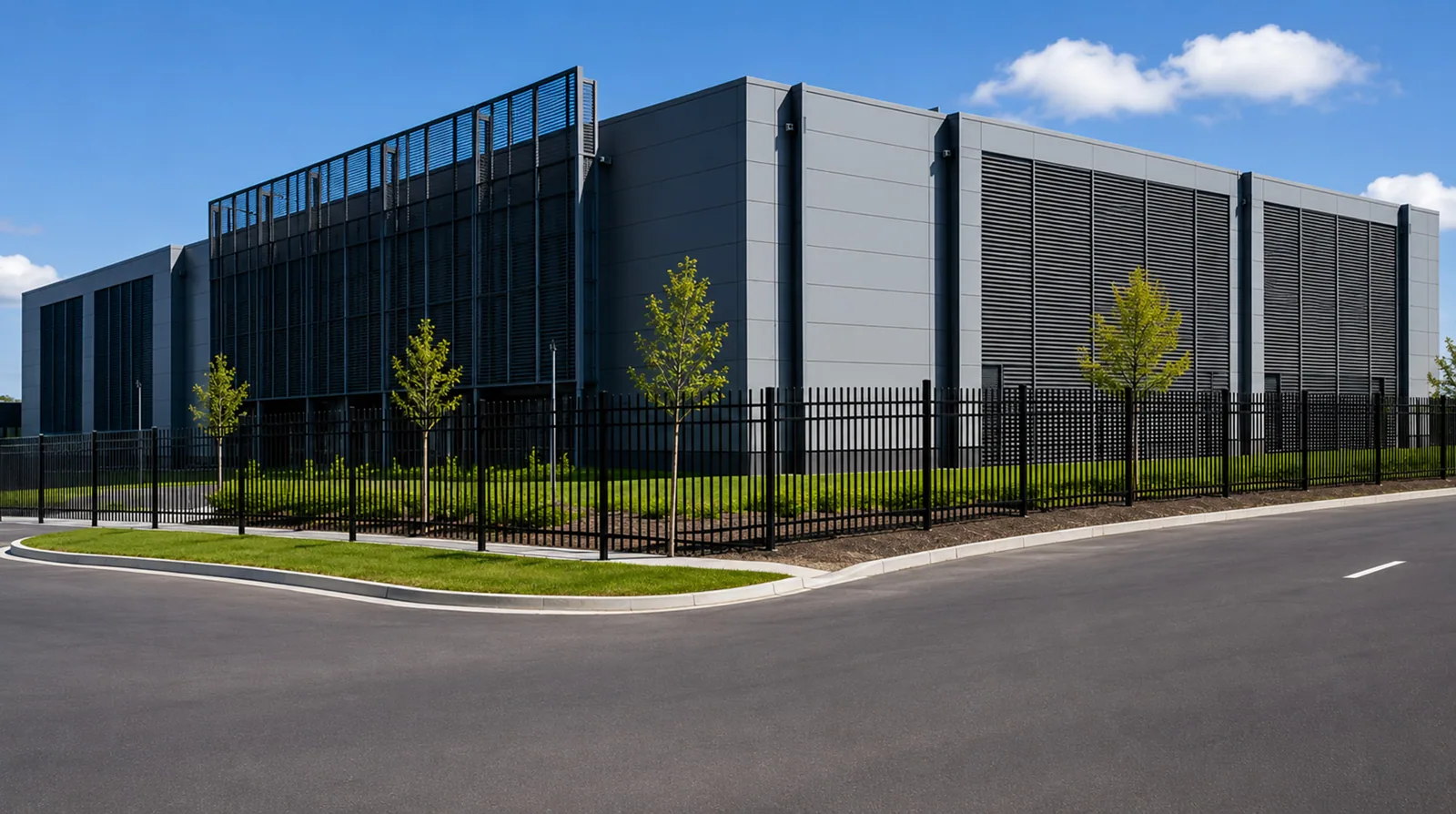
Aircraft Hangar Roofing
Talk to Commercial Roofing Westminster
Call 555-555-5555 or send a request and we will schedule a visit to look at the roof, explain what we find and lay out your options.