
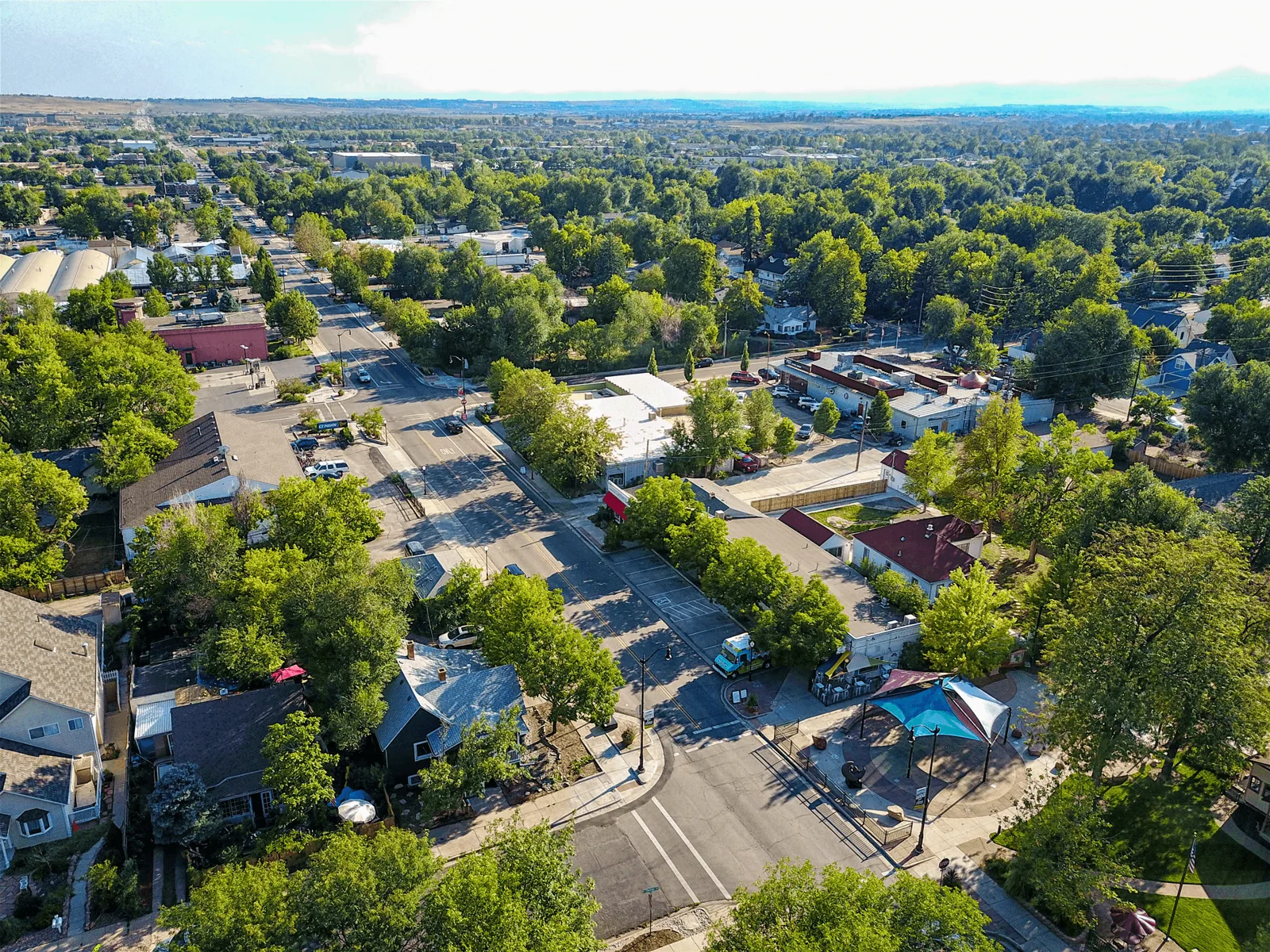
Commercial Roofing in Old Town Lafayette, Lafayette, CO
Plan Old Town Lafayette roof repairs around shop access, public routes, drainage, weather, and building-specific inspection records.
Old Town Lafayette, Lafayette
For restaurants, shops, and businesses in Old Town Lafayette, roof access should be coordinated with the street activity below. Baseline Road, South Public Road, East Simpson Street, and North Harrison Avenue form the district's business and activity streets. A roof request needs the property, affected room, and service route, not just the downtown name. We inspect the building itself before setting a repair boundary.
Keep work at the property scale
Old Town is Lafayette's downtown, with restaurants, businesses, attractions, small shops, and public art. The street context can affect lift placement, deliveries, customer access, and work hours. Keep any Olde Town Arvada roof request separate; its pedestrian routes and reinvestment records need their own inspection. Confirm which property is involved and who controls roof entry. Identify the pedestrian path and any entrance that must stay open. A South Lafayette healthcare district request involves different operating contacts and should remain separate from Old Town records. A Olde Town Arvada roof visit also needs a separate property map.
Lafayette's Downtown Development Authority, established in 2025, is dedicated to revitalizing and enhancing Old Town. For occupied storefronts and businesses, agree on roof access and street-side staging before the inspection. Keep property plans, maintenance history, and repair photos under the building where the work occurs. A roof asset file can preserve those details through tenant or ownership changes.
Map the roof edges, penetrations, drains, parapets, equipment curbs, and transitions. Compare available drawings with field conditions. Mark any section outside the approved access route. If a building has several roof levels, identify each in the inspection photos so the repair boundary remains clear.
Trace the interior symptom
Ask which room is affected, when water appeared, and whether the report followed rain, snowmelt, or equipment work. A roof leak may follow insulation seams, deck channels, or framing and appear away from the entry point. Compare the timing with details above and nearby. Keep the visible stain separate from the entry point until the roof walk supports that conclusion.
Check seams, wall flashings, curb bases, pipe penetrations, edge metal, drains, and overflow routes. Look for open laps, split sealant, punctures, loose termination bars, blocked flow, or prior patches. Photograph a close detail and its location. A commercial roof inspection can note access limits, tests completed, and findings that still need follow-up.
Confirm the membrane before recommending a repair. TPO, PVC, EPDM, KEE, modified bitumen, built-up, and metal roofs require different preparation and detail work. If the system remains unknown, review records or conduct a controlled investigation first. For a verified PVC roof, a PVC system inspection can document seams and flashing before repair materials are selected.
Use weather to schedule the walk
Front Range weather can bring hail, wind, thunderstorms, winter precipitation, heat, and cold. Use a regional storm date to organize a roof walk, then photograph the conditions observed on the Old Town building. For Old Town Lafayette area, coordinate access around the occupied space below the repair; schedule a return only after confirming safe roof access. The recorded normal and westward terrain pattern should not become a design value for this district. After thaw, inspect drains and overflows at the building, then compare the conditions with interior reports. Use project documents for structural questions and field observations for current drainage.
For an active leak, a leak response can limit interior exposure while permanent work is scoped. After possible hail or wind exposure, an Old Town inspection can document visible effects. Separate temporary protection from the lasting repair in the work record.
Set the boundary before pricing
A split at a wall transition or a separated lap can stay within a small work area when nearby material is dry and secure. Several recurring interior reports, soft insulation, or loose attachment change the question from patch size to assembly condition. Review drainage, roof layers, edge construction, and repair history first. Use a moisture survey only when its coverage and result can change the recommended scope.
A repair scope should describe preparation, compatible material, exact repair area, closeout photos, and any return test. A replacement scope should state tear-off assumptions, insulation and cover board, membrane, perimeter work, drain modifications, staging, and daily dry-in. In downtown conditions, staging and delivery can take more planning. Cost also changes with roof height, access equipment, concealed wet material, detail count, and work-hour limits.
Confirm Lafayette's current permit path and code requirements for the project. A replacement proposal should list the jurisdiction, assembly, and work assumptions. If a roof can remain in service, maintenance visits can track drainage and repairs without waiting for a larger project.
Schedule an Old Town roof inspection
Share the property or business, affected room, weather or leak timing, access route, and any delivery or street restrictions.
Protect the public route
Before a lift arrives, agree on loading, staging, roof access, pedestrian barriers, and the entries that stay open. Coordinate notices with the businesses affected by the work. The named Old Town streets help locate a request but do not identify the right side of a building or its access route. Confirm those details with the property contact on site. For a business on Old Town's commercial streets, identify the customer entrance, loading route, and roof access point before materials are staged.
Adhesive and coating work depend on surface and weather conditions. Check the chosen system's requirements and the forecast. If an opening must remain through a shift, use an appropriate temporary detail and assign the return date. Coordinate any rooftop unit shutdown with the operator and write down who approves restart.
At closeout, clear drains and staging debris, restore public access, and compare finished details with initial photos. State what was completed, what remained inaccessible, and whether a test is still due. Keep one property record even if the project affects more than one Old Town street frontage. If work sits above an active shop or restaurant, confirm the contact receives the closeout before reopening the affected route.
Preserve the roof history
Keep roof plans, inspection photos, system documents, warranties, repair orders, and access notes under the property name and roof zone. Label each image by direction and date. Record whether a condition was observed, tested, corrected, or left open. Keep each Old Town building's maintenance history and roof map with its inspection record.
On a return visit, use the prior photo to locate the repaired detail. Check whether water returned after rain or thaw and whether drainage remains open. Update the access contact if the business operator has changed. Keep deferred tests visible until a result is recorded.
For Old Town Lafayette service, share the business or property area, affected room, leak timing, prior repairs, access contact, and street or delivery restrictions. We can inspect the actual roof, document the evidence, and explain repair or capital options that fit the building.
Commercial Roofing Questions
Which streets help locate an Old Town roof request?
Baseline Road, South Public Road, East Simpson Street, and North Harrison Avenue identify the district. Dispatch still needs the property and access contact.
Does the Downtown Development Authority inspect roofs?
Its role is district revitalization. A building roof needs its own owner records, access arrangement, and field inspection.
Can work proceed beside open shops and restaurants?
The schedule can be coordinated around access, deliveries, public routes, noise, and business hours with the property contact.
What should a leak report include?
Send the room, onset, weather or equipment timing, prior repair history, and the person who can authorize roof access.
Does a nearby storm prove roof damage?
No. We document the condition at the inspected property and separate visible impact from wear or a condition that needs testing.
Related Roofing Work
South Lafayette's Healthcare District, Lafayette
Read more
Olde Town Arvada, Arvada
Read more
Commercial Roof Asset Management
Read more
Commercial Roof Inspection
Read more
More Service Areas in Westminster
See the rest of our service areas for Westminster commercial buildings, or call 555-555-5555 to talk through your roof.

Old Town Lafayette, Lafayette
Talk to Commercial Roofing Westminster
Call 555-555-5555 or send a request and we will schedule a visit to look at the roof, explain what we find and lay out your options.