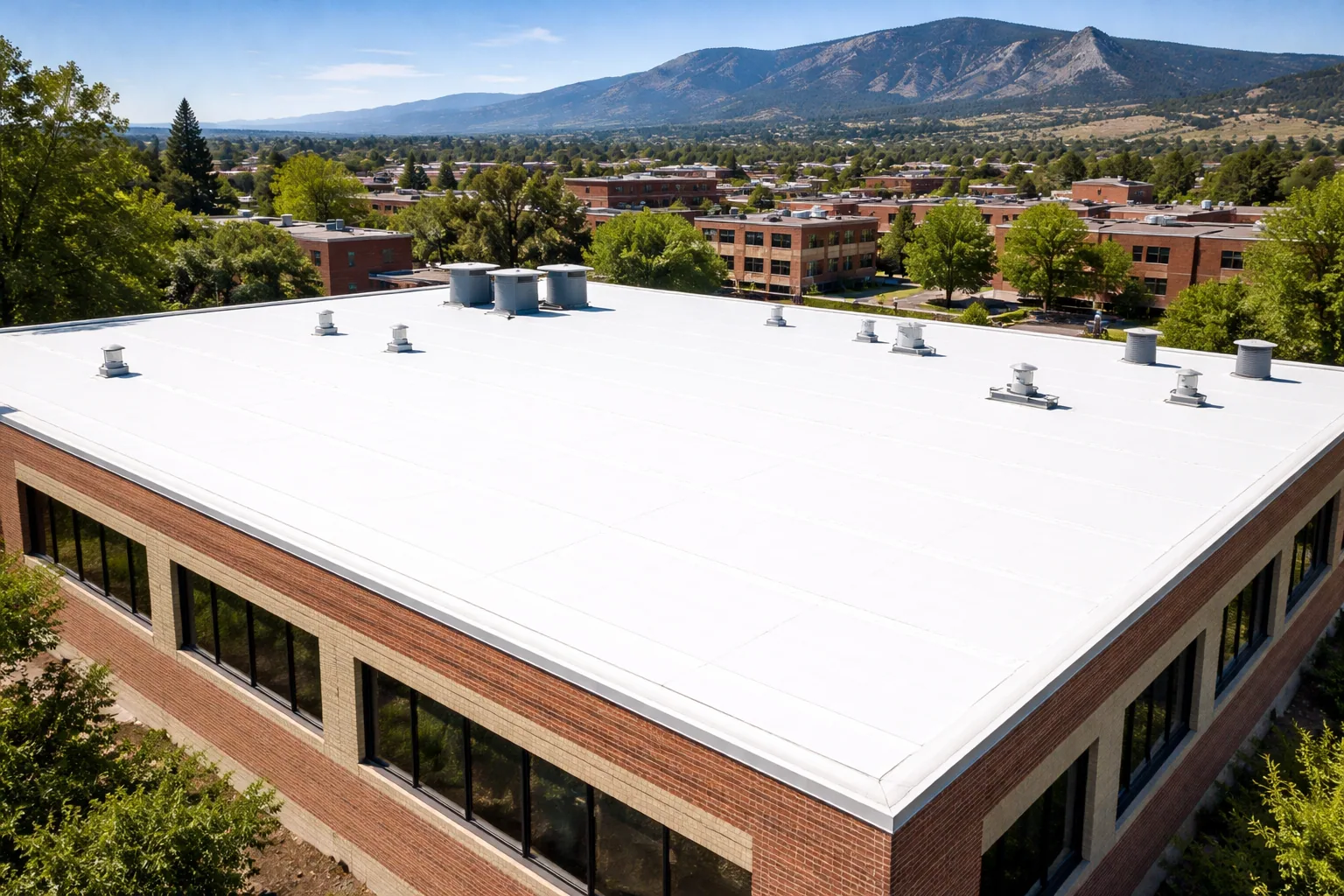
Holcim Elevate Commercial Roofing in Westminster, CO
Review Holcim Elevate roofing systems for Westminster buildings, including UltraPly TPO and RubberGard EPDM, with assembly-specific repair and planning.
Holcim Elevate Commercial Roofing
A cracked flashing after winter weather can sit beside an intact membrane, or it can mark a larger assembly problem. Identify the installed product and transition before opening the roof. Holcim Holcim Elevate's commercial portfolio includes UltraPly TPO and RubberGard EPDM, with accessories, insulation, and other system components. Westminster's hail, wind, heat, snow, and cold make the actual roof condition the deciding evidence.
Read older and current product labels
Older files may say Firestone Building Products; current documents may use Holcim Elevate. Preserve the original wording and confirm the membrane and system. The name alone does not establish product identity or warranty terms.
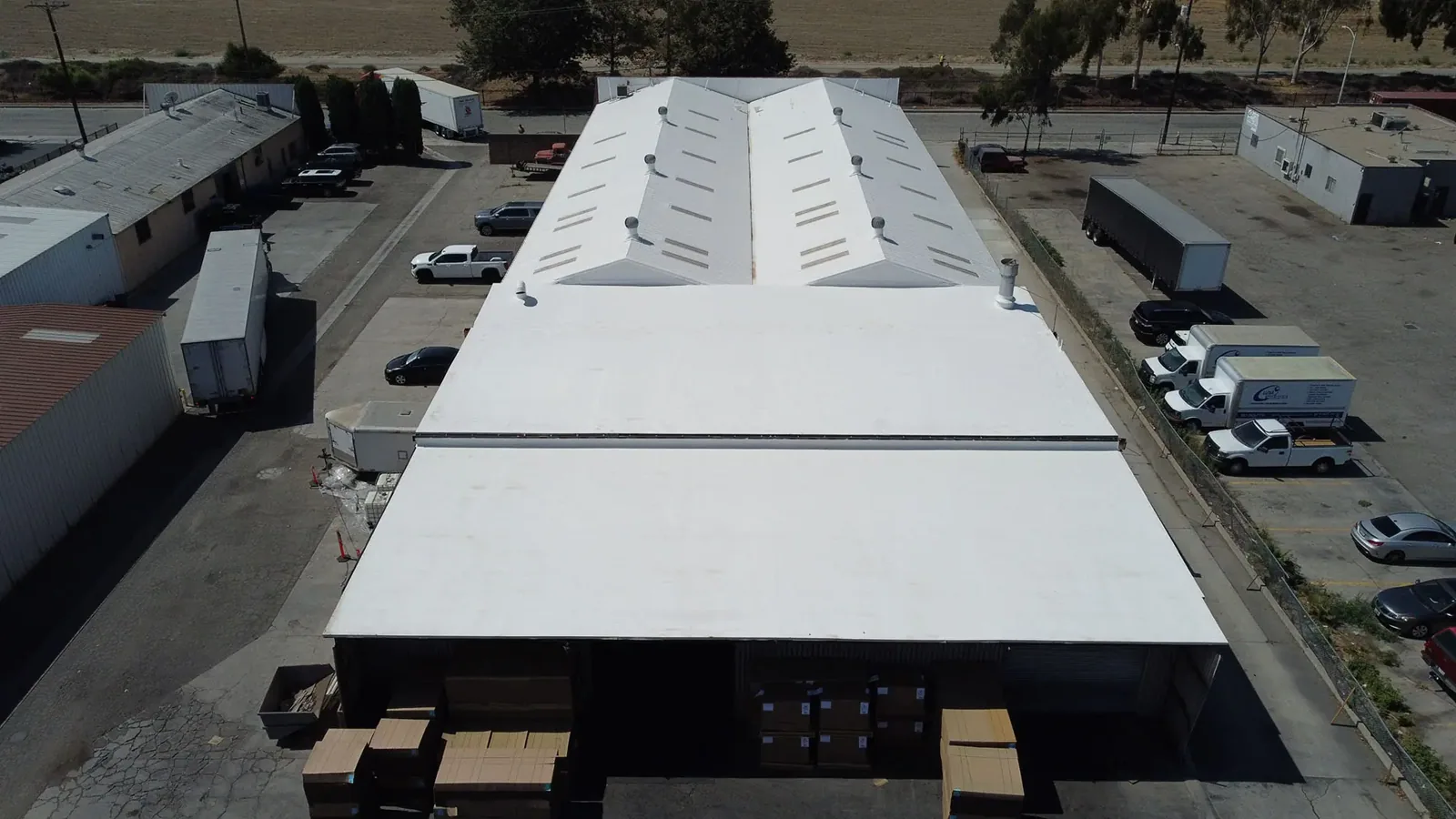
UltraPly is Holcim Elevate's TPO family, a thermoplastic membrane with heat-welded seams. RubberGard is an EPDM line offered in multiple forms, including adhered, mechanically attached, and ballasted system options. EcoWhite is an EPDM membrane option with a light-colored surface. UltraBlend combines TPO on horizontal roof areas with EPDM or EcoWhite for vertical details in a designed system. A GAF single-ply system and a Carlisle SynTec membrane may share a membrane category, but their materials and accessories are not automatically interchangeable.
Check plans, submittals, product labels, seams, fasteners, and flashing. If roof phases use different products, label each zone. Do not infer the installation date from an older brand reference.
Trace the assembly through each roof zone
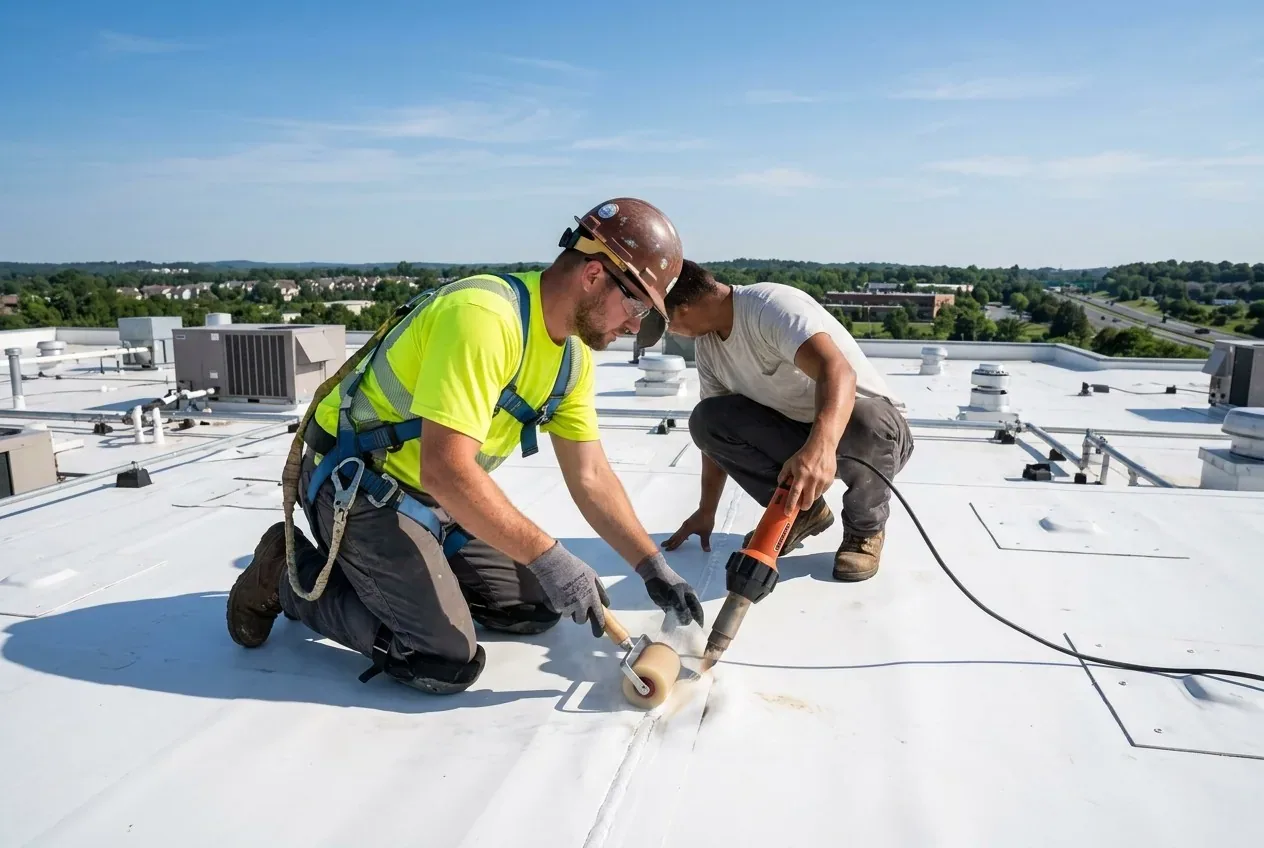
A TPO weld, an EPDM taped seam, and a fleece-backed sheet have different inspection and repair steps. For TPO, confirm the surface is clean and the weld is continuous after cooling. For EPDM, inspect lap edges, primer, seam tape, flashing, and terminations. If fleece backing is present, verify the intended adhesive and substrate. Use the installation documentation for the product actually on the roof.
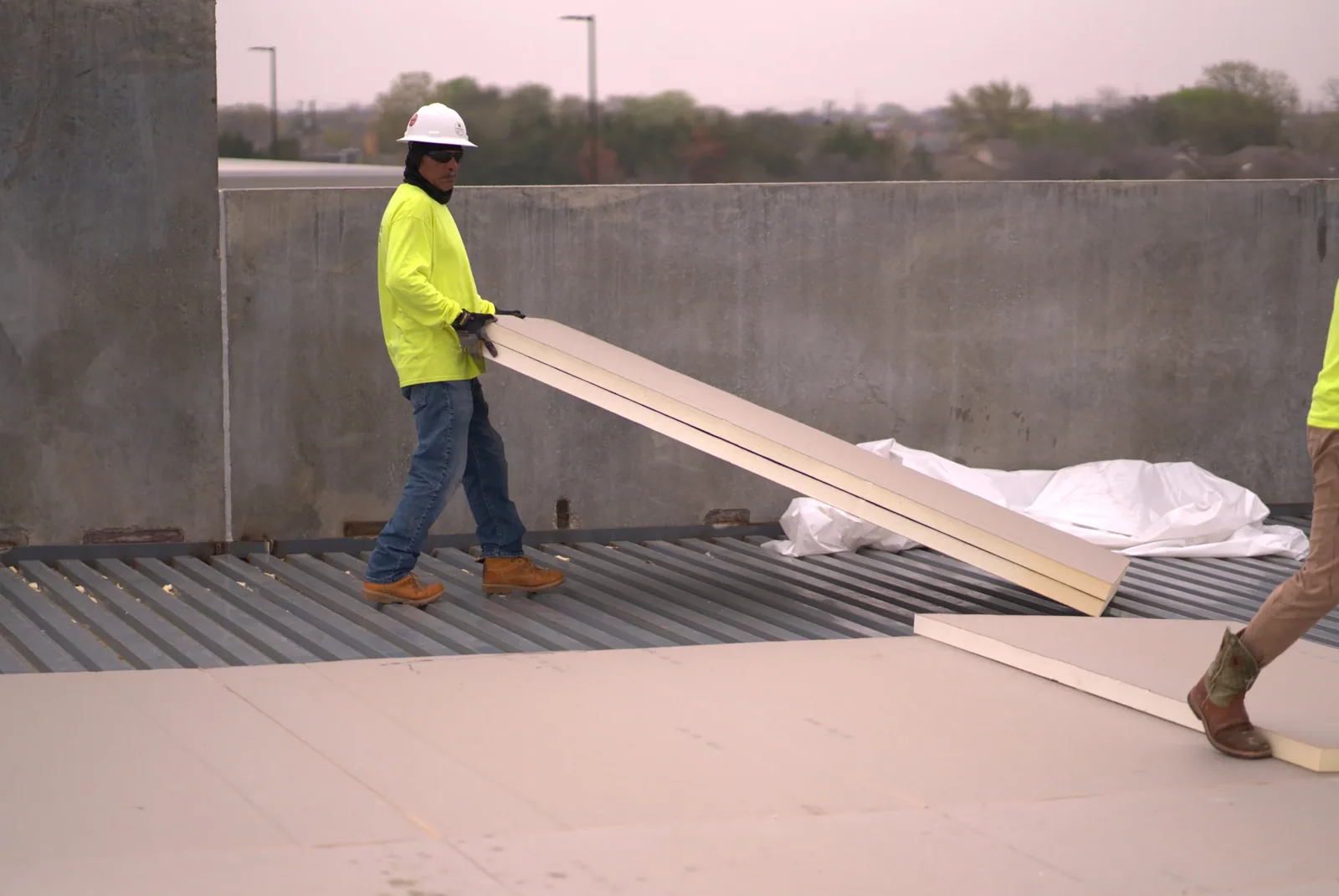
Attachment changes how wind loads reach the deck. Identify fastener rows, perimeter and corner zones, adhesive coverage, or induction-welded plates. Check for prior repairs that changed attachment or added a layer. A roof replacement specification should show the full build-up, including insulation, cover board, membrane, edge, drains, and penetration details.
At Westmoor Technology Park, office and flex buildings stand within the U.S. 36 corridor. The campus includes multiple multistory buildings, so inspect each roof zone and building independently. A Westmoor system survey should capture height, roof plan, equipment, access, and the assembly clues visible at each area.
Inspect the edge and vertical transitions
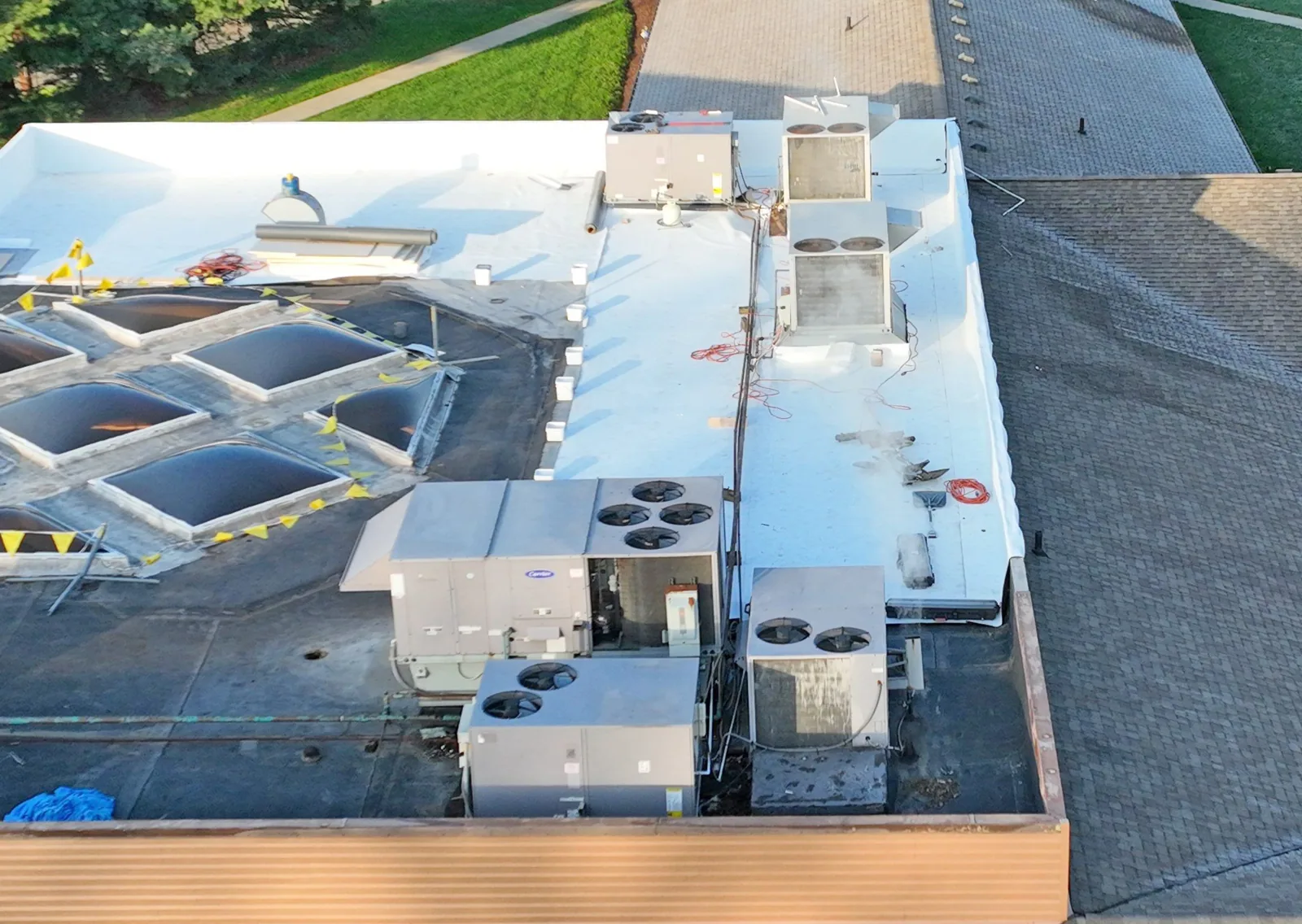
Leaks often start where the roof turns up, terminates, or meets another material. Check parapet base flashing, corners, drains, scuppers, skylights, equipment curbs, expansion joints, and metal edges. Look for separation, stretched sheet, open sealant, loose termination, or a drain bowl that no longer meets the membrane. The repair needs to correct the transition, not merely hide its surface symptom.
UltraBlend illustrates why horizontal field and vertical flashing materials may be selected differently within one assembly. Confirm the approved transition detail and components before replacing one part. Do not assume that TPO and EPDM can be overlapped or sealed together using a generic patch. A drain or scupper repair should show how the membrane, bowl, and overflow interact.
Document the detail from both a context view and a close view. If water is reported inside, trace the potential path and identify which connection remains uncertain. Wet insulation, deck damage, and hidden laps may require testing or a controlled opening before the permanent scope is set.
Select a system for the use and conditions
Compare roof slope, drainage, foot traffic, equipment, deck, insulation, fire and wind requirements, and the owner’s maintenance capacity. TPO can provide a reflective thermoplastic surface; EPDM offers a flexible rubber membrane family with its own attachment and seam methods. Those broad descriptions are not a system recommendation. The project documents, code review, and roof survey determine the assembly.
Broomfield Town Square is a planned mixed-use area near Main Street and 120th Avenue. Development can affect access and tenant coordination, but it does not establish roof condition. Westminster's 120th Avenue corridor has retail concentrated along Federal Boulevard and 120th Avenue. At an occupied retail site, plan delivery, staging, pedestrian protection, and daily dry-in around actual operations.
The Denver/Boulder forecast area includes hail, wind damage, winter weather, heat, and cold. A regional event is a reason to inspect, not proof a roof was damaged. A roof inspection can record visible impact, open seams, insulation concerns, and roof zones that could not be accessed. Use those findings before selecting a repair, restoration, or replacement option.
Review a Holcim Elevate roof
Share the Westminster building, Holcim Elevate or older Firestone documents, roof plans, leak history, and access instructions. We will verify the assembly and define compatible repair or project options.
Restore the defect with compatible materials
Begin a repair by identifying the existing product, checking substrate condition, and locating sound material beyond the defect. Clean and prepare surfaces as specified. On TPO, make a test weld and verify the repair seam. On EPDM, use the correct primer, tape, adhesive, or flashing detail. Do not cover moisture or a loose termination without documenting the condition below it.
For active water, a temporary dry-in may protect the interior while the permanent detail is prepared. Photograph the opening and record what the temporary material covers. State who will return and what conditions are needed to complete the final repair. A commercial roof repair scope should distinguish that emergency step from the completed work.
If the visible system is older or mixed, a small field check may be more useful than assuming the current product family. Keep the affected area, material, preparation, and closeout photos in the building file. Confirm the actual warranty terms and any notification or approval requirement before making a claim about coverage.
Carry product evidence into future work
Keep the original submittal, roof plan, approved details, product name, installation date when documented, maintenance log, repairs, and warranty file together. Label each building and phase. If an older Firestone reference appears in the record, retain it and connect it to the identified Holcim Elevate product only after confirmation.
Westminster's economy includes technology, aerospace, health and life sciences, financial services, hospitality, and business support. For an occupied facility, note hours, access controls, sensitive equipment, and tenant coordination that can affect work. Those site facts inform sequencing; they do not replace system documentation or a field review.
After a repair or reroof, store photographs of the completed seam, flashing, drain, or edge with the exact zone. Record an open item if the crew could not inspect beneath a layer. A condition report can establish a new baseline, while a warranty file review can list document-specific maintenance duties and dates.
Make the next roof decision traceable
For a Westminster project, share the building, product label, roof plan, leak report, prior repairs, and safe access details. We can identify the assembly, map the affected area, and prepare a compatible repair or larger project scope. If testing is needed, the report should state its purpose and limits before the roof is opened.
Keep repair and replacement options separate. List material layers, attachment, flashing, insulation, disposal, staging, and access assumptions. Document and approve any scope change after concealed conditions are found.
The closeout should identify what was installed, where the repair ends, what remains unconfirmed, and whether a follow-up visit is due. That record helps an owner distinguish current field evidence from a prior brand name or regional weather report. The system file can then support maintenance without implying that one roof's condition applies to another.
Commercial Roofing Questions
Is Firestone Building Products the same as Holcim Elevate?
Holcim Elevate's current materials may carry the Holcim name, while older project documents can use Firestone Building Products. Confirm the product and terms from the actual file.
What is the difference between UltraPly and RubberGard?
UltraPly is Holcim Elevate's TPO line. RubberGard is an EPDM membrane family with different seam, flashing, and attachment methods.
Can we patch a Holcim Elevate TPO roof with EPDM?
Do not assume that a material transition is compatible. Confirm the roof system and follow the specified transition detail.
Does an older Firestone file prove that repairs are covered?
No. The document, covered area, current ownership, and applicable terms need review before a coverage conclusion.
Can UltraBlend be used on any building?
It is a designed assembly with different membrane roles across horizontal and vertical areas. Confirm its details fit the project and existing roof.
Related Roofing Work
GAF Commercial Roofing Systems
Read more
Carlisle SynTec Commercial Roofing
Read more
Commercial Roof Replacement
Read more
Westmoor Technology Park
Read more
More Roofing Manufacturers in Westminster
See the rest of our roofing manufacturers for Westminster commercial buildings, or call 555-555-5555 to talk through your roof.
Holcim Elevate Commercial Roofing
Talk to Commercial Roofing Westminster
Call 555-555-5555 or send a request and we will schedule a visit to look at the roof, explain what we find and lay out your options.