GAF Commercial Roofing Systems in Westminster, CO
Evaluate GAF commercial roof systems for Westminster buildings by assembly, attachment, detail design, existing conditions, and documented project requirements.
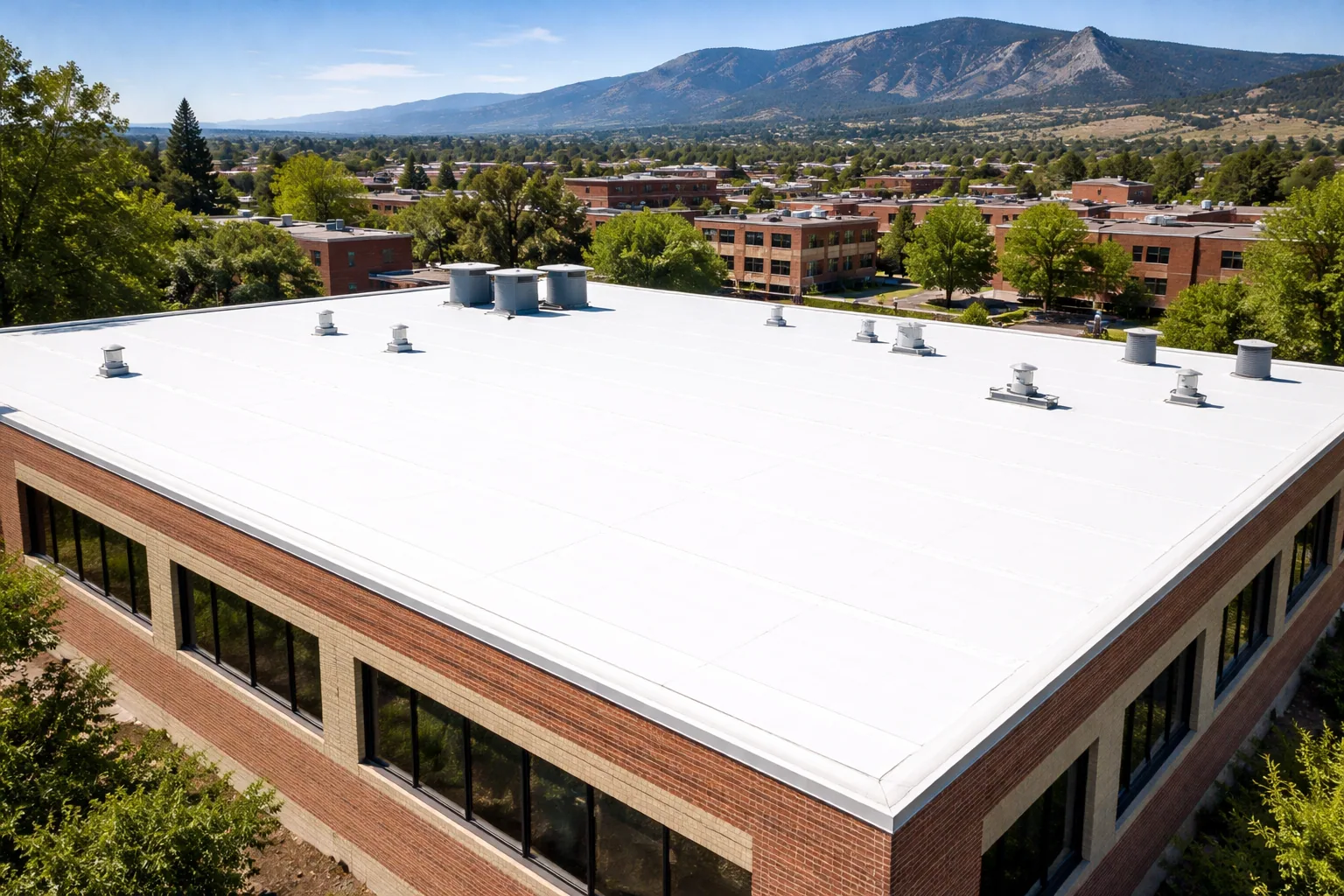
GAF Commercial Roofing Systems
A white membrane with a GAF label still needs a roof-level review before repair or replacement. Identify the product, assembly, attachment, and details that are actually on the building. GAF's commercial portfolio includes TPO, PVC, PVC KEE, asphaltic, and coating options. Westminster weather includes heat, hail, wind, snow, and cold, so the system choice should follow roof conditions and project requirements.
Identify the specified GAF assembly
GAF EverGuard TPO uses weldable thermoplastic sheet; the manufacturer also lists PVC and PVC KEE products in smooth or fleece-backed forms with distinct attachment choices. Those names do not identify what is installed on an existing roof. Check project documents, membrane markings, accessories, and field details before selecting a repair material or preparing a specification. Other product families, including Carlisle SynTec TPO and Johns Manville TPO, have their own accessory and detail requirements; components are not automatically interchangeable.
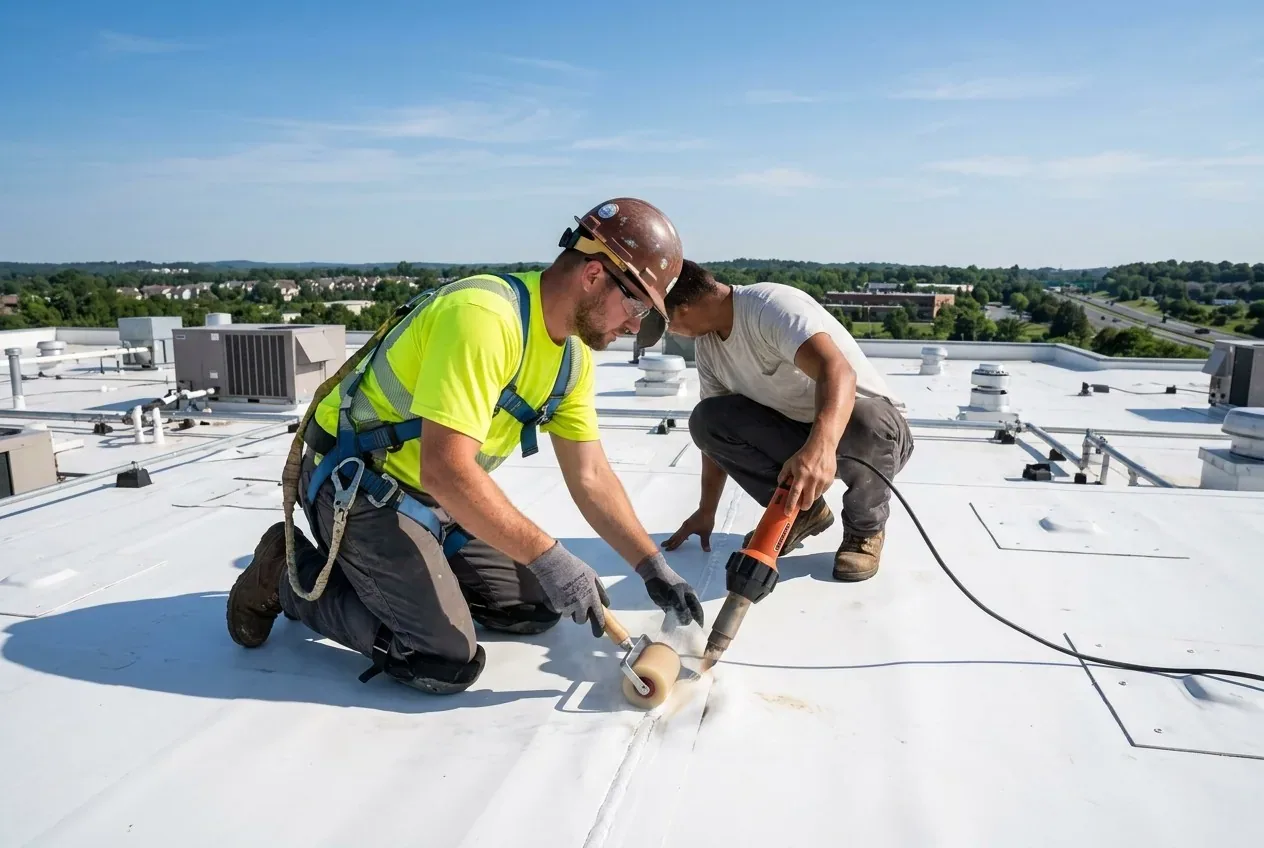
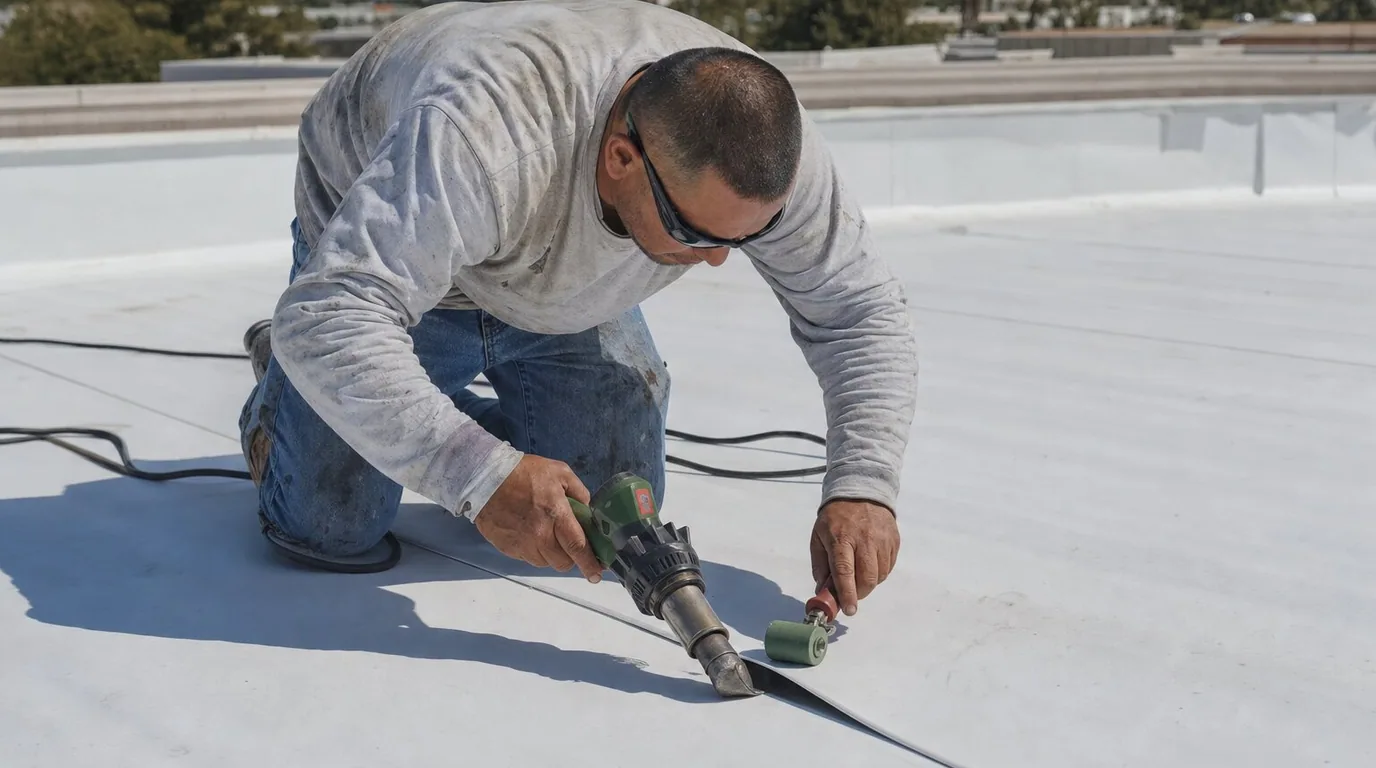
A thermoplastic weld joins compatible membrane surfaces through heat and pressure. The seam must be clean, dry, and prepared according to the system requirements. Check weld width and continuity with the appropriate probe after it cools. A surface smear or quick patch does not establish that the seam is sound. The TPO roof assembly and PVC assembly each need compatible accessories and detail methods.
GAF also lists asphaltic systems, including modified bitumen and built-up roofing, as well as coatings. Do not treat those as interchangeable with single-ply membrane. If an older roof has several layers, identify each layer and determine whether the proposed work is repair, recover, or replacement. A coating is not a substitute for correcting wet insulation, open flashing, or a failed drain detail.
Match attachment to the roof design
A GAF membrane system may be mechanically attached, adhered, or induction welded where the specified assembly allows it. Each option shifts the questions to deck type, fastener layout, substrate preparation, wind design, and construction phasing. Review the assembly details rather than choosing an attachment method from the membrane label alone.
For a mechanically attached system, map fastener rows and perimeter or corner zones against the approved design. For adhered work, confirm the substrate is clean, dry, and suitable for the selected adhesive. Induction-welded details depend on compatible plates, equipment, and a tested installation process. A commercial replacement plan should show the deck, insulation, cover board, membrane, edges, and penetration details as one coordinated roof.
At Westmoor Technology Park, multistory office buildings share a corridor but not necessarily the same roof assembly or exposure. A Westmoor roof inspection should record the building, height, zones, equipment, and access. Those observations help determine which project documents apply. Do not transfer an attachment assumption from one campus roof to another.
Treat seams and penetrations as part of the system
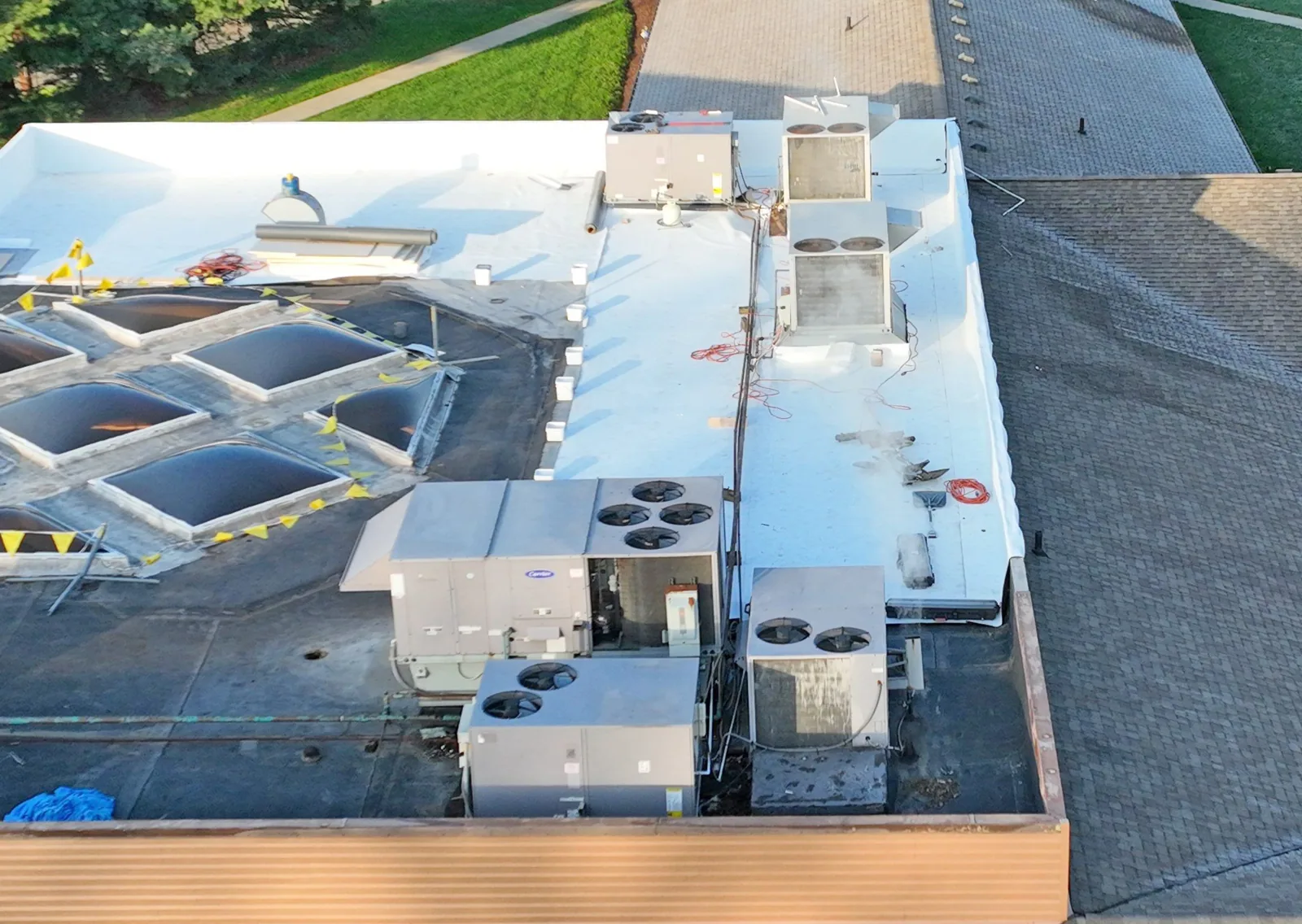
Field membrane is only one part of a roof. Parapet transitions, drains, scuppers, equipment curbs, expansion joints, and edge metal require compatible details. Look for fishmouths, bridging, open corners, poorly seated termination bars, and sealant that no longer contacts the intended surface. If a detail mixes membranes or metals, confirm its design before cutting it out or covering it.
GAF publishes system specifications, details, and accessory information for its commercial assemblies. Use the product and version that match the project documents. A preformed accessory may reduce field fabrication at a penetration, but it still needs correct substrate preparation, welding, fastening, and inspection. A penetration flashing repair should define the curb, membrane, and transition work rather than call for a bead of sealant without a boundary.
Hail can damage more than the visible membrane. Check metal caps, rooftop accessories, flashings, and roof boards for impact evidence. The May 2024 hailstorm brought documented roof damage across the northern Denver metro. After a report, photograph the GAF roof's membrane, edges, and rooftop details, then separate new impact marks from existing wear.
Choose by exposure and building use
Compare a proposed GAF assembly against the roof's slope, drainage, deck, insulation, expected foot traffic, equipment, interior use, and repair history. A fleece-backed membrane may be considered where the design calls for that construction; it does not remove the need for a sound substrate or correct flashing. A reflective surface may affect solar absorption, but energy results depend on the entire roof and building, including insulation and mechanical equipment.
Retail properties along Westminster's U.S. 36 and 120th Avenue corridors have active tenant and customer areas below. A reroof plan should set delivery, staging, temporary protection, and daily dry-in limits before crews open the assembly. Offices around Circle Point may have equipment access and work-hour constraints. These facts shape sequencing, not product suitability by themselves.
For heat, cold, and hail exposure, compare the current technical data and assembly requirements for the specified product. Avoid relying on a generic membrane thickness or a color name to establish performance. A roof condition inspection can document the current surface and details before the design team selects a GAF system for the repair or reroof scope.
Review a GAF commercial roof
Share the Westminster building, roof plan, GAF product details if known, leak history, prior repairs, and access information. We will inspect the assembly and define the next repair or planning step.
Repair the installed product, not the brand name
Before patching, identify the membrane and test an inconspicuous area if the product or bond is uncertain. Clean and prepare the surface using approved materials. Match the repair membrane, flashing, and accessories to the actual system. For thermoplastics, make a test weld and verify the settings under current roof conditions. Repair limits should extend into sound material and include the detail that caused the opening.
If a leak appears at a GAF system's seam, curb, or drain, trace water from the interior report to the roof and document the suspected path. Do not assume the closest visible defect is the entry point. A commercial roof repair should list temporary dry-in separately from permanent correction, plus any wet insulation testing or deck review needed before closing the assembly.
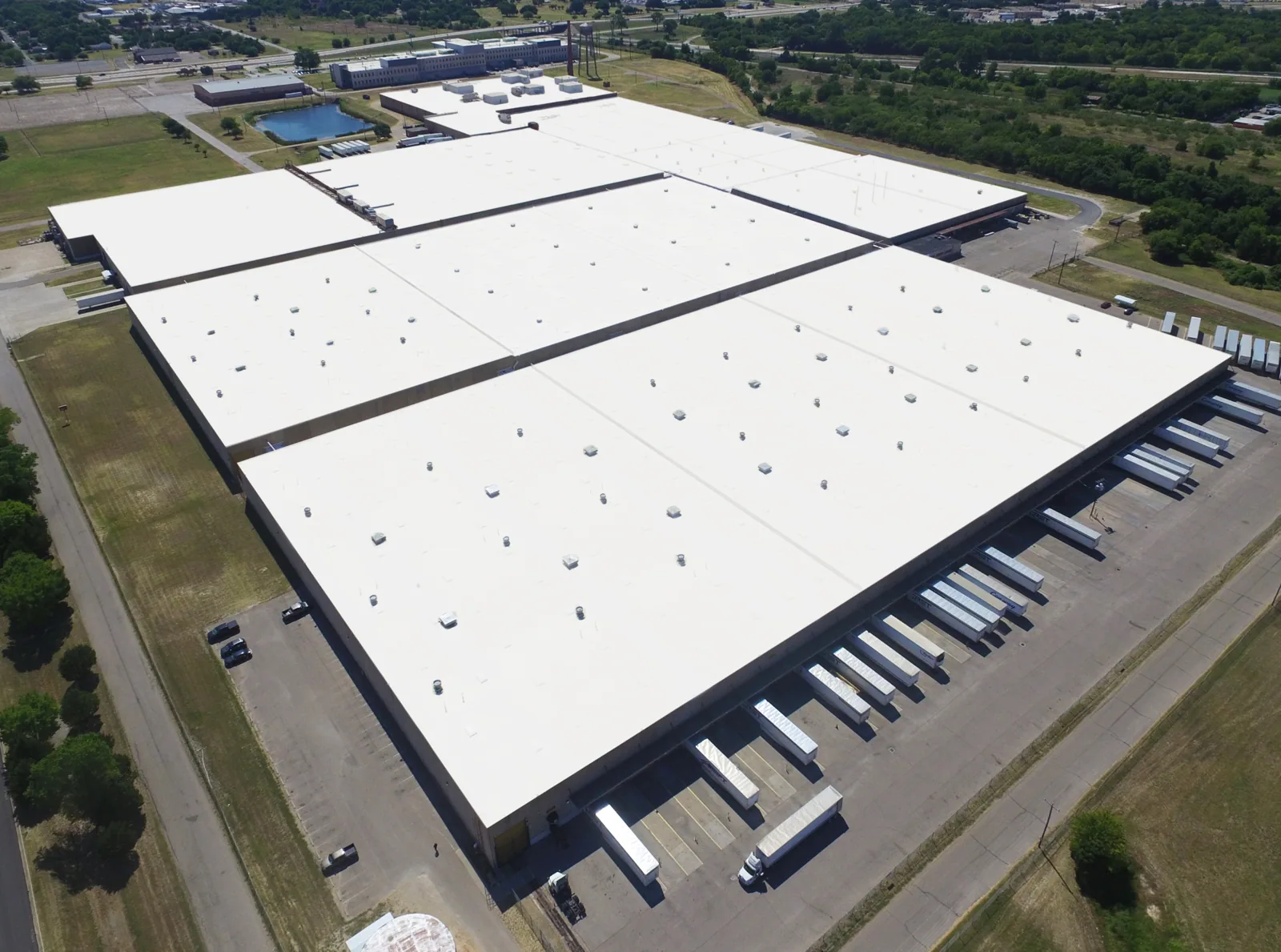
When damage is widespread, compare local repairs with a recover or replacement based on moisture, attachment, remaining layers, and edge conditions. Keep the proposal specific to the roof area and GAF product found. Set warranty expectations from the product documents and the specific assembly's recorded coverage. The applicable warranty and approved scope must be confirmed from the actual project records.
Keep product and closeout records together
Store the specification, product data sheets, approved substitutions, installation records, inspection photos, and warranty documents with the building's roof file. Mark the roof zones and identify which product was used in each phase. If a repair uses a different material, record how the transition was designed and what future maintenance should watch.
Westminster's economy includes technology, aerospace, health and life sciences, finance, hospitality, and business support. An occupied building may need work sequenced around its operations. Record access restrictions, tenant notices, equipment coordination, and any area left for a later phase. Keep operational notes separate from the material identification and roof observations.
For a Westminster project, provide roof plans, the visible system label, prior repairs, leak locations, and access contact. We can inspect the assembly, identify the repair boundary, and coordinate a scope that follows the selected GAF product requirements. The next step should be clear: repair, investigate, maintain, or prepare a larger replacement decision.
Commercial Roofing Questions
Does a GAF label tell us which membrane is on the roof?
Not by itself. Check project records, product markings, and roof details to identify the installed membrane and system.
Can a GAF TPO patch be used on a PVC roof?
Do not assume the materials are compatible. Confirm the membrane and use repair components approved for that assembly.
Does a reflective GAF membrane reduce cooling costs by a set amount?
No fixed result applies to every building. Roof color, insulation, HVAC, climate, and operating conditions all affect energy use.
What should a GAF roof repair record include?
Keep the product identification, location, preparation, materials, seam checks, photos, and any approval or follow-up requirement.
Can the same GAF assembly be used on every Westminster building?
The deck, slope, wind design, use, drainage, and existing layers can differ. Match the assembly to each building's documents and conditions.
Related Roofing Work
Carlisle SynTec Commercial Roofing
Read more
Johns Manville Commercial Roofing
Read more
Commercial TPO Roofing
Read more
Commercial PVC Roofing
Read more
More Roofing Manufacturers in Westminster
See the rest of our roofing manufacturers for Westminster commercial buildings, or call 555-555-5555 to talk through your roof.
GAF Commercial Roofing Systems
Talk to Commercial Roofing Westminster
Call 555-555-5555 or send a request and we will schedule a visit to look at the roof, explain what we find and lay out your options.