
Commercial Roof Membrane Puncture Repair in Westminster, CO
Find and repair punctures in Westminster commercial roof membranes by checking foot traffic, equipment work, wet insulation, and compatible patch materials.
Commercial Roof Membrane Puncture Repair
A puncture near a new rooftop unit needs a check of both the opening and the insulation below. Mark the location, size, and activity that occurred nearby, then compare it with the roof plan and interior report. A small hole can admit water without producing an immediate stain. The repair should address the membrane and any material affected beneath it.

Locate the damage and its cause clues
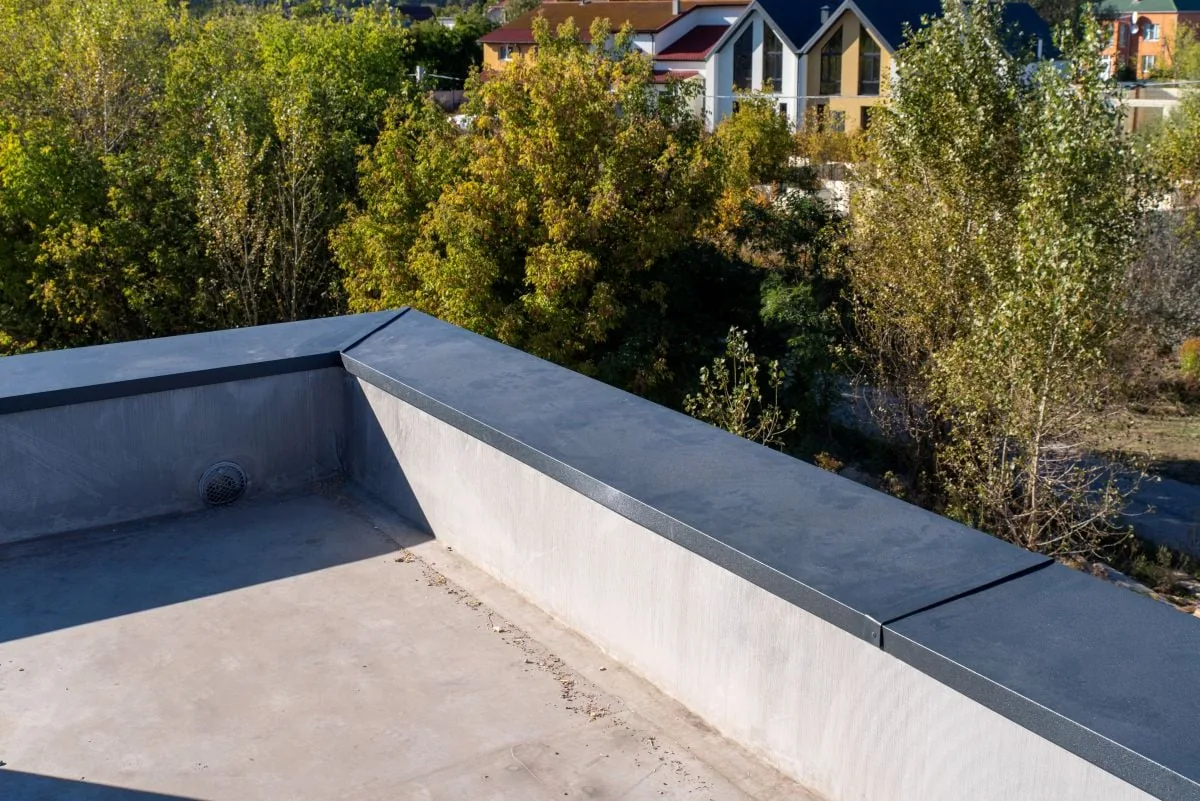
Look for cuts, dropped tools, fastener tips, abrasion, punctures from equipment feet, or damaged patches along a service route. Note whether the membrane has a clean cut, a crushed surface, or a tear that continues under a support. Photograph the detail before moving equipment or debris. The report should distinguish the observed opening from a suspected cause.
Westmoor Technology Park has multistory office buildings, and Colorado Technology Center includes office, manufacturing, and warehouse uses. At either location, verify the actual building, roof map, and membrane before selecting a puncture repair. The inspection confirms the actual assembly and route. A Colorado Technology Center service-area review can document the visited roof zones.
Foot traffic may leave scuffs, compressed insulation, or damaged walkway pads near a unit. Check whether maintenance staff or another trade has a designated route. If the surface has multiple openings, map each one and identify whether the damage is clustered around a work area or spread across the field.
Check beneath the membrane before patching
Water entering through a puncture may travel within insulation or along the deck before appearing indoors. Record the room, timing, weather, and equipment beneath the affected zone. Compare the report with roof slope, drains, seams, and nearby curbs. A local opening may need a larger test if moisture extends beyond the visible damage. For a puncture near a walkway pad, check the pad edge and adjacent fastener pattern, then inspect membrane and insulation around the mark. Record whether damage follows service access or a discrete impact.
A roof inspection can identify membrane condition and nearby details. A moisture survey may help locate wet insulation when conditions and the system support the method. The record should state the test area and limits instead of treating a scan as a definitive roof-wide result.
For an active leak, protect contents below while the roof is prepared. A leak response may add temporary dry-in before a permanent patch is installed. Identify which of those actions is complete and whether the assembly needs a follow-up opening or drying period.
Patch with a compatible system detail
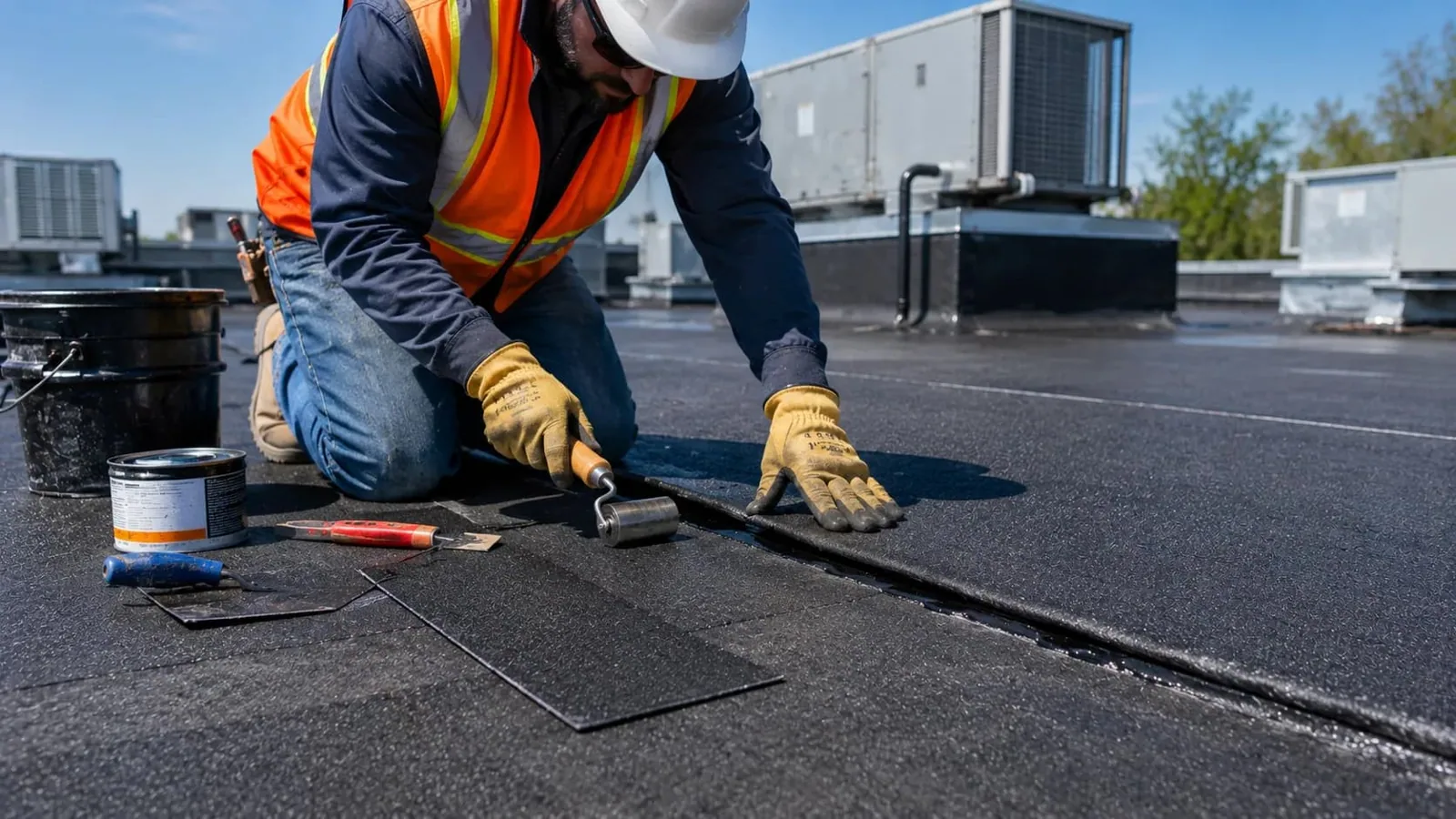
Identify the membrane before selecting a patch. TPO, PVC, KEE, and EPDM require different surface preparation and bonding methods. Remove contaminants, confirm sound material around the puncture, and extend the patch far enough to tie into a clean field. If the existing repair layers obscure the system, check records or test a sample before installing new material.
A puncture near a curb or pipe may involve flashing as well as the membrane field. A flashing detail inspection can establish whether the transition also needs repair. For a longer tear at a lap, a seam review can map the connected failure. Each repair should have its own measured boundary. For a puncture at a support foot, confirm whether the support can be lifted safely and who will reset it. For a cut near a roof drain, keep the outlet clear while the patch is prepared. The work plan should preserve water flow and keep debris from entering the drainage system.
Do not cover wet or detached material without identifying how it will be dried or removed. Photograph the surface before preparation, any material removed, the completed patch, and the tie-in. The closeout shows what the repair addressed and what remains outside its limits.
Prevent repeat punctures from service traffic
Equipment vendors, HVAC technicians, solar crews, and maintenance staff may cross the same roof route. Provide a path with walkway protection where appropriate and identify areas where the membrane should not be crossed. Keep tools, fasteners, and spare parts off the exposed field. The building contact should coordinate roof access before work begins.
Westmoor Technology Park and the Colorado Technology Center serve different office, industrial, and mixed-use property settings. For any active site, a roof map can label equipment routes, drains, and repaired punctures. Do not assume that an access path used at one building is suitable for another assembly.
A maintenance visit can check repaired surfaces, walkway pads, drains, and curbs after equipment service. If a trade relocates a unit or support, record the change and inspect the new flashing before the work area is released. Walkway pads should reach service points without crossing fragile seams or directing tools over unprotected membrane. Replace damaged protection rather than leaving a worn strip that invites another puncture. The access route can be marked on the roof plan and reviewed at each equipment visit.
Repair a commercial roof puncture
Send the roof plan, system records, leak report, equipment work history, and access rules. We will inspect the opening and document a compatible patch or testing scope.
Price the opening and hidden conditions separately
A straightforward puncture may be repaired locally if surrounding membrane and insulation remain sound. The scope should identify the opening, patch material, preparation, area measured, and test findings. If the membrane is brittle or moisture is present, note that the patch may not address adjacent deterioration.
Several punctures, repeated foot traffic, or widespread wet insulation may warrant a broader repair or replacement review. A commercial repair proposal should state access assumptions, temporary protection, material handling, and any test opening. Roof quantities come from measured surfaces and detail lengths, not office or warehouse floor area. Price small local patches separately from removal of wet insulation or reconstruction around a support. This lets the facility approve the confirmed puncture work while reserving concealed repairs for documented conditions found during testing.
Westminster has used the 2021 International building and energy code editions since June 2024. Permit history and the property's jurisdiction guide review. Keep drawings, product information, photos, and the maintenance route with the work record so a future technician can avoid damaging the same area.
Record the repair for future roof access
Closeout should show the puncture location, before-and-after condition, patch dimensions, material, and any wet or removed insulation. Note whether the interior report stopped and which adjoining seams or curbs were checked. A follow-up date helps confirm the patch remains sound after weather.
If another contractor will access the roof, give them the map and identify the protected path. Record who approved the visit, what equipment moved, and whether the patch was disturbed. That history can make a repeat leak easier to diagnose.
Keep the puncture repair separate from seam, flashing, and drainage work unless inspection connects the conditions. The owner should be able to see the exact completed area and any additional decision that remains open. If moisture testing or a second inspection is recommended, name the area and set a target date for that work.
Commercial Roofing Questions
What can puncture a commercial roof membrane?
Sharp tools, fasteners, equipment feet, dropped items, and unprotected service traffic can damage a membrane. The inspection documents the opening and surrounding evidence.
Is a small puncture always a simple patch?
Not if water reached the insulation or nearby material is detached. Check below and around the opening before setting the repair boundary.
Do you need to know the roof membrane before patching?
Yes. The patch method and material must be compatible with the installed system. Records or testing may be needed if the assembly is unclear.
How can we prevent damage during equipment service?
Set an approved route, use suitable walkway protection, control tools and fasteners, and inspect any curb or flashing altered during the visit.
What should the repair record include?
Keep location, photos, material, patch dimensions, moisture observations, access details, and any follow-up inspection date.
Related Roofing Work
Colorado Technology Center, Louisville
Read more
Commercial Roof Inspection
Read more
Infrared Moisture Survey
Read more
Commercial Roof Leak Repair
Read more
More Roof Damage Repair in Westminster
See the rest of our roof damage repair for Westminster commercial buildings, or call 555-555-5555 to talk through your roof.
Commercial Roof Membrane Puncture Repair
Talk to Commercial Roofing Westminster
Call 555-555-5555 or send a request and we will schedule a visit to look at the roof, explain what we find and lay out your options.