
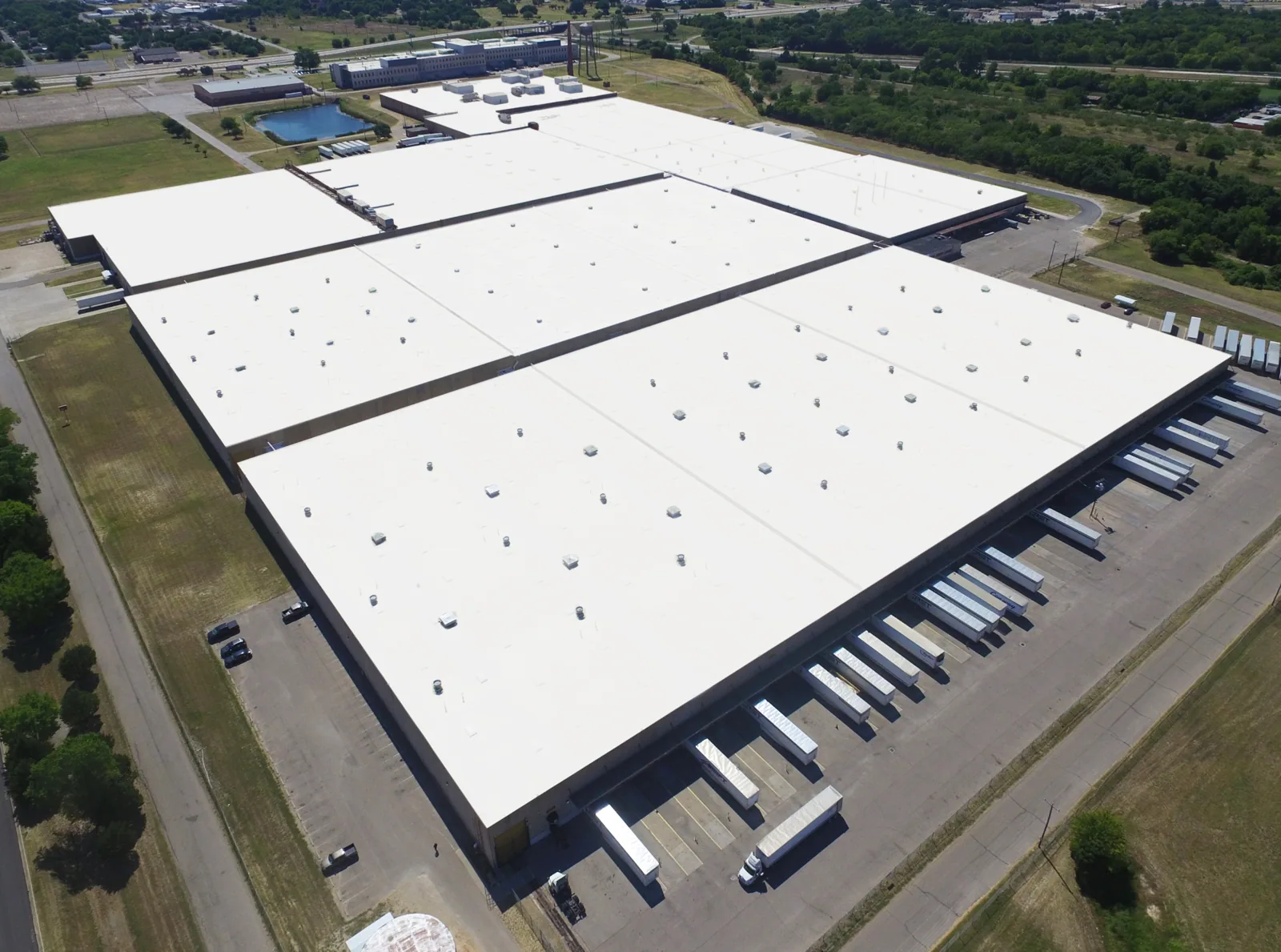
Duro-Last Commercial Roofing in Westminster, CO
Review Duro-Last PVC and custom-fabricated roofing for Westminster buildings by roof layout, transitions, field welds, substrate, and installation access.
Duro-Last Commercial Roofing
A seam at a roof edge can be factory-welded, field-welded, or part of a custom-fabricated panel. Identify how the Duro-Last system was laid out before repair. The manufacturer centers its commercial line on PVC membrane and custom-fabricated details, with additional roll-good options. Westminster's hail, wind, heat, snow, and cold make inspection of the installed roof more useful than assumptions based on the brand.
Understand the custom-fabricated layout
Duro-Last is known for PVC roofing with custom-fabricated deck sheets and accessories. Project dimensions guide how the sheets and roof details are prepared, which can reduce field seams and rooftop fabrication. That changes what an inspector sees, but it does not remove the need to inspect field welds, transitions, fasteners, flashing, and drainage.
Compare the roof plan and fabrication drawing with the installed layout. Identify panel edges, field seams, penetrations, curbs, drains, scuppers, and parapet conditions. Confirm which accessories were made for the project and whether later work changed the original pattern. If dimensions or drawings do not match the roof, record the discrepancy before defining a replacement sheet or patch.
Other PVC systems, including GAF's EverGuard products and Carlisle SynTec PVC, also use thermoplastic seams, but each manufacturer's accessories and system details belong to that assembly. A PVC roof specification should identify product, attachment, detail package, and transitions rather than call for generic white membrane.
Inspect the field seams that remain
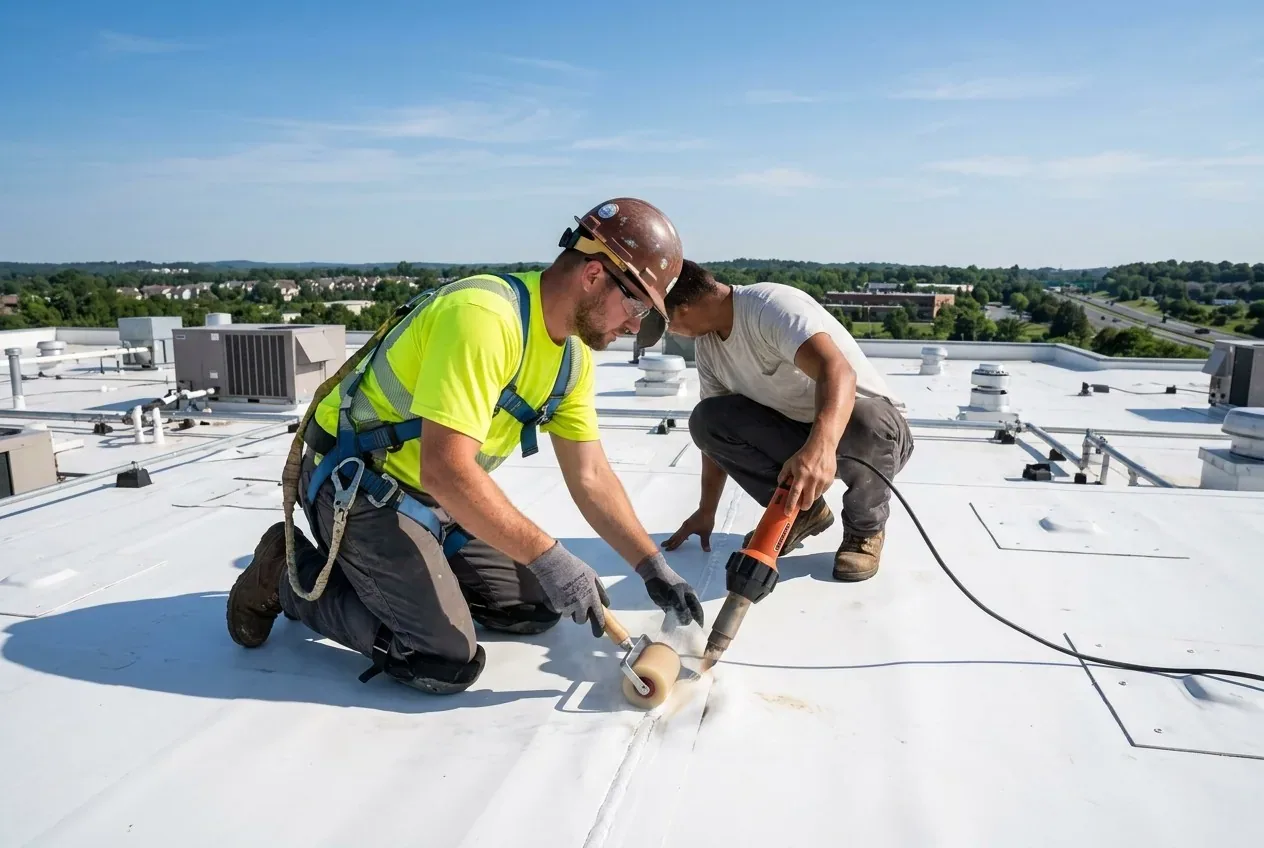
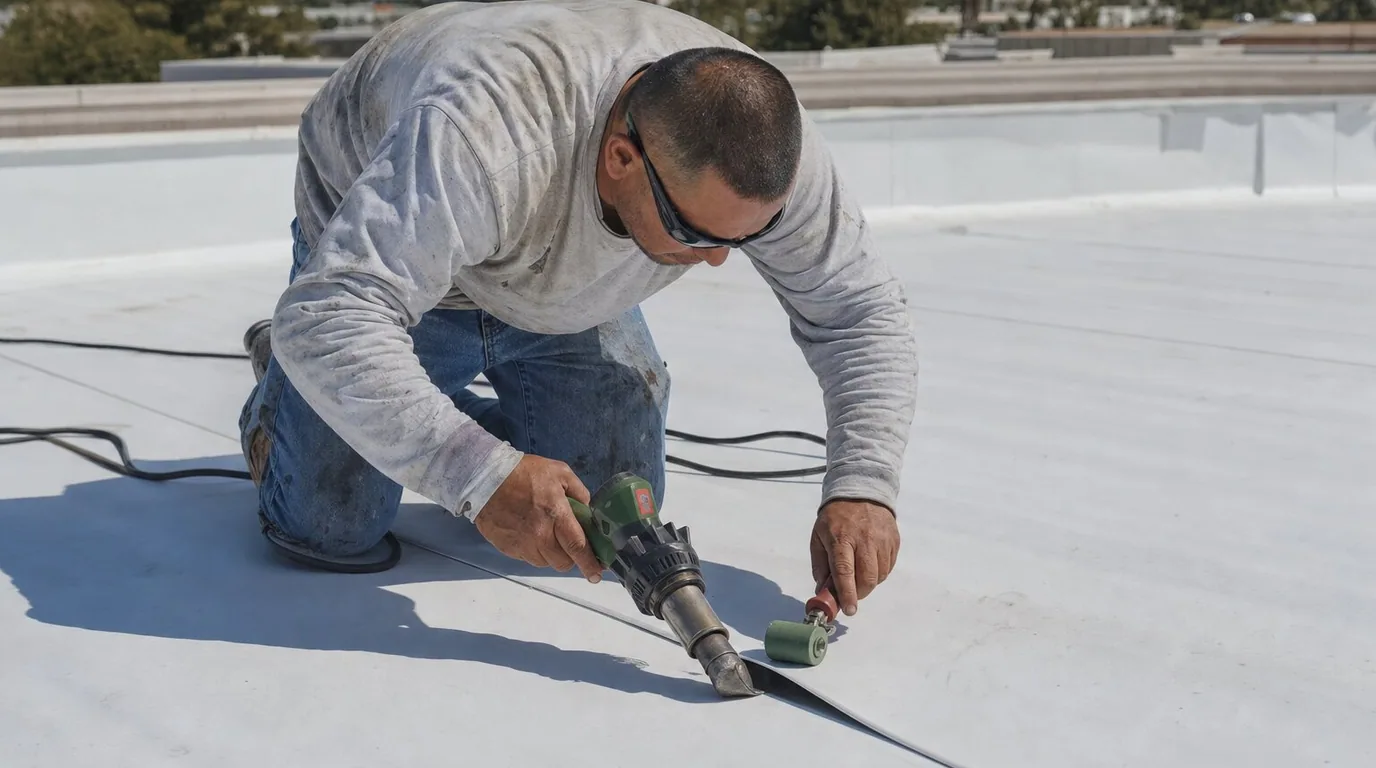
Factory fabrication can reduce some rooftop seaming, but the installed roof still has field connections and perimeter details. Check welds for clean edges, complete fusion, corners, repairs, and contamination. Probe the cooled seam with the appropriate method. Make a test weld when surface conditions, tools, or material have changed. Do not treat a neat-looking seam as proof that the whole lap is bonded.
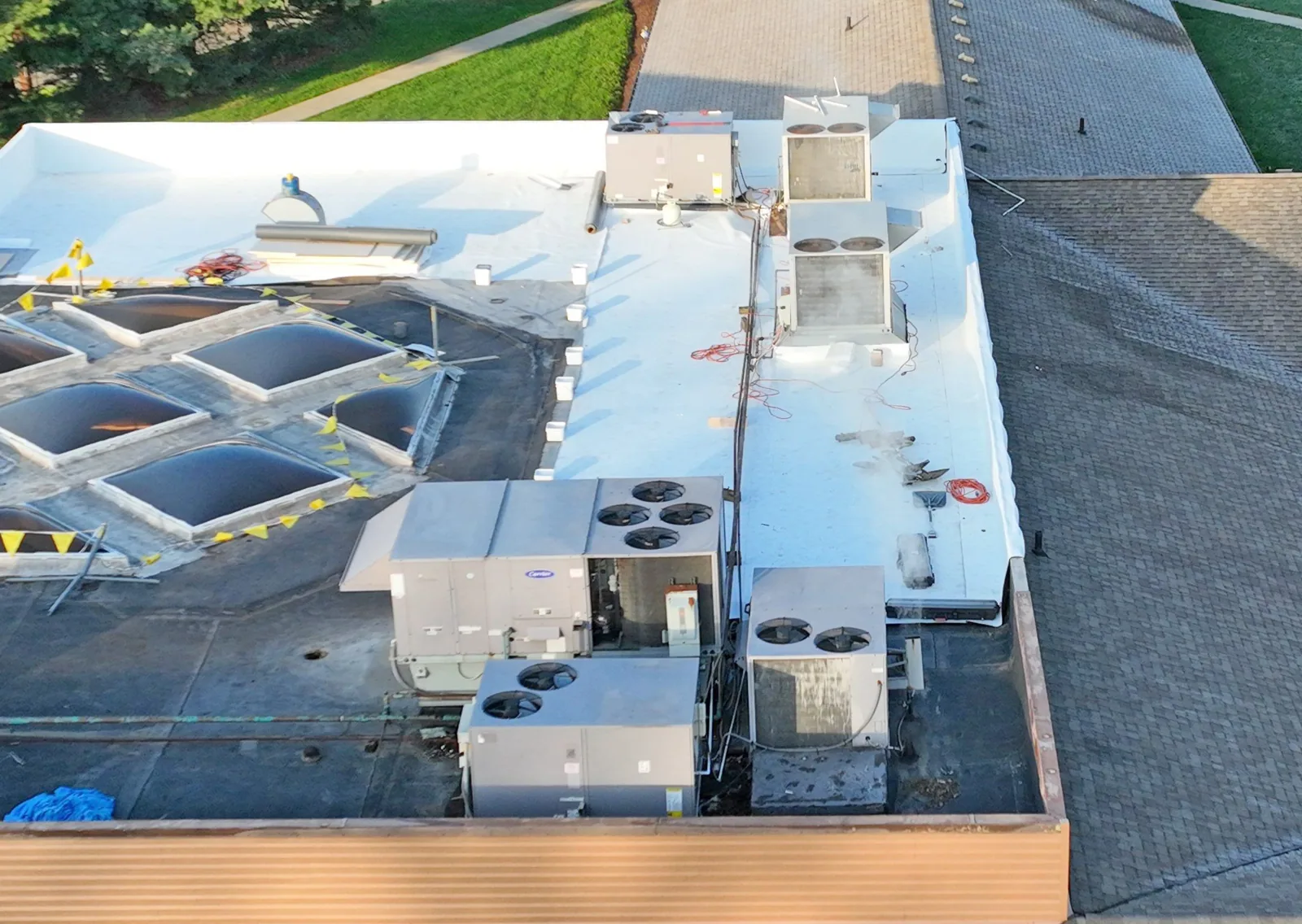
At a pipe or equipment penetration, check the custom boot or curb flashing and how it meets the field sheet. Inspect corners, termination bars, metal counterflashing, and drain connections. A preformed part still needs correct placement, compatible welding, secure attachment, and suitable substrate. If water is entering, inspect the adjacent field and route to the drain before selecting a patch location.
A penetration flashing inspection can identify whether the defect is at a boot, curb, edge, or nearby seam. Photograph both the whole roof area and close-up detail. Mark any moisture or interior report separately from the observed opening.
Compare PVC options by the project
Duro-Last offers PVC and related thermoplastic options, including KEE and TPO products, alongside custom-fabricated accessories. The membrane choice depends on the specified assembly and building conditions. Confirm the current product data and repair compatibility. Do not infer chemical resistance, fire behavior, reflectance, or warranty coverage without the product documents for the exact roof.
Review deck, insulation, cover board, slope, drainage, attachment, roof traffic, equipment, and edge conditions. A custom panel layout can affect material quantities and staging. It does not correct a weak deck or wet insulation. For a recover, verify the existing layers, attachment, moisture, and edge before assuming the new sheets can remain above the old system.
Westmoor Technology Park has multistory office buildings in Westminster's U.S. 36 corridor. Roof height, equipment, and access should be recorded at the exact building. A Westmoor roof assessment should compare the installed layout with the building's drawings before material is ordered.
Read weather marks at the building
The May 2024 storm brought a hail report near Westminster and documented roof damage across the northern metro. Hail can affect PVC sheets, accessories, rooftop equipment, and flashing. Map observed impact marks and inspect nearby welds or openings before assigning storm damage to the Duro-Last assembly.
Heat and ultraviolet exposure can age exposed materials. Snow and freeze-thaw can hold water at drains or stress transitions. Wind directs attention to edges, coping, and attachment. Use the event as context for the inspection, not as a substitute for observations. A commercial roof inspection can record roof zones reached, conditions seen, and areas hidden or inaccessible.
Circle Point is an office campus in the same U.S. 36 corridor, while the 120th Avenue corridor includes active retail. Their differing use and access may shape project scheduling. Confirm the membrane and roof condition at the property under review. Keep locations, layout, and inspection evidence tied to the correct building.
Review your Duro-Last roof layout
Share the Westminster building, fabrication plan, PVC product information, leak report, prior repairs, and roof access details. We will inspect the assembly and document compatible next steps.
Prepare repairs around the panel and detail
Before a patch, identify the PVC formulation and existing surface condition. Clean and prepare the material according to current instructions, make a test weld, and extend the repair into sound membrane. If the opening falls on a custom panel joint or preformed accessory, inspect the connection before covering it. A repair that crosses a panel boundary may need a designed transition instead of a simple overlay.
Separate temporary dry-in from permanent correction. Record the leak location, material, test weld, repair limits, and closeout photos. If moisture may extend into insulation or the deck, define an investigation before closing the assembly. A roof repair scope should identify what is included and what remains for testing.
Where multiple details fail or the roof has widespread deterioration, compare repair with restoration or replacement. Consider fabrication drawings, panel size, roof access, staging, removal, equipment, and disposal. A replacement estimate should include tie-ins and details instead of pricing only the membrane field.
Keep fabrication and field records together
Retain the roof plan, fabrication drawing, product data, submittals, installation photos, repair approvals, and warranty documents. Mark the roof zones and note changes made after installation. A new curb, unit relocation, or roof penetration may alter the original panel layout. Save the updated detail and closeout photo with the building record.
Westminster's economy includes technology, aerospace, health and life sciences, hospitality, finance, and business support. An occupied facility may require work to avoid critical access periods or equipment shutdowns. Record the operational constraints and who approves roof entry; keep them distinct from the technical system description.
For a Westminster service request, provide the building, roof plan, fabrication details if available, leak history, and access instructions. We can inspect the PVC assembly, identify the repair boundary, and prepare compatible work options. The closeout should show what changed and what needs another check after the next weather event.
Make the layout useful after repair
A roof file should let the next maintenance visit find the same panel, drain, or curb. Update the plan if field conditions differ from the fabrication drawing. Label the repair area, material, weld check, and any area not inspected. Keep the record with the owner rather than relying only on a contractor's separate photo archive.
For multi-building portfolios, use the same labels where practical but preserve building-specific panel maps. Duro-Last custom sheets are laid out for a particular roof; do not apply the drawing from one structure to another. If the owner plans future equipment work, review the proposed penetration before it is made and coordinate a compatible flashing detail.
Share the Westminster property's system records and current concern. We will compare the installed panel layout with roof observations, state any uncertainty, and identify the repair or planning decision that follows. That gives the owner a traceable path from custom fabrication to field maintenance.
Commercial Roofing Questions
Does custom fabrication mean there are no field seams?
No. The layout may reduce some site fabrication, but field connections, edges, penetrations, and repairs still need inspection.
Can a generic PVC patch go on a Duro-Last roof?
Confirm the product and compatibility first. Prepare the surface, test the weld, and extend the patch into sound membrane.
What should we do if the fabrication drawing does not match the roof?
Record the difference and confirm the installed layout before ordering material or setting a repair boundary.
Does the May 2024 hailstorm prove our Westminster roof was damaged?
No. Inspect the building and map its own impact evidence, seam condition, and any opening before defining storm work.
What records help maintain a Duro-Last roof?
Keep the fabrication plan, product data, field changes, repair records, photos, access notes, and warranty documents together.
Related Roofing Work
GAF Commercial Roofing Systems
Read more
Carlisle SynTec Commercial Roofing
Read more
Commercial PVC Roofing
Read more
Commercial Skylight and Penetration Flashing
Read more
More Roofing Manufacturers in Westminster
See the rest of our roofing manufacturers for Westminster commercial buildings, or call 555-555-5555 to talk through your roof.
Duro-Last Commercial Roofing
Talk to Commercial Roofing Westminster
Call 555-555-5555 or send a request and we will schedule a visit to look at the roof, explain what we find and lay out your options.