
Commercial Roofing for Insurance Restoration in Westminster, CO
Document Westminster commercial roof damage for restoration work with dated photos, measured repair scopes, temporary protection, and clear closeout records.
Insurance Restoration
Hail can mark a roof without creating an interior stain, so begin with the surface and the event record. A May 30, 2024 report placed one-inch hail just north of Westminster. The same northern-metro storm brought documented roof damage; Broomfield, Northglenn, and Thornton were among the communities in its path. Those facts support a timely inspection, not automatic damage at a particular property. We document what is visible, where it is located, and what repair work follows.
Set a clear timeline for the roof visit
Start with the reported event date, time, property location, and the conditions the owner observed. Gather earlier inspection photos, maintenance records, leak tickets, and prior repair invoices. A dated comparison helps distinguish a new mark from an older patch or normal wear. If the property changed hands or had recent equipment work, add those dates to the record.
A storm summary recorded the northern suburbs in its path, and a nearby observer reported hail close to Westminster. The report is regional context; the inspected building's roof establishes the observed conditions. The report should name the building and roof zone rather than attribute an entire portfolio's condition to one event.
A commercial roof claim record can organize photos, measurements, weather timing supplied by the owner, temporary measures, and completed work. Keep the file factual and identify any area that could not be reached. A claim narrative should not substitute for roof inspection or policy interpretation.
Photograph observed conditions by roof zone
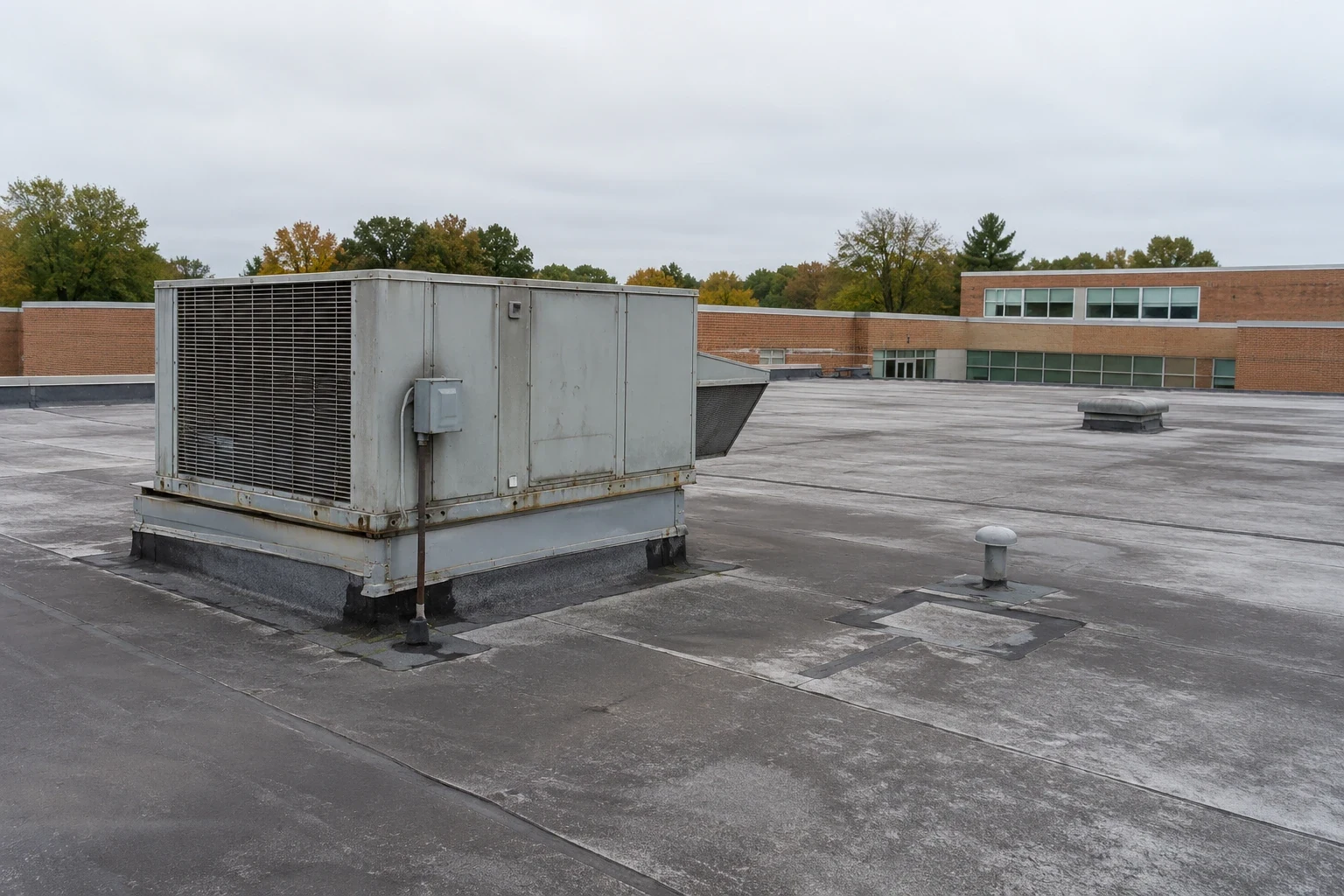
Walk a consistent route and identify the section in every photo. Inspect membrane fields, metal panels, seams, edge metal, skylights, flashings, rooftop units, and prior repair locations. Record visible impact marks or movement with enough context to locate them again. Separate close-up evidence from a wider view of the roof area.
A roof inspection can note system type where identifiable, attachment clues, drainage, and conditions that require testing. Do not label a mark as storm damage if its origin is uncertain. The report can say what was seen and what additional evidence would narrow the cause. If a photo is restricted by site rules, record the limitation and the area involved.
Interior observations belong in the same timeline but remain distinct from roof findings. Note staining, active water, protected contents, and the room or tenant contact. Water may move before appearing indoors, and a roof opening may be required to identify concealed damage. Get the owner's authorization and document restoration of the opened area.
Separate emergency protection from permanent work
Active water may require a temporary dry-in before a full repair is designed. Record the material used, section covered, date, and whether the interior remained dry afterward. Temporary measures reduce exposure but do not prove that the roof is permanently repaired. Schedule a return inspection if weather or access prevented a complete diagnosis.
A localized puncture, open seam, displaced edge, or failed flashing may support a defined repair. The scope should include measured quantity, compatible material, tie-in limits, access assumptions, and any test opening. A storm damage repair can then be compared with photos and the event record. Keep unrelated maintenance items separate from the loss scope.
If several sections show damage or moisture, test before expanding the repair boundary. State what was opened, how the area was restored, and which concealed conditions remain. A leak investigation can trace an active report while the claim file tracks event observations. The two work records may overlap, but they answer different questions.
Apply local weather carefully
The Denver/Boulder area sees hail, wind, thunderstorms, winter weather, heat, and cold. Hail reports and documented roof damage in nearby communities make a prompt post-event check reasonable. For insurance restoration files, confirm the roof system before selecting repair materials; record who owns the next inspection or repair step. Inspect primary outlets, overflow paths, parapet transitions, and low zones; log ponding duration separately from the storm review. Standing water or a blocked outlet can affect the repair decision, but it is not automatically evidence of storm damage. Record that condition as a maintenance observation unless the inspection supports another conclusion.
For a portfolio with a site in Northglenn Marketplace and another along the West 120th Avenue corridor, keep separate timelines, building photos, and repair quantities. Their place names help route the file; the field walk determines what changed at each roof. If strong wind, ice, lightning, or wet surfaces make roof access unsafe, postpone that part and protect an active interior leak through an approved method.
Document a Westminster commercial roof loss
Send the property location, reported event date, roof plans, prior photos, leak history, access rules, and restoration schedule. We will inspect the approved area and document repair findings.
Coordinate roofing with restoration trades
Restoration may include ceilings, insulation, electrical, mechanical, and finish work below the roof. Identify which trade will remove wet materials, protect contents, and restore the interior. Coordinate the roof opening and dry-in with that sequence so finished work is not exposed to another leak. The property contact approves each access route and any change in scope.
A construction coordination plan can assign roof penetrations, temporary weather protection, testing, and final flashing to named trades. A property manager's work record can keep tenant notices, access restrictions, and closeout details with the correct address.
For a retail property or restaurant, schedule noisy work and material delivery around opening hours. For an office or clinic, identify rooms and equipment that need protection. The building use changes the logistics, but the roof report stays tied to observed surface and concealed conditions.
Make the final file easy to review
Closeout should include dated photographs, roof-zone labels, measurements, material invoices, work limits, and the completed repair detail. Add before-and-after views where available. Identify any area not inspected and the reason, then list the next action. Keep the loss-related work separate from routine maintenance and unrelated improvements.
A replacement evaluation may follow if testing and condition evidence support a broader scope. The report should identify the assembly, measured area, drainage details, and work sequence. Building floor area or an insurance estimate is not a roof measurement. Westminster moved to its 2021 International code editions in June 2024; permit and project records determine applicable review.
Store the inspection, repair, and restoration records together with the building's maintenance history. If another storm occurs, the next survey can compare the same roof zone and identify what changed. That gives the owner and restoration team a usable record without treating a prior claim as proof of current damage. If the next file concerns a different building in the portfolio, start a new event timeline and preserve the earlier record unchanged. Consistent photo labels help the reviewer compare dates while preventing one address from inheriting another property's damage history.
For a claim file, keep event timing, roof-zone photographs, inspection limits, temporary protection, and repair quantities in separate fields. Identify which observations are visible and which require testing. This makes it easier to compare the proposed work with prior maintenance and prevents unrelated drainage needs from being grouped into a storm line.
Commercial Roofing Questions
What should a commercial roof claim inspection document?
Record the event timing, building, roof zones, visible conditions, photographs, measurements, access limits, temporary protection, and any testing still needed.
Does a nearby hail report prove damage at my property?
No. It can prompt an inspection, but the specific roof needs its own photographs and observations before damage is assigned.
Can temporary dry-in count as the permanent repair?
No. Note the temporary material and covered area, then schedule a follow-up to define and complete the lasting repair.
Should old maintenance items be included with storm damage?
Keep them separate unless the inspection supports a connection. Distinct findings make scope and repair records easier to review.
Can you document work for an adjuster or restoration team?
Yes. We can provide dated roof photos, measurements, observed conditions, repair limits, installed materials, and closeout information.
Related Roofing Work
Commercial Roof Insurance Claim Assistance
Read more
Commercial Roof Inspection
Read more
Storm Damage Roof Repair
Read more
Commercial Roof Leak Repair
Read more
More Industries We Serve in Westminster
See the rest of our industries we serve for Westminster commercial buildings, or call 555-555-5555 to talk through your roof.

Insurance Restoration
Talk to Commercial Roofing Westminster
Call 555-555-5555 or send a request and we will schedule a visit to look at the roof, explain what we find and lay out your options.